Chiang Mai International Schools 2026: A Relocating Family's Complete Guide
Why Chiang Mai Became a Southeast Asia Education Migration Hub
Chiang Mai international schools have moved from a niche expatriate topic to a core relocation question for families comparing Thailand, Singapore, Malaysia, Vietnam, and their home country. The city is not just selling lower rent or slower weekends. It offers a compact education market, a gentler daily rhythm, and enough accredited English-medium options for parents who want an international track without moving into a capital-city pressure cooker.
Two signals explain why the topic matters in 2026. First, reporting by AP/VOA described demand pressure from Chinese families and cited Lanna International School seeing applications roughly double during the 2022-23 school year. Second, a 2025 SAGE Open study interviewed 38 families connected with 23 international schools in Chiang Mai. The study framed relocation as household life-making, not simply credential shopping. Families were not only asking which diploma looks strongest. They were asking whether the entire family could breathe, study, work, and live with more flexibility.
This guide is written for English-speaking and Thai-speaking relocating families, including mixed Thai-foreign households, foreign buyers already looking at Chiang Mai property, and parents who need to align school fit with commute, visa documentation, and home search. It is not a keyword page for one nationality. Chiang Mai's education migration story is broader than any single source market. A British family comparing Bangkok, a Thai family moving home from Singapore, a German or Korean family considering a two-year assignment, and a Thai-foreign couple returning from Australia can face the same practical question: which school zone should shape the home search?
That is why school planning belongs at the front of the relocation process. A family can change furniture, internet providers, or weekend routines after arrival, but changing schools after a child has settled is harder. The school decision affects the morning route, the type of home that makes sense, the parent who handles pickup, and the documents needed for immigration. In Chiang Mai, a practical school shortlist can save weeks of scattered property tours.
The answer is rarely “the best school” in the abstract. It is the school your child can realistically enter, the curriculum that keeps future options open, the commute that does not consume family life, and the housing area where your budget still leaves room for tuition, transport, activities, and savings. Chiang Mai rewards families who plan these pieces together.
The Six Accredited International Schools Compared
The table below focuses on six schools that relocating families commonly shortlist when they want an accredited or internationally oriented pathway in or near Chiang Mai. The fee and drive-time figures are deliberately narrow because school decisions become messy when parents mix old forum posts, one-off agent claims, and unofficial fee screenshots. Treat this as a planning table, then verify admissions, campus visits, and fee invoices directly with the school.
| School | Curriculum | Annual fee 2025/26 | Drive time from east Chiang Mai | Accreditation |
|---|---|---|---|---|
| Varee Chiangmai School | bilingual (EN programme + Thai) | ฿244,000-524,000 | 11.1 km / 17 min | Education Development Trust and Cambridge, Nong Hoi |
| UCIS (Unity Concord Intl) | American Common Core | ฿212,000-388,000 | 13.8 km / 17 min | WASC + ONESQA, Saraphi |
| ACIS (Americana Chinese Intl) | trilingual American/Chinese/Thai | ฿220,000-396,000 | ~14 km / ~17 min | ACS WASC, ~550 students, Saraphi |
| CMIS (Chiang Mai Intl) | American, oldest in northern Thailand | ฿325,000-562,000 | 16.8 km / 21 min | Contact school directly, Mueang |
| Panyaden Intl | bilingual EN-Thai + Buddhist values | ฿303,000-571,000 | 21.9 km / 30 min | Contact school directly, Hang Dong |
| NIS (Nakornpayap Intl) | American PreK-G12 | ฿290,000-496,000 | 22.5 km / 27 min | Contact school directly, San Phi Suea |
Fees are school-published 2025/26 ranges via International Schools Database. Confirm with each school.
The east-side pattern is obvious. UCIS, ACIS, and Varee sit close to the Saraphi, Nong Hoi, and San Kamphaeng corridor, with all three shown inside roughly 17 minutes from east Chiang Mai in this comparison. CMIS pulls the search toward the city. Panyaden pulls it south-west toward Hang Dong. NIS pulls it north-west toward San Phi Suea. That geography matters because the cheapest house is not cheap if the daily school run becomes the family's biggest friction point.
Accreditation should be read carefully. WASC and ACS WASC relate to a school accreditation process. ONESQA is Thailand's national external quality assessment body. Some schools also use curriculum-linked recognition, examination boards, or membership bodies. Those are not all the same thing. Parents should ask each admissions office what is accredited, which grade levels are covered, when the current cycle expires, and how transcripts are issued for transfers abroad.
Curriculum Types Explained
Most parents start with labels: American, IB, British, bilingual, trilingual. The better starting point is the child's likely next move. If your child may return to a US-style high school or apply to US universities, an American curriculum using Common Core or US-style credits may feel familiar. UCIS, ACIS, CMIS, and NIS are the clearest American-style options in this six-school comparison, although each school has its own approach to assessment, language support, and graduation records.
IB is different. It is a specific programme framework associated with inquiry, international-mindedness, and defined authorization requirements. In Chiang Mai, IB options exist in the wider market, but parents should not assume every international school is an IB school. For the six schools in this article, the task is to compare the stated options and ask direct admissions questions where the school's exact authorization or grade coverage matters.
Bilingual English-Thai education suits families who want international exposure without losing Thai language, culture, and local continuity. This matters for Thai families returning from overseas and for mixed households where one parent wants the child to remain grounded in Thailand. A bilingual model can also make daily life easier for children who will join Thai sports, music, temple, family, or local community activities outside school.
Trilingual English-Chinese-Thai education adds another layer. ACIS describes an American curriculum with English, Chinese, and Thai language exposure. That can be attractive for families who want multilingual fluency, but parents should still ask how much instructional time each language receives, whether language support is streamed by level, and how the school protects academic progress for children who arrive mid-year.
For accreditation, use the names carefully: WASC and ACS WASC, CIS, ONESQA, and ACS-style terminology can sound similar in conversation. Ask for the official accreditation page or certificate, then match it to your child's grade level and future destination.
Where to Live by School Zone
School choice should narrow your map before you start touring homes. For a deeper property-side view, use BaanRow's Chiang Mai neighborhoods guide for foreign buyers. Then overlay the school run, because the same neighborhood can feel excellent or exhausting depending on which campus you choose.
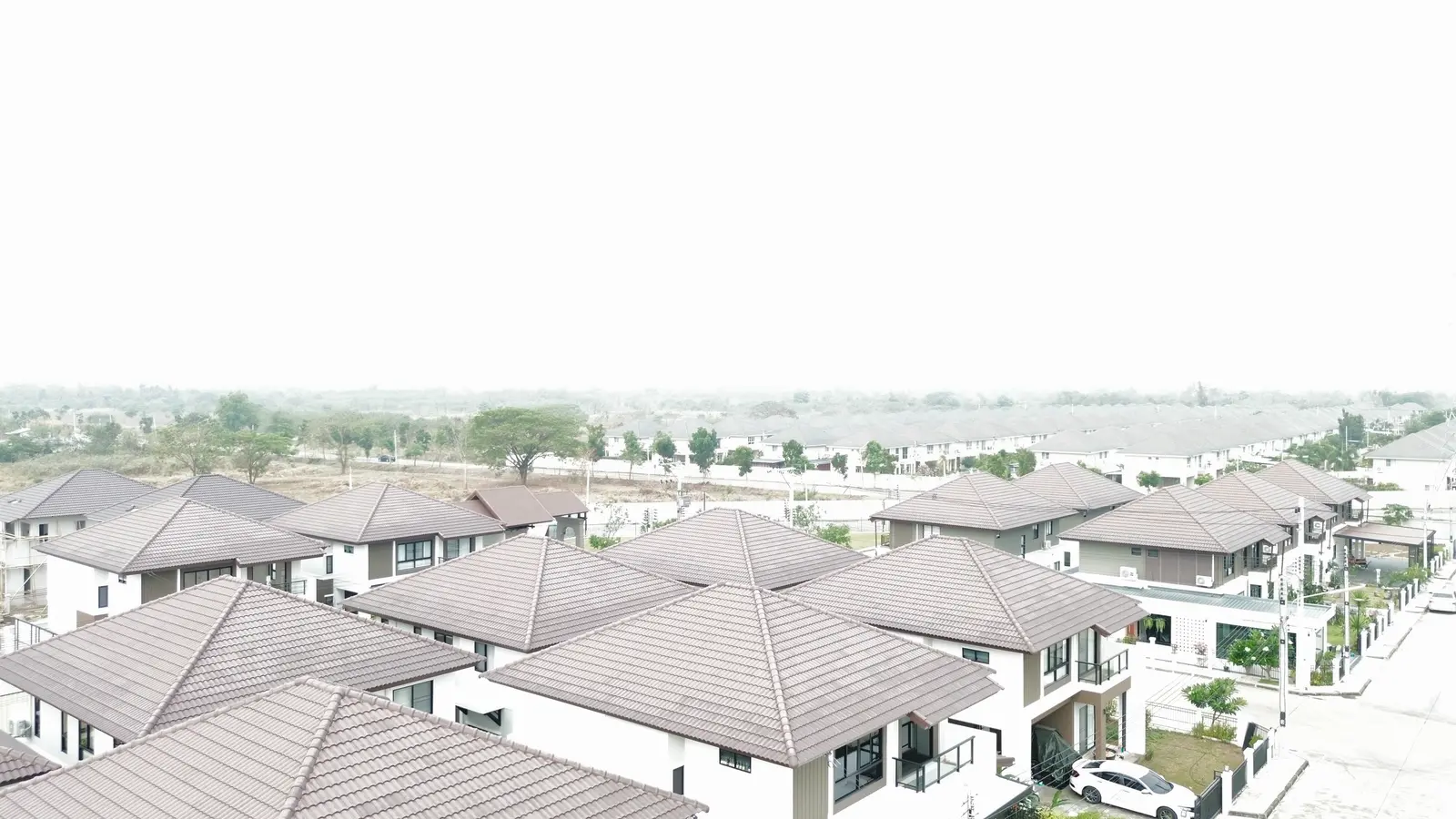
The Saraphi and San Kamphaeng east corridor is the practical zone for families shortlisting UCIS, ACIS, and Varee. It can suit parents who want more house for the budget, easier access to ring roads, and a quieter suburban rhythm while staying connected to the city. It is also the strongest cluster in this article because three of the six compared schools sit within the shortest drive-time band.
Mueang and the city zone fit CMIS families and parents who want walkability, old-city access, restaurants, hospitals, and a more urban routine. The tradeoff is that traffic, parking, and property type become more important. A central condo may be convenient for one child and one parent working remotely, while a larger family may prefer a house just outside the core.
Hang Dong is the natural search zone for Panyaden. It tends to attract families who value space, greenery, and a calmer school-home rhythm. North-west and San Phi Suea are the practical areas for NIS, especially if a family wants to avoid crossing the city twice a day. There is no universal best zone. The correct zone is the one where school fit, commute, housing, and family habits reinforce each other.
What It Costs: Education Plus Housing
For 2025/26, the six-school annual tuition ranges in this guide run from ฿212,000 at the lower end of UCIS's published range to ฿571,000 at the upper end of Panyaden's published range. That does not mean a family can simply multiply tuition by years and call the budget done. Ask each school about application fees, enrollment fees, capital or development fees, lunch, transport, uniforms, devices, exams, extra language support, trips, and after-school activities.
Housing is the second half of the equation, but this article intentionally does not invent rent or purchase figures. Chiang Mai costs vary by house size, land, school zone, road access, air filtration expectations, pets, pool, security, and whether the family needs a short rental before buying. Use BaanRow's cost-of-living tool to model the monthly family budget instead of relying on one generic number.
If you plan to buy, connect the school decision to the ownership structure and financing decision. Read the guide to condo juristic person, sinking fund, and CAM fees, then compare the mortgage risks in foreign-buyer mortgage bad math and DSR and LTV rules. A family that keeps tuition, housing, and financing in one spreadsheet will make better decisions than a family that treats them as separate projects.
ED Visa, Dependent Visa, and DTV Basics
Visa planning belongs early in the process, but it should be handled as a documented administrative pathway, not as casual advice. For school-age children, the common route is an education-related visa process supported by documents from the school, with parent or guardian status handled separately when eligible. The sources to name are the Thai Immigration Bureau and Thailand's Ministry of Foreign Affairs at mfa.go.th.
In practical terms, families should ask the school admissions team which documents they issue, how long those documents usually take, whether the school has a visa office or external coordinator, and which parent or guardian categories are possible. Typical document sets may include passports, photos, birth certificates or family relationship evidence, school acceptance letters, financial evidence, and prior school records, but requirements can change and depend on nationality, location of application, and current immigration practice.
The Destination Thailand Visa, or DTV, is a different category and should not be treated as a substitute for every school-family case. A parent working remotely may compare DTV, LTR, Elite, retirement, and dependent options, but the correct choice depends on the family's facts. Use BaanRow's Thailand visa ROI guide as a planning framework, then confirm the current process with the school, the relevant Thai embassy or consulate, and Thai Immigration.
Enrollment Timeline and Preparation
Many international schools in Thailand work toward an August start, so relocating families often begin serious applications between September and January for the following academic year. That is a planning pattern, not a guaranteed deadline. If a school's exact timeline is not published or directly confirmed, contact the school directly. Waitlists, year-group capacity, English-language support, sibling priority, and mid-year movement can all change the answer.
Prepare documents before you fall in love with a house. Most admissions teams will ask for the child's passport, parent or guardian passports, prior transcripts or reports, vaccination records, learning-support documents where relevant, and sometimes confidential teacher recommendations. Schools may require an English assessment, placement test, interview, class visit, or trial day. For younger children, readiness and social fit may matter as much as academic testing.
A sensible sequence is: shortlist curriculum and budget, contact schools, visit campuses, submit applications, clarify visa support, choose a school zone, then begin the home search. If the family is arriving from overseas, plan at least one Chiang Mai visit that combines school tours with neighborhood tours. Seeing the morning route, the pickup queue, and the surrounding housing stock is more useful than comparing brochures at midnight from another country.
- Ask each school for the 2026/27 admissions calendar when available.
- Ask whether fees are refundable if a visa or relocation plan changes.
- Ask how the school supports children entering from Thai, British, American, Chinese, Korean, Japanese, French, Arabic, Russian, or German systems.
- Ask whether the school bus route covers your preferred neighborhood.
FAQ
Which Chiang Mai international school is closest to the San Kamphaeng / east-side neighborhoods?
In this comparison, Varee is listed at 11.1 km / 17 min, UCIS at 13.8 km / 17 min, and ACIS at ~14 km / ~17 min from east Chiang Mai. That makes the east corridor strongest for families considering those three schools.
What is the annual tuition fee range for international schools in Chiang Mai in 2025/26?
For the six schools compared here, published 2025/26 annual ranges run from ฿212,000-388,000 at UCIS to ฿303,000-571,000 at Panyaden, with Varee, ACIS, CMIS, and NIS sitting inside the ranges shown in the table. Confirm the final invoice with each school.
Do Chiang Mai international schools follow the American, IB, or British curriculum?
Chiang Mai has American, British, IB, bilingual, and multilingual options across the wider market. In this six-school guide, UCIS, ACIS, CMIS, and NIS are American-style options, Varee is presented here as bilingual EN programme plus Thai, and Panyaden is presented as bilingual EN-Thai with Buddhist values. Ask each school directly about authorization, exams, and grade coverage.
Can my child get an ED visa to study at a Chiang Mai international school?
Many families use an education-related process supported by school documents, with parent or guardian status handled separately where eligible. Requirements depend on nationality, application location, and current Thai Immigration and MFA rules, so confirm with the school and official authorities.
Is Chiang Mai safe and affordable for a relocating family compared to Bangkok or Singapore?
Many families choose Chiang Mai because daily life can feel calmer and less costly than larger regional cities, but the correct answer depends on tuition, housing, transport, healthcare, air-quality needs, and lifestyle. Use a full budget model rather than assuming Chiang Mai is automatically cheap.
When do Chiang Mai international schools open enrollment for the new academic year?
A common planning window is September to January for an August intake, but exact dates and available seats vary by school and year group. Contact the school directly before making travel, housing, or visa commitments.
Next Steps: Find a Home Near the Right School
The strongest relocation plan starts with the child, then works outward. Pick the curriculum type, confirm the admissions path, understand the visa documents, and only then choose the home zone. For many families, the east corridor deserves early attention because UCIS, ACIS, and Varee are all within the shortest drive-time band in this comparison. Three of six schools within about 17 minutes is a practical advantage.
Use the neighborhood guide to compare zones, then browse BaanRow highlights for homes that match the school run, not just the listing photos. A good Chiang Mai relocation is not only about finding a property. It is about building a school-home-work routine your family can sustain.
AI disclosure: This draft was prepared with AI assistance, using 12 linked reference sources supplied for editorial review. Last updated: 5 June 2026.