What Does Living in Thailand Actually Cost a Foreigner in 2026? Bangkok vs Chiang Mai vs Phuket
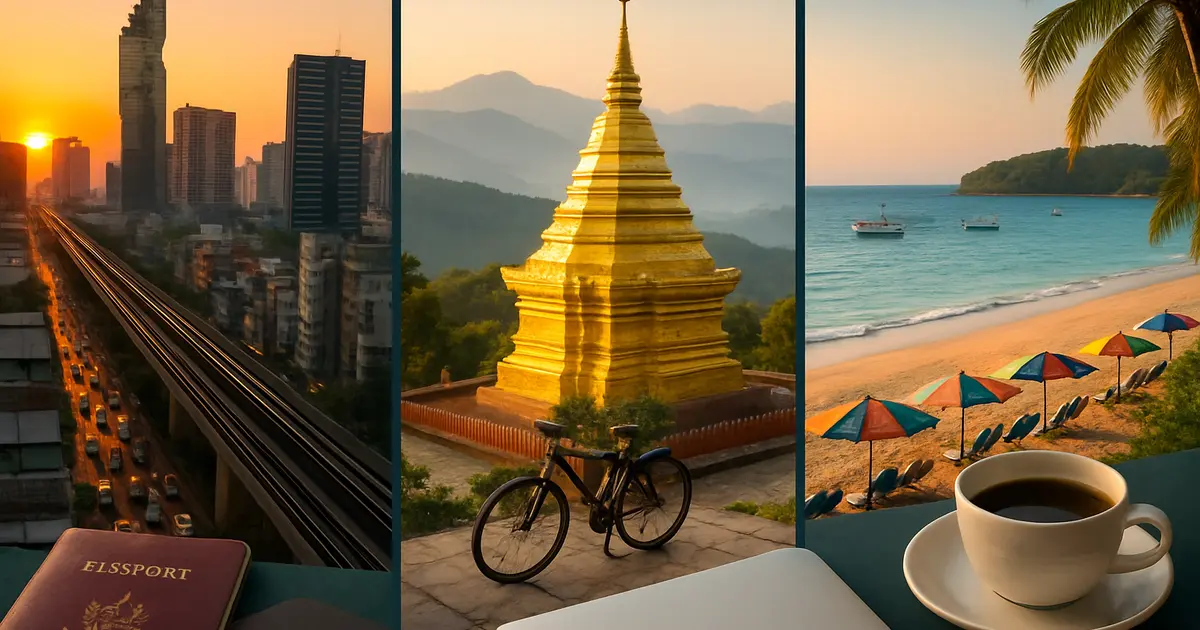
What does living in Thailand cost a foreigner in 2026? (Bangkok vs Chiang Mai vs Phuket)
If you’re planning to move in 2026, the headline is simple: Thailand is still very affordable for many expats, but the “budget” depends on your lifestyle. In 2026, the biggest swing factors are:
Housing location (expat-friendly areas vs more local neighborhoods)
Air-conditioning usage (electricity)
Healthcare tier (public vs international-private)
Schooling tier (this can dominate a family budget)
Imported lifestyle (cheese, wine, beef, “Western convenience”)
Transport choices (BTS/MRT vs car + traffic, motorbike vs taxis)
In May 2026 pricing reality: Chiang Mai is typically the cheapest for many expat retirees and remote workers; Bangkok is the most expensive when you want a high convenience expat setup; and Phuket often sits above Chiang Mai because tourism and beach demand lift rents and daily “premium” spend—especially in popular areas.
Exchange rate context (and the important caveat for “late-2026”)
The numbers below convert THB to USD/EUR/GBP/AUD using the exchange-rate context checked 16–17 May 2026. Late-2026 FX cannot be known yet, so treat USD/EUR/GBP/AUD amounts as “May 2026 equivalent budget planning,” not a guaranteed future rate.
| Currency | Checked rate (May 16–17, 2026) | Notes |
|---|---|---|
| USD | ≈ 32.56 THB / 1 USD | Used for USD conversions |
| EUR | ≈ 37.86 THB / 1 EUR | Used for EUR conversions |
| GBP | ≈ 43.40 THB / 1 GBP | Used for GBP conversions |
| AUD | ≈ 23.29 THB / 1 AUD | Used for AUD conversions |
For cross-checking the “local cost reality,” this article also references public cost-of-living indices and city snapshots from Numbeo (May 2026 pages), but then translates them into practical monthly budgets for foreigners.
Monthly budgets at a glance (single person + couple + family-level ranges)
These are planning ranges for May 2026 and assume you’re living like a typical expat: renting, eating out regularly, using private healthcare options when needed, and paying for decent internet/comfort. Your actual cost can be lower or higher depending on schooling (families) and housing zone.
| City | Budget style | Monthly (THB) | USD (≈32.56) | EUR (≈37.86) | What this usually means |
|---|---|---|---|---|---|
| Bangkok | Comfort expat | 65,000–95,000 | ≈ 2,000–2,920 | ≈ 1,720–2,510 | Sukhumvit/Sathorn 1BR/1.5BR, AC, private transport mix, Western meals sometimes |
| Family / premium lean | 120,000–220,000+ | ≈ 3,680–6,760+ | ≈ 3,170–5,810+ | 2BR+ or bigger condo/townhouse + international schooling considerations | |
| Chiang Mai | Comfort expat | 40,000–70,000 | ≈ 1,230–2,150 | ≈ 1,060–1,850 | Digital nomad/retiree pace, often Thai+expat restaurants, 1BR condo or small house |
| Family / premium lean | 85,000–160,000+ | ≈ 2,610–4,910+ | ≈ 2,250–4,220+ | Bigger rental + schooling tier (which can narrow the cost gap quickly) | |
| Phuket | Comfort expat (beach life) | 55,000–105,000 | ≈ 1,690–3,230 | ≈ 1,450–2,780 | Tourism-priced neighborhoods, 1BR/2BR with pool-style lifestyle possible |
| Family / premium lean | 105,000–200,000+ | ≈ 3,230–6,140+ | ≈ 2,770–5,280+ | More frequent private healthcare, beach-area rent premiums, schooling adds up |
Bangkok (2026): highest cost, best for digital nomads, business, and international school families
Bangkok is where you pay for convenience: premium services, more choice in hospitals and shopping, and the easiest “international expat bubble.” If you’re a digital nomad who wants fast everything and an expat social calendar—or a family planning for international schools—Bangkok usually makes sense, but expect higher monthly outgoings than Chiang Mai.
Where expats live (Sukhumvit & Sathorn)
For foreign retirees, nomads, and expat families, the classic areas are Sukhumvit and Sathorn (near BTS/MRT links, dense dining, private gyms, and international-friendly services). This is also where rent and “premium” daily spending tend to be highest.
Bangkok monthly budget example (1BR + comfort lifestyle)
| Cost line | THB / month | USD (≈32.56) | EUR (≈37.86) |
|---|---|---|---|
| Housing: 1BR (Sukhumvit-style expat area) | 20,000–45,000 | ≈ 615–1,380 | ≈ 530–1,190 |
| Utilities: electricity (AC), water, internet | 3,300–6,000 | ≈ 100–185 | ≈ 90–160 |
| Food: street + local restaurants + some Western | 18,000–35,000 | ≈ 550–1,080 | ≈ 475–925 |
| Transport: BTS/MRT + taxis/Grab | 5,000–12,000 | ≈ 155–370 | ≈ 130–320 |
| Healthcare (out-of-pocket + insurance reserve) | 3,000–10,000 | ≈ 95–310 | ≈ 80–265 |
| Lifestyle: shopping, gym, subscriptions | 8,000–20,000 | ≈ 245–615 | ≈ 210–530 |
| Total planning range | 57,300–128,000 | ≈ 1,760–3,930 | ≈ 1,515–3,380 |
Best for: expats who want choice
Digital nomads who want reliable coworking options, lots of networking, and fast logistics
Business expats who need “international” services without compromise
International school families where schooling costs are a major line item but school options are broader
If you want to benchmark locations, start with our area guides: Bangkok neighborhoods.
Chiang Mai (2026): often 40–50% cheaper than Bangkok for many expat lifestyles
Chiang Mai is the “middle easy”: slower pace, strong expat retiree/remote worker community, and generally lower costs—especially if you don’t require top-tier private hospital services daily. Many expats find they can maintain an international-friendly lifestyle for significantly less than Bangkok.
Why it feels cheaper
Rent pressure is lower outside premium enclaves
Food options are cheaper for local restaurants and street food
Transport can be simpler (motorbike or smaller car plans)
Day-to-day services (gyms, cafés, Thai wellness) often cost less
But a caveat: schooling can narrow the gap
International schooling is the one area where Chiang Mai can become “Bangkok-like” if you choose a top tier option. Still, for retirees and remote workers without children in international schools, the cost gap remains significant.
Chiang Mai monthly budget example (1BR + comfortable expat pace)
| Cost line | THB / month | USD (≈32.56) | EUR (≈37.86) |
|---|---|---|---|
| Housing: 1BR (digital nomad / expat-friendly) | 12,000–28,000 | ≈ 370–860 | ≈ 320–740 |
| Utilities: electricity (AC), water, internet | 2,800–5,500 | ≈ 85–170 | ≈ 75–145 |
| Food: street + local + occasional Western | 14,000–28,000 | ≈ 430–860 | ≈ 370–740 |
| Transport: motorbike / taxis mix | 4,000–10,000 | ≈ 120–310 | ≈ 105–265 |
| Healthcare: insurance reserve + checks | 2,500–8,500 | ≈ 75–260 | ≈ 65–225 |
| Lifestyle: gym, cafés, coworking | 6,000–16,000 | ≈ 185–490 | ≈ 160–420 |
| Total planning range | 41,300–96,000 | ≈ 1,270–2,950 | ≈ 1,090–2,535 |
Want to compare areas and rentals? See: Chiang Mai neighborhoods.
Phuket (2026): tourism-priced areas + beach inflation; emerging premium healthcare option
Phuket is where many expats “pay for the view.” Costs can be higher than Chiang Mai because popular beach areas attract tourism pricing, and rents in desirable zones reflect demand from short stays and seasonal demand.
Where costs show up fastest
Beach-area rents (1BR and 2BR can jump in tourist-friendly districts)
Dining and services priced for visitors
Transport convenience (more taxis/car needs if you don’t motorbike)
Healthcare options: premium exists, but be cautious with “equivalent” claims
Phuket has well-known private providers, including Bangkok Hospital Phuket and other private hospitals (e.g., Phuket International Hospital / Siriroj private options). There is also a market push for BIH Phuket as an emerging premium option. However, as with any “newer” premium facility, verify service scope, language support, and pricing for your specific needs rather than assuming it matches Bangkok one-to-one.
Phuket monthly budget example (1BR + beach-oriented comfort)
| Cost line | THB / month | USD (≈32.56) | EUR (≈37.86) |
|---|---|---|---|
| Housing: 1BR (beach/tourism-influenced areas) | 15,000–40,000 | ≈ 460–1,230 | ≈ 400–1,060 |
| Utilities: electricity (AC), water, internet | 3,000–6,500 | ≈ 90–200 | ≈ 80–170 |
| Food: street/local + beach-area mix | 16,000–32,000 | ≈ 490–980 | ≈ 420–845 |
| Transport: motorbike or taxi/Grab mix | 5,000–14,000 | ≈ 155–430 | ≈ 130–370 |
| Healthcare reserve + occasional private visits | 3,000–10,000 | ≈ 95–310 | ≈ 80–265 |
| Lifestyle: golf, beach activities, gym | 9,000–22,000 | ≈ 275–675 | ≈ 240–580 |
| Total planning range | 51,000–124,500 | ≈ 1,565–3,825 | ≈ 1,350–3,290 |
For area comparisons, see: Phuket neighborhoods.
Housing: condos vs detached homes, expat zones vs Thai zones (1BR/2BR/3BR/family rentals)
Housing is the single biggest lever you control. In all three cities, expat-zone pricing is real: you pay for location, building quality, security, and proximity to transport/dining/healthcare.
Typical rent anchors (May 2026 planning ranges)
| City | 1BR rent (suburbs/less central) | 1BR rent (city center / expat zone) | 1GBps internet (range) | Notes |
|---|---|---|---|---|
| Bangkok | ≈ 21,634 (suburbs avg anchor) | ≈ 20,000+ in Sukhumvit-style expat pricing (example anchor) | ≈ 800–1,500 THB | Rent swings heavily by BTS/MRT proximity + building amenities |
| Chiang Mai | ≈ 8,712 (suburbs avg anchor) | ≈ 15,269 (city center anchor); ~12,000 for Nimmanhaemin with pool/gym example | ≈ 550–600 THB typical for 1Gbps fiber level | Expat comfort often lands far below Bangkok for similar “lifestyle” |
| Phuket | ≈ 15,400 (suburbs avg anchor) | ≈ 20,850 (city center anchor) | ≈ 800–1,500 THB (varies by provider/area) | Beach-side demand pushes rents up fast |
Condo vs detached: what foreigners usually discover
Condo is easier for “lock-and-leave” and often includes security + facilities (pool/gym).
Detached house can be cheaper per space, but you’ll pay more in maintenance, security solutions, and sometimes bigger electricity bills with larger living areas.
In all cities, AC usage drives electricity cost. Detached homes can mean higher kWh consumption.
How utilities usually look (electricity/water/internet)
Expect electricity to vary most. Electricity in 2026 with AC can commonly land around ฿2,800–฿3,200 in Bangkok for heavier usage scenarios, and around ฿3,500 for couples/retirees in Chiang Mai (examples), plus or minus based on habits and unit size.
| Utility line | Typical monthly range | What changes the number |
|---|---|---|
| Electricity (with AC) | ฿2,000–฿5,000+ (often ฿2–5K for planning) | AC hours, insulation, unit size; electricity rate (kWh) varies by tier |
| Water | ฿200–฿500 | Metered usage; small apartments are usually at the low end |
| Internet (fiber, 1Gbps level) | ฿800–฿1,500 (Bangkok/Phuket), and ~฿550–฿600 in Chiang Mai typical | Area/provider/promotions; installation fees may apply once |
Practical tip: when touring, ask for the last 2–3 electricity bills if possible (especially if you’re planning to run AC overnight).
Food & groceries: street food bargains, imported premium, and supermarket tiers
Food pricing: what you actually pay (May 2026)
Food can be very affordable—until you switch into “Western convenience mode.” Typical daily patterns for many foreigners:
| Meal type | Typical price (THB) | USD (≈32.56) | EUR (≈37.86) |
|---|---|---|---|
| Street food | ฿40–฿80 per dish (tourist zones higher) | ≈ $1.20–$2.45 | ≈ €1.05–€2.11 |
| Local restaurant | ฿100–฿200 for a main + rice, often more with drinks | ≈ $3.10–$6.15 | ≈ €2.64–€5.29 |
| Western/expat restaurant | ฿300–฿800 depending on meal style | ≈ $9.20–$24.60 | ≈ €7.93–€21.13 |
Grocery tiers (Thai markets to premium supermarkets)
Thai markets and everyday local chains: best value for rice, noodles, fruit, vegetables, eggs, basic proteins.
Mid-tier supermarkets: convenient for expats (bread, yogurt, some imported items), usually still reasonable.
Premium imports (Villa / Tops / Gourmet-type stores): prices rise quickly—especially for cheese, wine, and beef.
Imported groceries premium (expect 2–3× Western prices)
A common surprise for new arrivals: imported staples can be 2–3x the “Western price feel.” For planning, treat premium cheese, wine, and beef as an extra lifestyle cost, not a normal grocery line.
If you want to compare shopping and daily life by area, also use: our relocation search.
Transport: BTS/MRT vs taxis/Grab vs motorbike rentals and car plans
Bangkok: BTS + MRT is the cost-control move
Bangkok can be very predictable if you use mass transit. BTS and MRT travel costs typically land in a ฿16–฿52 per trip range context, with day passes often around ฿140. For official fare references, see: BTS fare rate page and MRT fare rate page.
If you rely on taxis/Grab, costs rise—especially during rush hours and with short trips. Budget a higher transport allowance if you don’t want to navigate schedules.
Chiang Mai & Phuket: motorbikes can be the default
Many foreigners in Chiang Mai/Phuket rent a motorbike for flexibility. Typical examples:
Chiang Mai: motorbike rental + fuel can be around ฿2,500 per month for a digital nomad-friendly plan (example).
Phuket: smaller scooters ~฿150–฿300 per day, mid-range bikes ~฿250–฿400 per day, and higher-end models can go ฿400–฿600+ per day.
Used car / leasing + fuel: good but not automatically cheaper
If you move beyond motorbikes, budget for car costs and fuel. Car rental/lease contexts often average ฿500–฿700 per day (rental context), and fuel prices vary. For a 2026 context check, gasoline is around the low-to-mid ฿50s per liter range (May 17, 2026 context in the research brief).
| Transport item | THB / typical unit | USD (≈32.56) | Where it matters |
|---|---|---|---|
| BTS/MRT single trip context | ≈ ฿16–฿52 | ≈ $0.49–$1.60 | Bangkok daily commuting |
| BTS day pass context | ≈ ฿140 | ≈ $4.30 | Bangkok cost control |
| Taxi / Grab start fare context | ≈ ฿72–฿108 | ≈ $2.20–$3.30 | All cities; surge/traffic affects totals |
Healthcare & schooling: the two categories that can reshape your budget
Healthcare tiers (and what “cheap” vs “expensive” really means)
Thailand has a wide healthcare spectrum. You can get care very cheaply in public facilities, but English support and international-level convenience often push foreigners toward private hospitals.
Public vs international-private
Public hospitals: very low cost, but English can vary, appointment processes may be less straightforward.
Private hospitals (Bumrungrad, BNH, Samitivej in Bangkok; Bangkok Hospital Phuket and other private providers in Phuket): typically higher prices but more consistent expat-friendly support.
Health check examples (Bangkok Hospital-type planning with Bumrungrad reference)
For concrete health-check planning context, Bumrungrad publishes check-up packages for 2026 valid to 31 Dec 2026, including Executive and Comprehensive options with different age brackets. Example pricing from Bumrungrad’s 2026 check-up page includes: Executive ~฿16,300 (male) / ฿20,700 (female) and Comprehensive under 40 ~฿28,900 (male) / ฿34,000 (female).
Source: Bumrungrad 2026 check-up packages.
Expat insurance budgeting (important)
Many retirees and families budget ฿30,000–฿80,000 per year for comprehensive expat insurance (depending on age, coverage, deductibles, and medical history). If you’re planning your “Thailand in 2026” budget, assume you’ll need insurance even if you also use public care for minor issues.
Schooling: the biggest “surprise bill” for expat families
If you’re relocating with children, schooling can dominate your monthly spend. A realistic planning approach is to treat schooling as a separate “yearly budget module” and then build everything else around it.
| School tier | Typical annual range (THB) | USD equivalent (≈32.56) | EUR equivalent (≈37.86) |
|---|---|---|---|
| Tier 1 (NIST/ISB/Patana, etc.) | ฿800K–฿1.2M/year | ≈ $24,600–$36,800 | ≈ €21,150–€31,700 |
| Tier 2 / international alternatives | ฿400K–฿600K | ≈ $12,300–$18,400 | ≈ €10,560–€15,850 |
| Thai bilingual (local option) | ฿100K–฿200K | ≈ $3,070–$6,140 | ≈ €2,640–€5,280 |
Official examples for top-tier Bangkok schooling (2026/27 schedules) include ISB’s published fees and application/registration charges. ISB’s official admissions fee page lists an application fee of ฿4,700, registration fee ฿260,000, and tuition examples that can reach above ฿1.1M depending on grade. See: ISB official fees.
Bangkok Patana also publishes a fee announcement PDF; for example, the document shows Nursery around ฿515,000, and later-year tuition above ฿749,000 and up to ฿1,014,000 depending on year level, plus a capital assessment listed in the PDF. Source: Bangkok Patana fee announcement 2026/27.
Note: NIST and other top-tier schools publish fee schedules; verify the exact school/grade fit early because placement is competitive and can become a planning constraint.
Visas and setup costs: what foreigners usually plan for in 2026
Visa costs are not your monthly lifestyle budget, but they affect cash flow. A retiree who parks ฿800,000 in a Thai bank has a different real cost than a digital nomad paying a DTV fee, and both differ from a family using Thailand Privilege for convenience.
| Visa route | Typical 2026 cost / requirement | Who it tends to fit |
|---|---|---|
| Thailand Privilege / Elite | Authorized examples: Gold ฿900,000 (5 years), Platinum ฿1.5M (10 years), Diamond ฿2.5M (15 years), Reserve ฿5M (20 years). | Convenience buyers, retirees who value concierge services, people avoiding repeated visa uncertainty. |
| LTR | BOI route; visa fee ฿50,000 at TIESC, 10-year renewable structure, insurance or deposit requirements, income/asset tests. | High-income remote workers, wealthy pensioners, investors, highly skilled professionals. |
| DTV | Official MFA material lists ฿10,000 fee, 5-year validity, 180-day stay with one extension option. | Remote workers, freelancers, soft-power participants who qualify and can document their purpose. |
| Retirement Non-O / O-A planning | Often planned around ฿800,000 bank balance or ฿65,000 monthly income evidence; local office rules and timing matter. | Retirees over 50 who prefer the traditional annual extension route. |
The hidden cost is not always the fee. It is the money you cannot use, the time spent on paperwork, insurance exclusions, bank letters, 90-day or one-year reporting, and the risk of changing interpretations. Before buying property, cross-check the visa plan with ownership and cash-flow assumptions. Start with Can Foreigners Buy Property in Thailand in 2026? and the financing warning in The Foreign-Buyer Mortgage Pitch Is Usually Bad Math in Thailand.
Common cost pitfalls foreigners underestimate
First, tourists shop like tourists. Phuket beach restaurants, Bangkok hotel-district groceries, and imported wine can make Thailand feel expensive quickly. A foreigner can spend ฿65,000 per month in Chiang Mai or ฿250,000 in Bangkok without changing countries, only changing habits.
Second, families often underbudget school. A couple can choose a smaller condo and eat locally. A family with two children in tier-1 schools may spend more on school fees than on rent, food, and transport combined.
Third, healthcare feels cheap until it is not. Public hospitals can be excellent value for routine Thai-language care, but foreigners often choose private international hospitals for speed, English, and coordination. That choice needs insurance or a cash reserve.
Fourth, rent numbers are only meaningful by zone. “Bangkok 1BR” means different things in Thong Lo, On Nut, Nonthaburi, and Ladprao. “Phuket villa” means different things in Kamala, Rawai, Laguna, or Phuket Town. Always compare exact districts, not city averages.
For a single remote worker, the pragmatic answer is: Bangkok for opportunity, Chiang Mai for value, Phuket for lifestyle. For a retiree, Chiang Mai is the value play, Phuket is the beach-and-healthcare play, and Bangkok is the convenience play. For an international-school family, Bangkok is usually the default unless lifestyle or employer location strongly points elsewhere.
If you are still choosing where to live, browse current listings by city before you lock the budget: search Thailand property, compare Bangkok, Chiang Mai, and Phuket.
Sources & References
- Numbeo Thailand Cost of Living, May 2026 — country-level food, rent, utilities, transport, school and city index data.
- Numbeo Phuket Cost of Living, May 2026 — Phuket rent, schooling and city price ranges.
- Expatistan Bangkok vs Chiang Mai comparison — relative cost comparison used as a secondary cross-check.
- Exchange Rates UK THB table, 16 May 2026 — USD, EUR, GBP and AUD context rates.
- BTS Skytrain fare page — official BTS fare context for Bangkok transit.
- BTS trip packages 2026/27 — official trip package context.
- MRT fare-rate page — official MRT fare context.
- Bumrungrad 2026 health screening packages — Bangkok international-hospital pricing examples.
- International School Bangkok 2026/27 fees — official tier-1 school fee schedule.
- NIST tuition and fees page — official premium school fee source.
- Bangkok Patana School fee announcement 2026/27 — official PDF schedule.
- BOI LTR official website — LTR benefits, criteria and official process.
- BOI LTR brochure PDF — visa fee, insurance and eligibility details.
- Thai MFA DTV measures PDF — DTV fee, stay period and validity context.
- Samut Prakan Immigration retirement documents — retirement extension bank/income evidence reference.
- Thailand Privilege official website — official program source for long-stay privilege visa planning.
This article was researched using Gemini API research and 13+ verified source checks, then written with AI assistance. Last updated: 17 May 2026.