Asalha Bucha and Khao Phansa 2026: Foreign Buyer Playbook for Thailand's Property Slowdown
This article was researched using 15 verified sources and written with AI assistance. Last updated: 26 May 2026.
This guide is for timing and due-diligence planning. It is not legal, tax, lending, or investment advice. Confirm transfer dates, document requirements, bank cutoffs, and condominium foreign-quota status with your lawyer, bank, juristic office, developer, and the relevant Land Office before signing.
Date correction for 2026
For transaction planning, do not block only 28-29 July. In 2026, Tuesday 28 July is H.M. King Maha Vajiralongkorn's Birthday, Wednesday 29 July is Asalha Bucha Day, and Thursday 30 July is Khao Phansa, or Buddhist Lent Day, for government-office planning. Banks list 29 July as the financial-institution Buddhist holiday, while government offices and many counterparties also treat 30 July as a practical closure day.
What Asalha Bucha and Khao Phansa Actually Are
Asalha Bucha commemorates the Buddha's first sermon and is one of Thailand's major Buddhist holy days. Khao Phansa, the next day, marks the start of Buddhist Lent, the rainy-season retreat when monks traditionally remain at a temple for roughly three months. The period is religious, social, and practical at the same time: families make merit, some men ordain temporarily, alcohol sales are restricted on key Buddhist holidays, and local calendars bend around temple, family, school, and government-office rhythms.
For property buyers, the important point is not theology. It is operating cadence. A foreign buyer often sees a public holiday as one closed day. Thai transaction teams see it as a planning boundary. Lawyers avoid scheduling Land Office transfers into a holiday cluster. Bank officers try to clear loan and cashier's cheque paperwork before staff disappear. Developers reduce public-facing launch events during sensitive religious days, then return with campaigns after the rains-retreat window has established itself.
In 2026, the property calendar has an unusually awkward late-July sequence. Tuesday 28 July is the King's Birthday. Wednesday 29 July is Asalha Bucha. Thursday 30 July is Khao Phansa for government-office planning. Friday 31 July is not a national holiday, but anyone who has transferred property in Thailand knows what happens after a three-day midweek interruption: counters are open, yet everyone is catching up, signatories may be away, and the next truly clean transfer slot may be the following week.
That is why this guide treats Buddhist Lent not as a single holiday, but as a market-temperature shift. It starts with late-July administrative friction, continues through a quieter August and September, and often clears into October and November, when developers, agents, and sellers become easier to pin down again. If you are comparing Bangkok, Pattaya, Phuket, Hua Hin, or Chiang Mai inventory on BaanRow search, the listing may still be visible. The human machinery behind the deal may be moving at a different speed.
The Data on the Slowdown
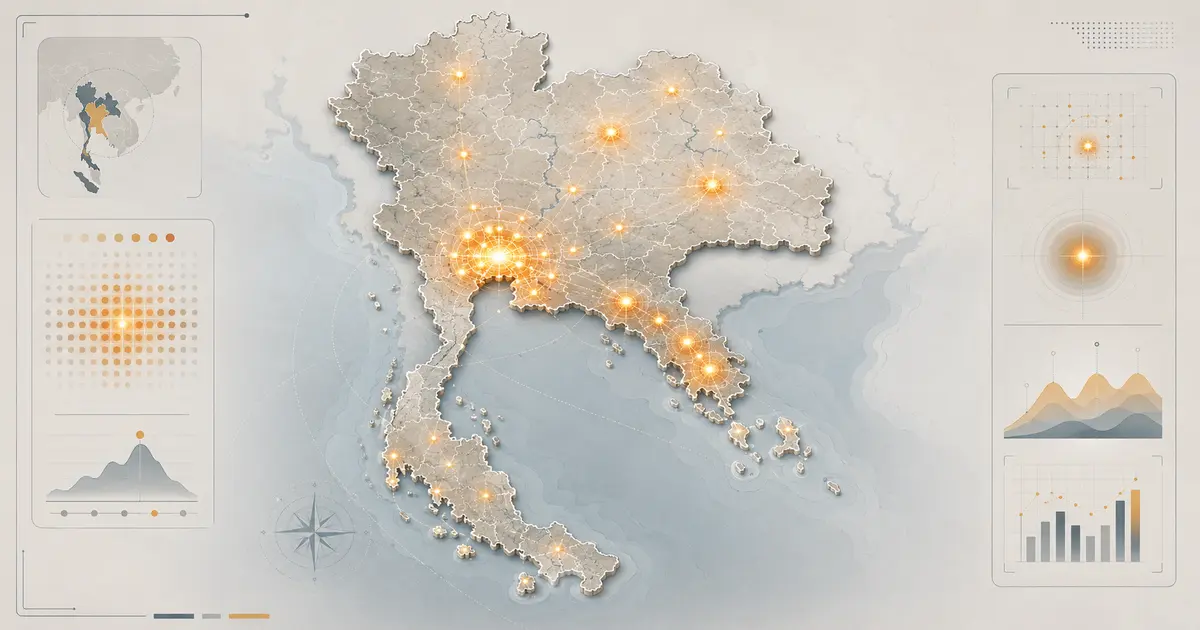
There is no official "Buddhist Lent property index" published by the Land Department. The slowdown has to be read indirectly from three datasets: residential transfer volumes, bank and mortgage conditions, and developer-launch behavior. REIC's recent market releases show a weak base before the holiday period even begins. In 2025, nationwide residential transfers were already down year on year, and REIC expected 2026 to remain soft rather than snap back into a broad recovery. That matters because a cultural slowdown has more impact when the underlying market is already cautious.
REIC's first-half 2025 figures showed Q2 transfers improving from Q1, but still falling sharply versus the same period a year earlier. In simple buyer language, Q2 often gets the benefit of pre-rainy-season urgency and government stimulus timing, while Q3 has to fight school breaks, monsoon travel, bank caution, and the Buddhist Lent pause. REIC also projected nationwide residential transfers at about 320,200 units in 2026 after a weak 2025, a small further decline rather than a rebound.
Foreign condo data points in the same direction. REIC's 2025 foreign-condominium transfer analysis showed volume resilience in some quarters but pressure on value and buyer mix, especially where Chinese demand became more cautious. That does not mean foreign buyers vanish during Buddhist Lent. It means the market becomes more segmented. Cash buyers in prime Bangkok or resort locations can still transact. Marginal domestic mortgage buyers, local sellers who need bank coordination, and developer teams clearing mid-market inventory tend to move more slowly.
The banking side supports the same reading. Bank of Thailand economic releases through 2025 and early 2026 repeatedly describe soft real-estate demand, weaker new mortgage approvals, cautious lenders, and a property sector that still needed policy support. Even when LTV easing or fee reductions help sentiment, they do not remove the document bottleneck. If a bank credit committee, branch officer, juristic office, seller, buyer, and Land Office all need to coordinate around a holiday sequence, the slowest party sets the pace.
Key takeaway
The Buddhist Lent window is not a crash signal. It is a liquidity and response-time signal. Inventory remains online, but offer counters, document checks, loan approvals, and transfer bookings become less predictable.
Why Foreign Buyers Get It Wrong
The common foreign-buyer mistake is the phrase "low season equals bargain." In Thailand, low season often means fewer competing buyers, but it can also mean fewer empowered counterparties. The seller may be travelling. The agent may be covering three colleagues. The developer may have paused campaign spending. The juristic office may not rush a foreign-quota certificate. Your lawyer may wait for the Land Office to confirm a realistic transfer date before red-lining the final contract.
That creates a trap. A buyer sees silence and assumes weakness. Sometimes it is weakness. Often it is just Thai administrative drag. If you respond by pushing an aggressive deadline, the other side may simply stop prioritising you. If you read the quiet correctly, you use the period to remove friction: confirm foreign quota, verify title, inspect common-area maintenance, check sinking-fund balances, review building insurance, and line up the FET or bank certificate that a foreign condo buyer will need.
The second mistake is treating every segment the same. A Bangkok CBD resale condo owned by an offshore seller, a Pattaya foreign-quota studio, a Phuket leasehold villa, and a Thai-owned low-rise house with a domestic mortgage chain do not slow for the same reason. For a foreign freehold condo buyer, the legal questions usually centre on the Condominium Act's 49% foreign ownership cap, foreign-currency evidence, title transfer, and building documentation. For a villa or land-adjacent structure, the questions are usually leasehold, usufruct, superficies, company risk, inheritance, and exit liquidity.
The third mistake is trying to "win" Buddhist Lent with price alone. The better win is certainty. A seller who receives two offers in August may prefer the buyer who has proof of funds, clean foreign-currency paperwork, a lawyer ready to act, and a realistic transfer timetable over the buyer who offers slightly more but needs a vague bank process. This is especially true in older condos where foreign quota is tight, or in buildings where the seller knows that a failed transfer can waste weeks.
What Actually Slows Down and What Does Not
Thailand's property market does not shut down for Buddhist Lent. It changes shape. Search traffic may continue. Agents will still answer messages. Developers will still show units. Renters still need homes. What changes is the speed and confidence of the formal transaction chain.
| Market function | What happens in late July to October | Buyer tactic |
|---|---|---|
| Land Office transfer | Public-holiday closure, backlog, harder booking coordination, slower document corrections. | Avoid final transfer in the 28-31 July cluster. Book early August only if every document is already clean. |
| Developer launches | Major splash campaigns are often softer; inventory-clearance offers may continue quietly. | Ask for written promotion validity, transfer-fee treatment, furniture inclusions, and cancellation terms. |
| Bank approvals | Cautious credit environment plus holiday staffing can stretch approvals and cashier's cheque timing. | For financed deals, finish approval before late July. For cash deals, prepare proof of funds and FET paperwork. |
| Rental market | Less affected in Bangkok work districts; seasonal resort demand depends more on weather and flight patterns. | Do not assume purchase sluggishness equals rental weakness. Underwrite rent separately. |
| Resale listings | Listings remain available, but seller response and document retrieval can slow. | Use the lull for due diligence, not emotional bidding. Set clear response windows without forcing impossible transfer dates. |
The mechanics matter most when a buyer is already near exchange or transfer. A casual viewing in August is easy. A same-week foreign condo transfer after an incomplete FET certificate is not. A developer reservation can be paid online. A title transfer still needs signatures, documents, fee calculations, and an available official process.
There is also a social dimension that foreign buyers underweight. Khao Phansa begins a merit-making season. Some Thai families avoid major celebratory events during sensitive religious periods. Some owners are less responsive because they are travelling to home provinces or temples. This is not a legal prohibition on property buying. It is a cultural drag on urgency, especially for discretionary decisions.
Operationally, the strongest foreign-buyer strategy is to separate negotiation, due diligence, and signing into the right windows. Treat June and early July as your negotiation window. Treat late July through September as your verification window. Treat October and November as your clean-signing window if the seller is not under time pressure.
By mid-July, you should know the building, quota status, seller identity, expected taxes and fees, likely transfer date, and whether the seller's documents are complete. If you are buying a condo, ask for the juristic office's current foreign-quota confirmation before you over-negotiate. A bargain that cannot transfer to a foreign name is not a bargain.
Cash buyers have a particular advantage in this window. In a market where domestic mortgage approvals are cautious and developers are clearing stock selectively, clean funds can matter more than a theatrical low offer. But clean funds still have to be documented. For a foreign condo purchase, the bank evidence of foreign-currency remittance should be arranged before the transfer appointment, not discovered on the morning of transfer.
Existing owners should use the same period as an annual file review. Visa, TM30, tax, insurance, juristic, and rental-income records are easier to repair during a quiet market than during a resale deadline.
That is the practical slowdown: fewer clean handoffs, not fewer listings. The buyer who understands that distinction can stay active while still refusing rushed paperwork, vague promises, missing bank evidence, unsigned fee splits, incomplete juristic letters, unclear taxes, and holiday-week transfer dates that nobody has truly confirmed in writing.
The Buyer's Tactical Playbook
Before Asalha Bucha: shortlist hard. Your goal is not to see every possible unit. Your goal is to reduce the field to two or three properties that can actually transfer, finance, renovate, and exit cleanly.
During Buddhist Lent: do boring work. Have your lawyer review the title deed, sale agreement, seller authority, encumbrances, maintenance-fee arrears, sinking-fund obligations, and building rules. For older units, commission an inspection and price the refurbishment realistically. BaanRow's property refurbishment ROI guide is useful here because many "discounted" resale condos only look cheap before you cost air-conditioning, cabinetry, waterproofing, electrical work, and furniture replacement.
After Khao Phansa: re-open negotiation with evidence, not pressure. If the inspection found repairs, quantify them. If bank approval is delayed, reset the timetable. If the seller has gone quiet, ask whether an October transfer date works better than an August rush. A calm buyer often gets better terms than an impatient one because Thai sellers and agents value transactions that will not collapse at the counter.
Owners who already hold Thai property should also match their documents against BaanRow's foreign-owner annual compliance calendar. Many property problems are caused by good purchases that are poorly administered after completion.
2026 Dates, Checklist, and Internal Links
Use the following 2026 transaction calendar as the practical version, not the tourist version:
- Tuesday 28 July 2026: H.M. King Maha Vajiralongkorn's Birthday. Treat as a closed or disrupted government and banking day.
- Wednesday 29 July 2026: Asalha Bucha Day. Bank of Thailand lists this as a financial-institution holiday.
- Thursday 30 July 2026: Khao Phansa, or Buddhist Lent Day. Government-office and local-office planning should assume closure or practical disruption.
- Friday 31 July 2026: nominally a working day, but likely a backlog day. Avoid first-choice transfer scheduling unless all parties confirm in writing.
- October 2026: Buddhist Lent ends around early October, and the post-rains market often becomes easier for signing, handover, and developer campaigns.
10-point buyer checklist
- Confirm the exact Land Office transfer date before paying a non-refundable deposit.
- Ask the juristic office for current foreign-quota status if buying a condo.
- Prepare foreign-currency remittance evidence before transfer week.
- Check seller authority, ID, marriage-consent issues, and power-of-attorney wording.
- Review maintenance-fee arrears, sinking-fund balance, and pending building assessments.
- Inspect water damage, balcony drainage, air-conditioning age, electrical panels, and common-area condition.
- Get all developer promotions, furniture packages, and fee splits in writing.
- Underwrite rental income separately from purchase-season weakness.
- Keep visa, TM30, tax, and insurance documents in one annual compliance file.
- Use October and November for clean signing if July to September paperwork is incomplete.
The best way to read Buddhist Lent is neither fear nor bargain hunting. It is transaction choreography. If you need a fast closing, finish the hard work before late July. If you want leverage, use the quiet months to build certainty. If you are unsure whether a renovation-heavy unit is really cheaper, compare it against refurbishment costs before you negotiate. And if you already own in Thailand, make the same period your annual compliance review rather than waiting for a document problem to appear at resale.
Sources & References
Verified sources note: every reference below links to the source used for date, legal, market, banking, or cultural context.
- Bank of Thailand: Financial Institutions Holidays 2026 - official bank-holiday list showing 28 July King's Birthday and 29 July Asalha Bucha.
- Thai PBS: 2026 official holiday calendar - Thai-language holiday explainer listing 30 July 2026 as Khao Phansa.
- TAT Newsroom: Khao Phansa and Buddhist Lent - cultural background on Buddhist Lent, temple observance, and candle festivals.
- Tourism Authority of Thailand: Festivals - official tourism context for Khao Phansa and Thai faith-based festivals.
- REIC: First-half 2025 residential transfer slowdown - Thai residential transfer data showing weak year-on-year demand.
- REIC: 2025 and 2026 transfer forecast - forecast for nationwide residential transfers into 2026.
- REIC foreign condominium transfer analysis via TerraBKK - English summary of REIC's 2025 foreign-condominium ownership transfer situation.
- Bank of Thailand: July 2025 economic press release PDF - real-estate sector slowdown and mortgage-approval context.
- Bank of Thailand: Banking Sector Quarterly Brief Q4 2025 - banking-system and credit-risk context.
- Department of Lands: Land and condominium information for foreigners - official Land Department foreign-ownership resource hub.
- Department of Lands English guide - public-service guide including condominium ownership and registration context.
- Siam Legal Law Library: Condominium Act ownership sections - English reference for foreign condo ownership and the 49% quota.
- CBRE: 2026 Thailand Real Estate Market Outlook - consultancy outlook on 2026 residential and condominium conditions.
- Knight Frank: Bangkok Condominium Market Q2 2025 - condominium-market research context.
- Reuters via Investing.com: BOT LTV easing for property sector - policy context for a weak housing market and lending conditions.
This article was researched using 15 verified sources and written with AI assistance. Last updated: 26 May 2026.