The Bangkok Foreign-Quota Squeeze Is Real: Why 'Foreign-Friendly' Top Condos Are Mostly Capped Already (2026)
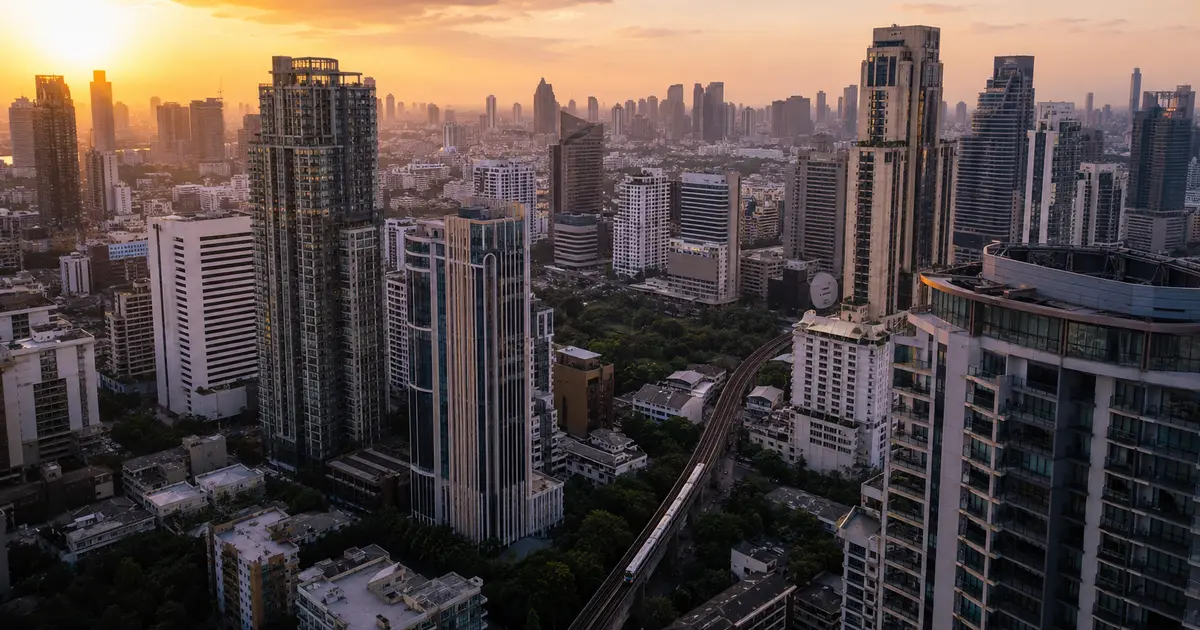
The headline version is simple: the best-known central Bangkok condos are more foreign-friendly in marketing than they are in remaining quota. For a buyer searching Sukhumvit, Sathorn, Asoke, Thonglor, or Phrom Phong in 2026, foreign quota is often the first constraint, not view, floor, decoration, or negotiation.
That sounds odd because Bangkok still has many condos for sale. Search Bangkok condo listings and you'll see thousands of units across the city. The squeeze is not citywide supply. The squeeze is in the narrow slice foreign buyers keep circling: branded, BTS-linked, walkable, central, ready-to-transfer freehold units in buildings with a track record.
Key Takeaway
Treat "freehold available" as a marketing phrase until the building's current foreign-quota certificate, Land Office transfer position, and payment documentation all line up. In 2026, the practical question is not whether foreigners can own Thai condos. They can. The question is whether this building still has legal room for your name on the title.
What the 49% Foreign-Quota Actually Means in Law
Thailand's Condominium Act allows qualified foreign buyers to own condominium units in freehold, but the foreign-owned portion of a registered condominium project cannot exceed 49% of the aggregate unit area. The key point is area, not a casual headcount of units. A project with many large foreign-owned units can use quota faster than a buyer expects.
Government guidance also requires a buyer to obtain a certificate from the condominium juristic person confirming the foreign proportion. That certificate is submitted at the Land Department when ownership is transferred. If the transfer would push the project above the limit, the officer can refuse registration.
This is why the buying process in BaanRow's foreigner condo guide puts legal eligibility before emotional commitment. A reservation form, deposit receipt, or agent chat message doesn't create quota. Only the current project register and Land Department transfer position matter at completion.
Foreign buyers also need clean foreign-currency evidence. The Bank of Thailand exchange-control framework and normal Land Office practice mean purchase funds should be remitted into Thailand through the banking system with documentation that ties the money to the condo purchase. A buyer who gets the quota right but mishandles the money trail can still create a transfer problem.
| 100-unit example | Simple count | Practical meaning |
|---|---|---|
| Total registered unit area | 10,000 sqm | The legal base is area, not marketing inventory. |
| Maximum foreign-owned area | 4,900 sqm | Large units can consume quota quickly. |
| Foreign-owned area today | 4,820 sqm | A 90 sqm sale to a foreigner may fail, even if several Thai-quota units are listed. |
| Room left | 80 sqm | One small transfer can close the door for the next buyer. |
The Saturation Story in Prime Bangkok
The contrarian claim is not that every Bangkok condominium is capped. Outer Bangkok, older local buildings, and Thai-buyer projects often have unused foreign quota. The capped-feeling market is the buyer shortlist: top central buildings near BTS and MRT stations, especially where agents promote "foreign freehold" in English, Chinese, Japanese, Korean, and Russian.
Public market data supports the demand side. REIC transfer records show foreign condominium transfers remain a major part of Thailand's condo market. Nation Thailand reported that foreign buyers took 23.5% of Bangkok and surrounding-area developer sales in 2025, with foreign demand far more concentrated in prime and transit-linked locations than the citywide average suggests.
Brokerage research points in the same direction. Knight Frank describes prime and super-prime Bangkok supply as limited and price-resilient relative to the wider condominium market. CBRE and Colliers both describe a slower broad market, tighter lending, and selective demand for central, ready-to-move stock. That combination creates the quota squeeze: Thai demand softens in the mass market while foreign demand keeps clustering around a small number of trusted central buildings.
BaanRow's live inventory view should be read the same way. Listings can tell you which buildings foreign buyers keep asking about, which units are advertised as freehold, and where resale prices cluster. Listings do not prove legal quota. Use BaanRow's Bangkok area page as a shortlist tool, then force the quota proof before a deposit becomes non-refundable.
The practical 2026 pattern is clear. A buyer can still find Bangkok freehold. A buyer can't assume that the best-known building on a foreign buyer's shortlist has fresh quota waiting. The more a building feels obvious, safe, and internationally liquid, the more likely quota becomes a gate.
Illustrative Central Bangkok Quota Snapshot
The table below is intentionally anonymized. It shows the type of status screen a serious buyer should build for top central Bangkok condos. It does not name projects or claim exact percentages without a current Land Department or juristic-person document for that specific building.
| Building label | District | Illustrative foreign-quota status | Source / note |
|---|---|---|---|
| Tier-A Sukhumvit BTS building | Phrom Phong / Thonglor | Near cap, 45%-49% watch zone | Verify by juristic certificate and Land Office before signing. |
| Tier-A Asoke interchange building | Asoke / Nana | Functionally scarce, buyer waitlist likely | Foreign buyer demand is concentrated around BTS and MRT access. |
| Sathorn flagship development | Sathorn / Silom | Near cap for best stacks, check unit area | Area calculation can block a large unit even when a smaller unit might transfer. |
| Wireless / Langsuan luxury tower | Lumphini / Chit Lom | High foreign interest, limited resale float | Cross-check with current transfer history and owner register. |
| Riverside branded residence | Charoen Krung / Sathorn edge | Project-specific, can swing by phase | Check whether towers are separately registered condominium projects. |
A buyer who wants named proof should ask the seller or agent for the current foreign-quota certificate, then have a lawyer confirm with the building office and Land Office. If the answer changes between offer and transfer, your contract needs a quota condition. Without it, the buyer carries the risk.
How To Verify Quota Before You Sign
Verification has to happen before money becomes hard to recover. Start with the unit title details, building registration, unit area, seller name, and seller nationality. Then ask the condominium juristic person for the current foreign-owned proportion and written confirmation that your proposed transfer can fit inside the remaining quota.
Next, ask your lawyer to verify the same point with the Land Office handling that condominium. The Land Office is where the transfer either happens or fails. A building office letter is critical, but it shouldn't be your only source when the project sits near 49%.
Put the result into the sale contract. A clean clause says the deposit is refundable if the buyer cannot register freehold foreign ownership due to foreign-quota unavailability, seller title issues, or missing documents outside the buyer's control. If the seller refuses that clause, price the deal as risky.
Payment documentation deserves the same discipline. Send purchase funds in foreign currency, keep bank evidence, and make the transfer purpose clear. The details sit beside quota in the closing file, much like transfer fees, specific business tax, withholding tax, agent fee, and sinking-fund charges described in BaanRow's hidden-costs guide.
Warning
Don't verify quota only once at viewing stage. A near-cap building can change after another foreign buyer transfers. Reconfirm before signing, before sending the main payment, and again before the Land Office appointment.
The Workaround Structures, Compared Honestly
When foreign quota is full, the market doesn't stop. It shifts into workarounds. Some are clean but less liquid. Some are legal only when the facts are real. Some are sold casually in ways that create legal and exit risk.
The safest comparison starts with the buyer's true goal. If you need a registered foreign freehold title, don't pretend a company or lease gives the same thing. If you care more about use, location, and rental income than title purity, leasehold can be rational. The better discussion is covered in BaanRow's ownership-vehicle comparison and Thailand leasehold guide.
| Structure | Setup cost | Ongoing cost | Exit liquidity | Legal risk |
|---|---|---|---|---|
| Freehold primary foreign quota | Low to normal closing cost | Common fees, sinking fund, tax on sale | Best, if building stays liquid | Low when quota and FET documents are clean |
| Thai-company holding | Medium to high legal and setup fees | Accounting, filings, tax, director upkeep | Mixed, buyer diligence is harder | High if Thai shareholders are nominees |
| 30+30+30 leasehold | Medium, depends on registration and drafting | Lower owner burden, but renewal terms matter | Weaker than freehold | Medium, renewal promises need careful review |
| Secondary-market freehold purchase | Normal closing cost plus possible quota premium | Common fees, taxes, repairs | Good in prime buildings | Low to medium, depends on quota proof at transfer |
| Quota waitlist | Low direct cost, high opportunity cost | None until purchase | Uncertain, timing controls the deal | Low if no non-refundable deposit is trapped |
The Thai-company row needs special care in 2026. Baker McKenzie has flagged new nominee-arrangement measures, and Thai media has reported stricter scrutiny of foreign-linked companies in property-heavy sectors. A real operating company with real Thai investment is different from a shell used to make a foreign buyer feel like an owner.
What You Pay Extra for Secondary-Market Freehold
Quota scarcity changes price behavior. A Thai-quota unit and a foreign-quota unit in the same building are not always economically identical to a foreign buyer. If the building is capped, a unit that can transfer into a foreign name has a narrower but more urgent buyer pool.
The premium isn't a universal percentage. It depends on building reputation, unit size, view, transfer tax split, lease alternatives, and how many similar units are for sale. In prime Bangkok, the premium often appears indirectly: less seller discount, faster serious offers, weaker room for repair credits, or insistence on a clean deposit schedule.
Run the math before treating the premium as unfair. A 3% price premium on a truly transferable foreign freehold unit may be cheaper than company setup, years of accounting, legal review, exit friction, and buyer distrust later. Use the BaanRow transfer-fee calculator to model closing costs, then compare the all-in number against leasehold and Thai-company scenarios.
Location still matters. The same quota pressure doesn't apply equally across Bangkok. Pair the quota check with BaanRow's Bangkok neighborhood ranking so you don't pay a quota premium in a building or micro-location with weak resale demand.
Common Quota Traps Agents Won't Mention
The first trap is treating "foreign quota unit" as a permanent label. Quota is tied to the project's current foreign-owned area. A unit owned by a Thai seller can transfer to a foreigner only if the building has room at the time of transfer. A foreign-owned unit sold to a Thai buyer can release quota back to the project.
The second trap is relying on old screenshots. A project that was 46% foreign-owned last month may be at 49% after a few large transfers. Prime buildings often move in small bursts when sellers accept offers at the same time.
The third trap is ignoring unit area. Buyers talk about "49 units out of 100" because it's easy. The law is based on area. If your target unit is a large corner residence, it may need more quota than the last available sliver can support.
Common Quota Trap
"Agent says foreign-quota available" is not enough. Red flags include no dated juristic certificate, no refund clause, pressure to pay before Land Office confirmation, a sudden switch to Thai-company ownership, or a claim that the developer can "reserve" quota without showing the project register.
The fourth trap is treating lease renewals as identical to freehold. A registered 30-year lease can be useful, but promised renewals require legal review and may not bind future parties the way a buyer assumes. Leasehold is a structure, not a magic way to recreate freehold.
The fifth trap is mixing lifestyle and investment logic. A unit that is perfect for your own use can still have weak resale liquidity if the foreign-buyer exit route is unclear. Bangkok rewards patience, but it punishes vague paperwork.
What This Means for Your 2026 Buying Strategy
Start every prime Bangkok search with two tracks. Track one is the property: building, unit, view, price, rent, maintenance, flood risk, developer history, and neighborhood fit. Track two is the legal route: quota, title, seller capacity, payment evidence, tax split, and exit path.
If your goal is foreign freehold, make quota a condition of every serious offer. Ask for the dated juristic certificate before deposit, legal verification before the sale agreement, and a final check before transfer. Build the refund clause into the contract, then keep your bank evidence clean.
If the building is capped, decide fast whether you still want it. A Thai-company route should be used only when the company is real and the legal facts support it. Leasehold should be priced as leasehold. A waitlist should not trap serious capital unless the seller gives clear protection.
For many buyers, the better answer is not to force the famous building. Shift the search by two BTS stops, compare older low-density buildings, or widen from one micro-location to a stronger value band. BaanRow's property search is useful here because the best risk-adjusted purchase may sit outside the first Instagram shortlist.
This isn't an anti-Bangkok argument. It's an anti-hype argument. Bangkok remains one of Asia's most usable foreign-buyer condo markets, but the usable part is not the same as unlimited quota in the best buildings. Verify first, price the workaround honestly, and don't let "foreign-friendly" replace proof.
Sources & References
- Thailand.go.th, Government guidance on foreign condominium ownership and the juristic-person quota certificate.
- Office of the Council of State / Krisdika, Thai legal source for the Condominium Act framework.
- Department of Lands Thailand, Official DOL material on foreign ownership of land and condominium units.
- Bank of Thailand, Exchange-control rules relevant to foreign-currency inflows and transaction evidence.
- Knight Frank Research, Bangkok condominium market research for 2025 supply and demand conditions.
- Knight Frank Thailand PDF, Bangkok condominium market Q1 2025 research report.
- CBRE Bangkok Overall Figures Q4 2025, Bangkok residential market slowdown and lending context.
- Colliers Thailand, Bangkok condominium market Q4 2025 research.
- Real Estate Information Center, Foreign condominium transfer reporting format and Land Department data basis.
- Nation Thailand, 2026 report on foreign buyer share in Bangkok condominium sales and location concentration.
- Bangkok Post Property, Coverage of debate around increasing the foreign condominium ownership quota.
- Siam Legal, Foreign-currency requirements for foreign buyers purchasing Thai condominiums.
- Baker McKenzie, Thailand nominee-arrangement measures and company-registration risk context.
- Nation Thailand, Nominee crackdown coverage affecting property-related company structures.
- BaanRow live Bangkok condo inventory, Current listing screen used for buyer-shortlist context, not a substitute for Land Office quota verification.
This article was researched using web sources (15 verified) and written with AI assistance. Last updated: 2026-05-23.