Thailand Land Title Deeds Decoded: Chanote, Nor Sor 3, and the Sor Por Kor Trap (2026 Buyer Guide)
Why Land Titles Decide Whether You Actually Own Anything
In Thailand, the document attached to a piece of land is not a formality. It decides whether you have full ownership, a temporary possessory right, or a piece of paper that grants you almost nothing at all. Two plots of land sitting next to each other can look identical on the ground, share the same view of the same rice field, and yet one is freely transferrable freehold while the other can never be legally sold — only physically handed over with zero protection if the next owner challenges your claim.
The Thai land system is governed primarily by the Land Code Act B.E. 2497 (1954), with later amendments and a layer of agrarian and environmental rules on top. Under Section 86 of that Code, land ownership in Thailand is restricted to Thai nationals unless a specific treaty or law provides otherwise — which is the main reason this entire topic matters intensely for foreign buyers, but also for any Thai buyer who does not want to inherit somebody else's title dispute.
Key Takeaway
There is exactly one Thai land title that gives clean, transferrable, mortgageable, foreign-leasable freehold ownership: Chanote (Nor Sor 4 Jor). Everything below it carries some combination of unsurveyed boundaries, transfer restrictions, or outright bans on commercial sale. If you only remember one thing from this guide, remember that.
This guide walks through the five tiers of Thai land documents that you are most likely to encounter, what each one actually grants, the specific traps each tier hides, and the verification steps that prevent the most common forgery and "upgrade dream" scams that have been quietly draining buyers since the 1970s.
The Thai Title Ladder — Five Tiers, Wildly Different Rights
Thai land documents form a ladder, not a list. The higher you go, the closer the document is to full freehold ownership in the international sense. The lower you go, the more the document resembles a tax receipt or a notification slip than a deed. Most international and Thai legal commentary collapses this into a clean five-tier model that maps neatly onto the Land Department's classification system.
| Tier | Title | Boundary Survey | Transferrable | Mortgage / Lease Registerable | Foreign-Lease Safe |
|---|---|---|---|---|---|
| 1 | Chanote (Nor Sor 4 Jor) | GPS-surveyed | Yes — full freehold | Yes | Yes |
| 2 | Nor Sor 3 Gor (NS3K) | Aerial-surveyed | Yes | Yes | With caution |
| 3 | Nor Sor 3 (NS3) | No precise survey | Yes, with 30-day notice | Yes | High risk |
| 4 | Sor Kor 1, PBT 5/6 | None | Not via Land Office | No | Avoid |
| 5 | SPK 4-01 (Sor Por Kor) | Reform programme | Cannot be sold | No | Illegal |
Knight Frank Thailand and CBRE Thailand both single out the same dividing line in their buyer guides: the first two tiers (Chanote and Nor Sor 3 Gor) are the only documents where a foreigner's 30-year registered lease, usufruct, superficies, or condominium freehold purchase rests on solid statutory ground. Tiers three through five exist for historical and agrarian reasons that are useful to Thais who already live and farm the land, but they are not investment instruments. Treating them as such is the single most expensive mistake foreign buyers continue to make in 2026.
If you are running yield numbers, see our rental yield calculator — but be aware that yield projections only make sense on tier-1 or carefully-vetted tier-2 land. There is no yield on a plot you cannot legally transfer.
Chanote (Nor Sor 4 Jor) — The Only Title You Want
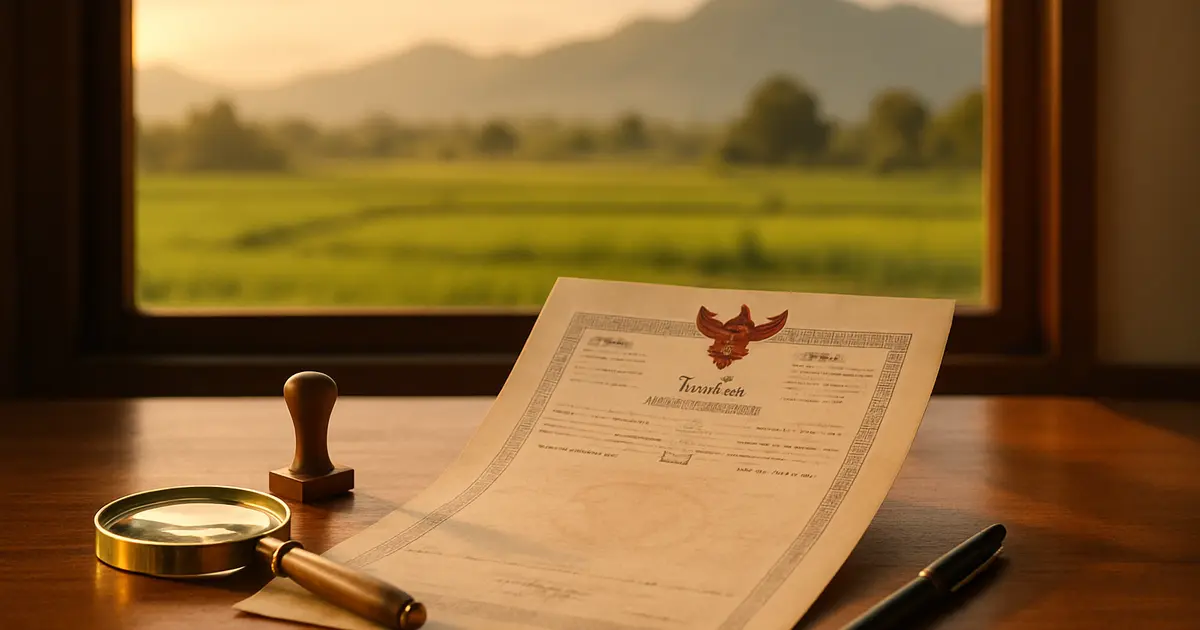
A Chanote, formally Nor Sor 4 Jor, is the highest land title issued by the Thai Department of Lands. It is the closest thing Thailand has to Western-style freehold: full ownership, clean transfer rights, registrable mortgages and leases, and GPS-surveyed boundaries marked physically on the ground with concrete posts. The certificate bears a Red Garuda emblem — the visual shortcut Thai conveyancing lawyers use to confirm at a glance that a document is the gold-standard tier and not one of its lower-tier cousins.
Section 4 bis of the Land Code requires any transfer of Chanote land to be done by written deed registered with the relevant Land Office. That registration is the moment legal ownership moves from seller to buyer — not the moment money changes hands and not the moment a contract is signed at the lawyer's table. Sellers who insist on side agreements, parallel paperwork, or "we will register next month" are signalling something is wrong with the title or with their position to transfer it.
What Chanote actually gives you
Surveyed boundaries with concrete markers, ability to register a mortgage, ability to register a long-term lease (up to 30 years renewable in practice for foreigners), ability to register usufruct or superficies, and a deed format that is auditable against the Land Office's central registry via a Tor Dor 15 search.
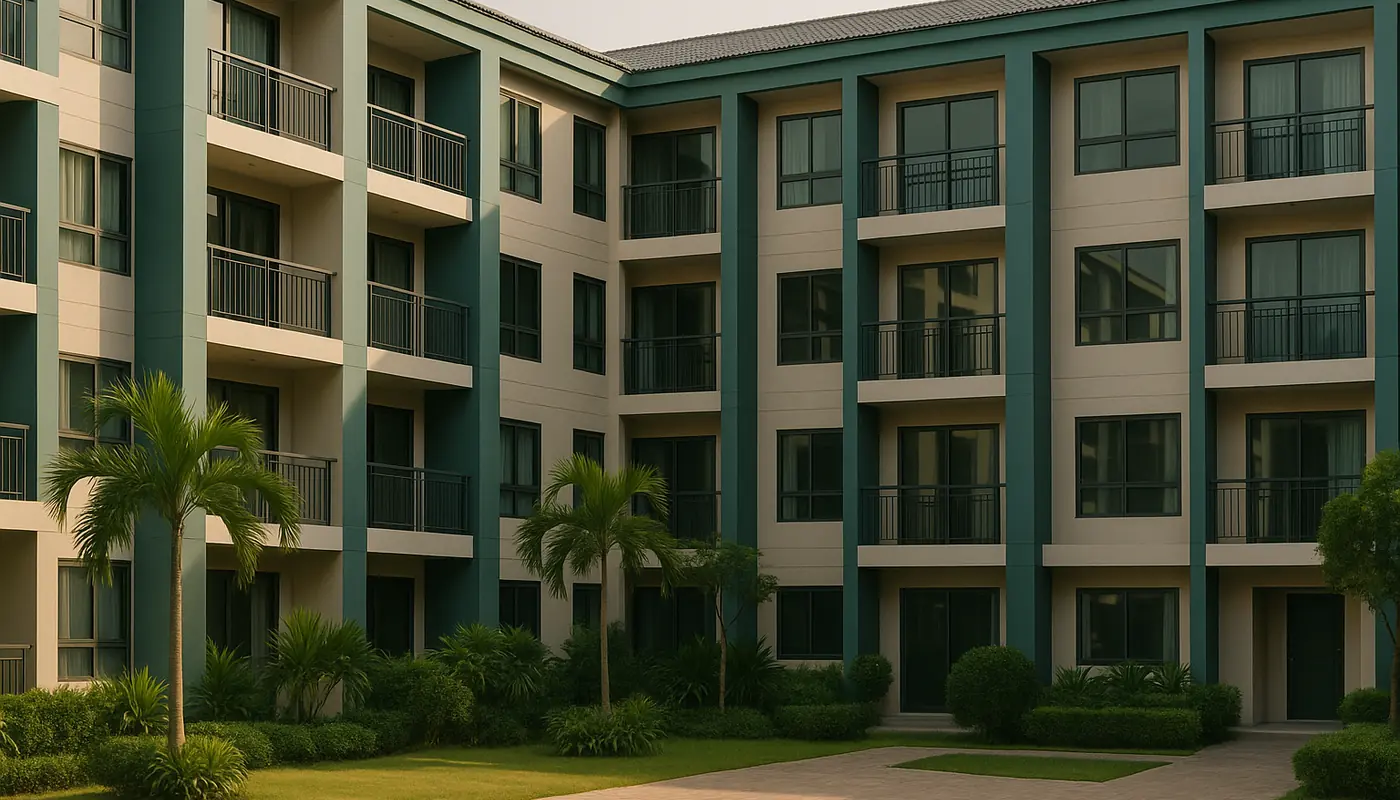
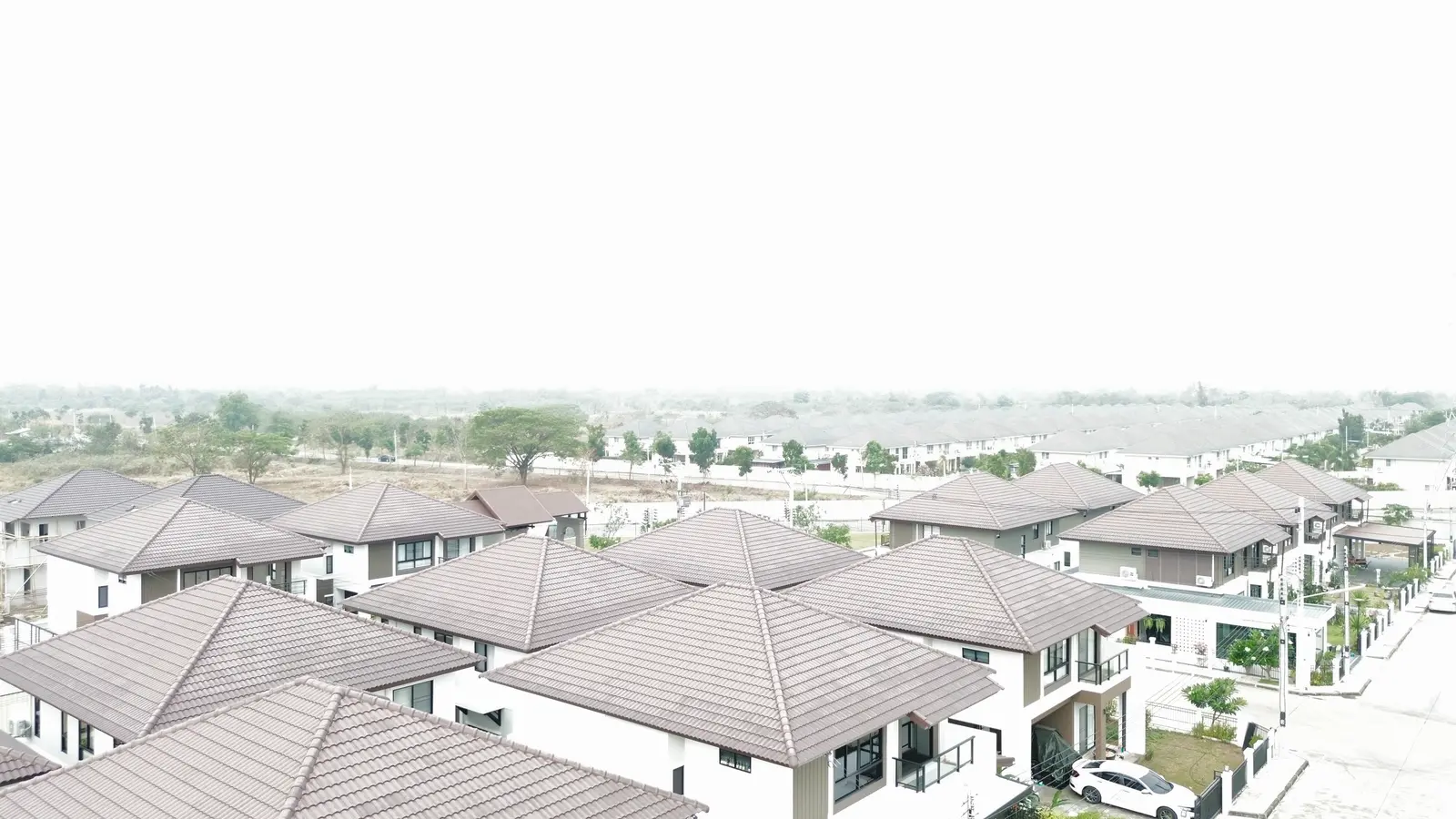
Most new condominium and housing-estate developments in 2026 are built on Chanote land precisely because banks will not lend against weaker titles and developers will not list off-plan units to international buyers on anything else. If you are buying a condo, the building must sit on Chanote land for a foreign-freehold quota unit to be legally clean — see our RTM vs off-plan analysis for the 2026 inventory picture.
Nor Sor 3 Gor — The "Almost-Chanote" With a Catch
Nor Sor 3 Gor — sometimes written NS3K, NS3G, or in Thai หนังสือรับรองการทำประโยชน์ — is a confirmed land-use certificate. Boundaries have been aerially surveyed by the Land Department and are reasonably reliable, although they were not measured by physical ground survey to Chanote precision. Owners can sell, mortgage, register a long-term lease, and grant a usufruct or superficies on Nor Sor 3 Gor land in the same way they could on Chanote, with the same Land Office registration mechanism.
The "catch" is twofold. First, the boundaries are aerially surveyed rather than ground-marked, which leaves room for genuine disputes if a neighbour cleared a strip of land before the aerial photography was done. Second, while the title can in theory be upgraded to Chanote through a formal land survey request, this upgrade requires Land Department resources that have been thinly stretched for decades; the upgrade is not automatic and not always granted.
For foreign buyers structuring a 30-year registered lease, Nor Sor 3 Gor is acceptable but requires extra due diligence: physical boundary walk-through, neighbour interviews if practical, and a Tor Dor 15 search showing no pending boundary objections. The cost of that diligence is small relative to the cost of a 30-year lease over disputed land.
Nor Sor 3 — Possession Without Boundaries
Nor Sor 3 — the version without the "Gor" suffix — is a certificate of possession on land that has never been formally measured by the Land Department. Boundaries are described relative to neighbouring plots, terrain features, or rough markers. Selling Nor Sor 3 land legally requires a 30-day public notice period precisely because the lack of precise boundaries means third parties might surface with competing claims during that window.
You can still mortgage, lease, and transfer Nor Sor 3 land through the Land Office, which technically puts it above the lower tiers. But it is also where the boundary-fraud cases concentrate. Pattaya, Hua Hin, Krabi, and Phuket all have well-known case histories of Nor Sor 3 plots being sold with boundaries that the seller could not actually defend, leaving the buyer to fight a multi-year possession dispute against neighbours who had been using "their" land for two generations.
When to walk away from a Nor Sor 3
The seller cannot show a Tor Dor 15 search, the boundary description references features that no longer exist on the ground, neighbours cannot be reached for confirmation, or the price is suspiciously below comparable Chanote plots in the same district. Any one of those is a yellow flag. Two or more is a walk-away.
Sor Kor 1, Por Bor Tor 5/6 — Tax Receipts, Not Titles
Sor Kor 1 (SK1) is a notification form of land possession introduced under earlier land-reform laws. No new SK1 forms have been issued since 1972, and crucially, it has not been possible to upgrade an SK1 directly to a Nor Sor or Chanote since 2010. Holdings still exist — typically passed through families — but they sit outside the modern transfer system. SK1 cannot be transferred through the Land Office registration mechanism. Any "sale" of SK1 land is at best a physical handover with zero legal protection if the next claimant disputes it.
Por Bor Tor 5 (PBT5) and Por Bor Tor 6 (PBT6) are even weaker. They are evidence that the occupier of a plot has been issued a tax number and has been paying tax on use of the land. They confer no ownership right at all. Historically they were used to establish occupancy so that the holder could later apply for a Sor Kor 1, but with SK1 issuance frozen in 1972, that pathway is closed. PBT5 and PBT6 in 2026 are essentially tax receipts dressed up as title documents.
The most common scam in this tier — repeatedly documented on Koh Pha-Ngan, Koh Samui, and other tourist islands — sells PBT5 or similar tax-receipt land to foreigners with the promise that the title can be "upgraded" to Chanote later. The upgrade is theoretical. In practice it rarely happens. The buyer is left with a tax receipt, no enforceable possession, and no recourse when the original Thai claimant decides to assert ownership or when the local Land Office refuses to entertain an upgrade request.
Anyone offering to sell a PBT5, PBT6, or SK1 plot to a foreign buyer is either misinformed or operating in bad faith. The answer is the same in both cases: walk away.
SPK 4-01 (Sor Por Kor) — The Trap That Has Ruined Foreign Buyers for 30 Years
Sor Por Kor — formally SPK 4-01 — is the most politically charged land document in Thailand. It was created under the Agricultural Land Reform Act to redistribute degraded forest land to landless poor farmers. The title certifies that the holder may occupy and farm the land for agricultural purposes, but with severe restrictions: it cannot be sold, cannot be leased commercially, cannot be mortgaged with private banks, and cannot be transferred to anyone other than qualifying Thai farmers and their heirs.
The political history is a warning by itself. In 1995, accusations that then-agriculture minister Suthep Thaugsuban had directed the granting of Sor Por Kor titles to wealthy and connected people in Phuket brought down the Democrat Party government of Chuan Leekpai. Three decades later, Sor Por Kor controversies continue to surface in Thai media coverage with the same recurring pattern: officially-agrarian land ending up in resort and tourism developments through a chain of nominees, side agreements, and quiet handovers that ignore the reform law's transfer ban.
Warning: Sor Por Kor and foreign buyers
Any transaction that places Sor Por Kor land in the effective control of a foreign buyer — through nominees, lease structures, or company structures — is exposed to nullification. The land reverts to the Thai state or the original allocation. The buyer's investment is unrecoverable. Court orders requiring eviction of unlawful occupants of Sor Por Kor land have been issued repeatedly over the last decade.
The 2024-2025 enforcement wave makes this risk operationally real. Thai authorities announced in 2025 a programme to inspect nearly 47,000 companies across seven provinces, with priority targets including approximately 1,000 companies with foreign shareholders in real estate, tourism, hotels, and e-commerce. A landmark September 2024 Phuket case convicted 23 defendants — including lawyers, accountants, and corporate service providers — who had facilitated nominee structures designed to give foreign investors effective control of Thai-owned land. The pattern that the prosecutors targeted is the same pattern that sells Sor Por Kor plots to foreigners under "lease for life" or "company-owns-land, foreigner-owns-company" pitches.
The lesson for any foreign buyer is simple: if a seller cannot present a Chanote or, at second-best, a Nor Sor 3 Gor with a clean Tor Dor 15 search, do not proceed regardless of how clever the legal wrapper around the deal looks. Our earlier piece on foreign property ownership and the Thai Will trap walks through how nominee structures unwind when an owner dies; the Sor Por Kor problem is the same risk, but with the additional layer of agrarian-reform law making the underlying transaction void from the start.
How Titles Interact With Foreign Ownership Law
Section 86 of the Land Code Act B.E. 2497 restricts land ownership in Thailand to Thai nationals, with extremely narrow exceptions that almost no foreign buyer will ever qualify for. The Land Code does not, however, restrict foreigners from holding registered long-term leases, usufructs, or superficies over land, and it does not restrict foreigners from owning condominium units (which are separate from the underlying land).
This is where the title hierarchy becomes the operational filter. Only Chanote and — with diligence — Nor Sor 3 Gor allow these foreigner-suitable rights to be properly registered at the Land Office. On lower tiers, the underlying land cannot be transferred or encumbered through the official registry, which means any foreigner-targeted rights described in a contract are unenforceable when challenged. The contract may exist in writing. The right does not exist in law.
Three foreigner-suitable structures are commonly used on Chanote land:
- 30-year registered lease, with renewal terms that are commercial in nature rather than legally guaranteed past the first 30-year term;
- Usufruct, granting the foreigner the right to use and enjoy the land and its fruits for life or for a defined period;
- Superficies, granting the foreigner the right to own buildings on land owned by someone else.
For condominiums, the foreigner-freehold mechanism is separate: under the Condominium Act, foreigners may collectively own up to 49% of a building's saleable area in their own names, with the underlying land remaining under the juristic person of the condominium. This is why due diligence on a condominium purchase must always confirm both the building's foreign-quota status and the Chanote underlying the entire project. If the project's land is not Chanote, the foreign-freehold mechanism does not function.
For the all-in cost picture on a Chanote transfer, see our transfer-fee calculator — it lays out the 2% transfer fee, specific business tax or stamp duty, and withholding tax based on the appraised value or sale price.
How to Verify a Chanote Is Real (and Not a Forgery)
Chanote forgery is a real and ongoing problem. Thai Supreme Court decisions document cases where forged Chanote certificates were used as loan collateral or used to "sell" land that the seller did not own — sometimes selling the same plot to multiple buyers in parallel. The verification protocol that Thai conveyancing lawyers and reputable real-estate firms use is straightforward and worth doing in person, not by email.
| Step | What to check | Why it matters |
|---|---|---|
| 1 | Hold the certificate up to a strong light | Real Chanote shows two Garuda watermarks plus "Department of Lands, Ministry of Interior" text, and the corner circles reveal tiny pinholes when backlit |
| 2 | Request a Tor Dor 15 search at the local Land Office | Reveals discrepancies between the certificate held by the seller and the central registry version, including any mortgages, encumbrances, or pending transfer notices |
| 3 | Walk the boundary with the original certificate | Concrete boundary markers on a Chanote plot should align with the survey coordinates printed on the certificate; mismatches indicate either fraud or a survey error that must be resolved before transfer |
| 4 | Verify the seller's identity against the certificate | The name on the Chanote must match the seller's Thai ID; if a company holds the title, request the corporate documents and check the directors' authority to sell |
| 5 | Never accept a photocopy or scanned certificate | Advanced forgeries circulate widely in Thailand's real estate market; the original must be presented for the verification steps above to mean anything |
Reputable Thai law firms include all five steps as standard pre-contract diligence on any Chanote purchase, and CBRE Thailand's buyer guide explicitly singles out the Tor Dor 15 search as the non-negotiable first step before any deposit changes hands. The cost of the search is trivial compared to the cost of being the victim of a parallel-sale forgery.
Pre-Purchase Title Checklist
Print this list. Keep it with you at every site visit. Refuse to proceed if any item cannot be answered with documentary evidence — not a verbal assurance, not a "trust me," not a "we will get that next week."
- The title is Chanote (Nor Sor 4 Jor) or, with extra diligence, Nor Sor 3 Gor;
- The certificate has been verified physically against light for watermarks, Red Garuda emblem, and corner pinholes;
- A Tor Dor 15 search at the local Land Office confirms the seller as the registered owner with no pending encumbrances or transfer notices;
- Boundary markers on the ground match the survey coordinates on the certificate;
- If the seller is a Thai company, corporate documents and director authority have been verified through the Department of Business Development;
- If a condominium, the building's foreign-freehold quota has been confirmed in writing by the juristic person and the underlying land is Chanote;
- If a registered lease, usufruct, or superficies is being granted to a foreign buyer, the underlying land is Chanote or a vetted Nor Sor 3 Gor;
- The transfer fees, specific business tax, withholding tax, and stamp duty have been quantified — use our transfer-fee calculator — and there is written agreement on who pays what.
Bottom line
Buy on Chanote. Verify with a Tor Dor 15. Register the transfer at the Land Office on the same day the money moves. Everything else is either a careful exception (vetted Nor Sor 3 Gor for a registered lease) or a path that experienced Thai-side lawyers will refuse to underwrite for good reason.
For active listings on Chanote land across Bangkok, Phuket, Chiang Mai, and the wider market, browse our property search; every listing on BaanRow includes the land title type and the underlying-land status for condominium projects, so the title-tier check is the first filter rather than the last.
Sources & References
- CBRE Thailand — Thai Land Title Deeds Guide to Property Ownership — Buyer's overview from the largest international real-estate consultancy operating in Thailand
- CBRE Thailand — Thailand Property Ownership Law — Section 86 Land Code restrictions and the structures available to foreign buyers
- Knight Frank Thailand — Property Research Library — Market research and title-related advisory across Thailand's commercial and residential sectors
- ThaiLawOnline — Title Deeds in Thailand: Chanote, Nor Sor 3 Gor, Nor Sor 3, Sor Kor 1, Por Bor Tor 5, SPK 4-01 — Practical legal-firm walkthrough of every title type and the upgrade pathways between them
- ThaiLawOnline — Land Ownership Restriction in Thailand — Law-and-rights summary of Section 86 and the narrow exceptions
- Siam Legal International — Title Deeds in Thailand — Conveyancing guide from a Bangkok-based law firm covering the practical registration steps for each tier
- Benoit & Partners — Chanote in Thailand: Understanding and Securing Full Land Ownership — Detailed legal explainer of the Chanote tier and the Section 4 bis registration requirement
- Benoit & Partners — Land Code in Thailand: Ownership & Legal Rights — Walkthrough of the Land Code Act B.E. 2497 framework
- FAOLEX — Thailand Land Code Promulgating Act, B.E. 2497 (1954) — Full statutory text hosted by the UN Food and Agriculture Organization legal database
- Themis Partner Thailand — What Is a Chanote Title Deed in Thailand? — Recent practitioner guide including the verification protocol
- Bangkok Post — Land Rights Upgrade to Cover 22 Million Rai — Coverage of the government's land-title upgrade programme and the rai-scale of remaining lower-tier holdings
- The Nation — Misuse, Illegal Ownership of Agricultural Land to Be Tackled — Reporting on the enforcement push around agrarian-reform land
- Thailand Construction News — Sor Por Kor Land Continually Courts Controversy — Historical and 2024-2025 context for the SPK 4-01 trap, including the 1995 political scandal
- Benoit & Partners — Foreigner Land Ownership in Thailand 2025 — Full legal guide including the 2025 enforcement inspection programme on 46,918 companies across seven provinces
- Jirawat Law Office — Essential Due Diligence for Foreign Property Buyers in Thailand — Practical due-diligence checklist for foreign buyers including Tor Dor 15 search protocol
- Pulse Real Estate Phuket — Thai Land Title Deeds Explained — Phuket-specific buyer guide with case examples from the island's title disputes
This article was researched using parallel web search across 16 verified primary and secondary sources, including CBRE Thailand, Knight Frank Thailand, the Bangkok Post, The Nation, Benoit & Partners, ThaiLawOnline, Siam Legal International, Themis Partner Thailand, Jirawat Law Office, and the UN FAO legal database hosting the full Land Code Act B.E. 2497. Written with AI assistance. Last updated: 16 May 2026.