Pattaya After the Russian Wave: 2026 Buyer's Market or Falling Knife?
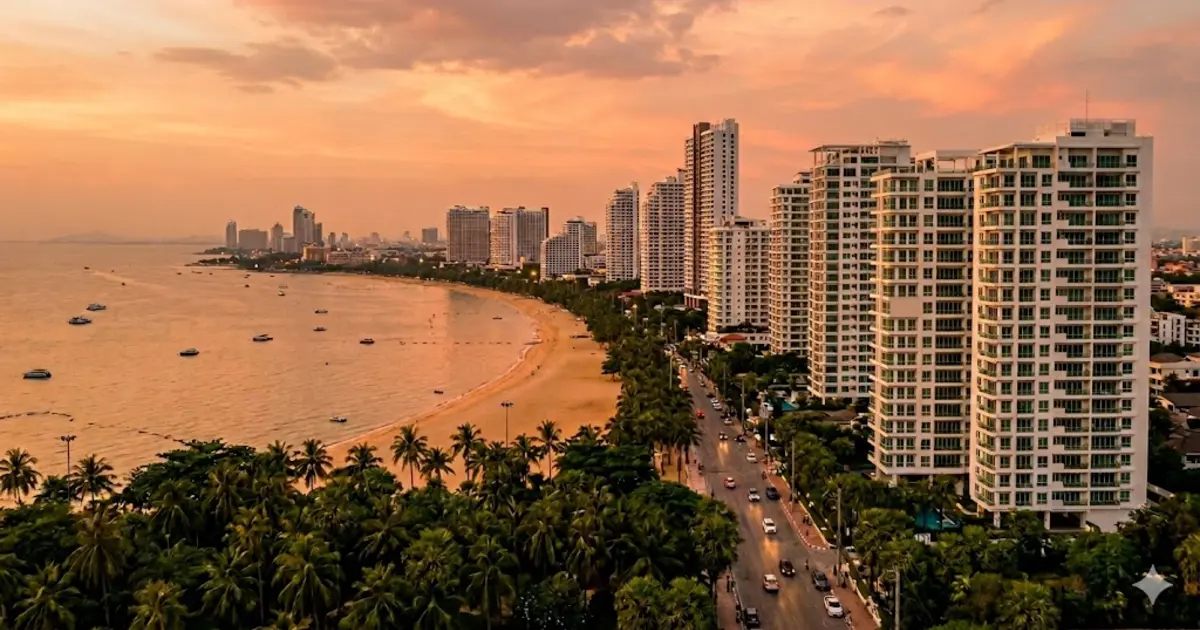
Five years ago, Russian rubles were lifting Pattaya's beachfront tower by tower. Today, those same towers carry resale signs in Cyrillic — and yields north of 8% in the right zone. So which is it: a generational buyer's market, or a falling knife the diligent should let drop? The honest answer in Q2 2026 is "both, depending on which zone, which building, and which juristic person you're trusting with your sinking fund."
1. The Russian Wave — What Actually Happened (2022–2026)
Between 2022 and 2024, Russian capital fundamentally rewrote Pattaya's foreign buyer demographic. By the first quarter of 2025, Russians accounted for 31.2% of all property applications in Thailand, with Pattaya capturing more than 21% of those requests — the highest concentration of any Thai resort city. Beachfront stock in Jomtien, Pratumnak Hill, and Wongamat absorbed this wave first, often within weeks of release.
What's changed in 2026 isn't a crash — it's a phase shift. International sanctions, OFAC banking constraints, and tightened capital controls have made it harder for new Russian buyers to wire purchase funds. According to Thailand Business News, the average foreign-purchased unit value dropped from 5.1 million THB to 4.7 million THB — a 6.8% decline that masks a much bigger story underneath: existing Russian owners are listing on the secondary market, and they're doing it at prices that don't reflect the 2022 boom.
The Key Insight
This isn't a Russian exodus. It's a Russian transition from aggressive new acquisition to quiet secondary-market liquidation. The first wave caused price spikes; the second wave is causing the discounts you're seeing now.
Tourism arrivals tell the complementary story. Russian visitors set a record in 2025 and the TAT targets 2.2 million Russian arrivals in 2026, according to Bangkok Post. The Russians keep coming as tourists — they're just less aggressive as buyers. Meanwhile, India has emerged as the fastest-growing source market, with Indian, Taiwanese, and Middle Eastern buyers actively absorbing some of the Russian secondary supply.
2. The Buyer's Market Case (The Bull Thesis)
The contrarian view is straightforward: the noise of inventory headlines is masking structural quality at attractive entry prices. Four pillars support the bull case in 2026.
Entry Prices Have Reset
Average property transaction values stabilized around 2.8–2.9 million THB through 2025–2026, dramatically below boom-era expectations. The Bank of Thailand's December 2025 policy rate cut to 1.25% has made developer financing more workable, with offshore mortgages now in the 5–6% range — useable, if not generous. CBRE Thailand's 2026 outlook calls this a "flight-to-quality" environment where well-managed assets keep absorbing while commodity stock languishes.
Yields That Bangkok Cannot Touch
Central Pattaya investment units are reporting 6–10% gross yields, with the high end driven by Destination Thailand Visa (DTV) demand for furnished, service-integrated units. Bangkok's mass-market condos struggle to hit 4–5%. The real Thai rental yield reality already showed that headline 8% numbers are mostly fiction in Bangkok — but in Pattaya's right zones, they're closer to documented fact.
Infrastructure Floor
The U-Tapao Aviation City — a 290-billion-baht (~5.7 billion USD) megaproject targeting 60 million passengers per year — entered its delivery phase in early 2026, with real estate components slated for late-2026 launch (Nation Thailand). Even if the high-speed rail slips to 2031, the airport build-out provides a direct economic engine for Na Jomtien and Bang Lamung sub-markets.
Visa-Driven Tenant Demand
The DTV's 180-day stay allowance has unlocked a long-stay rental segment that didn't legally exist before 2024. Combined with the 40-million-plus tourism projection for 2026 (Bangkok Post), Pattaya's rental pool is now structurally deeper and more diversified than in any previous cycle.
3. The Falling Knife Case (The Bear Thesis)
The bears aren't wrong either. Four counterforces make 2026 a genuinely dangerous year for the unprepared buyer.
Warning: Inventory Pressure Is Real
According to Pattaya Mail's Q2 2026 market report, Jomtien's southern beachfront is carrying inventory that could take years to absorb. Intense competition between large-scale projects has already pushed average asking prices down by up to 10% in the affordable segment as developers fight for a shrinking pool of domestic buyers.
Juristic Health Time Bomb
This is the silent killer. Russian-era buildings constructed during the 2014–2018 wave are now reaching the age where elevator overhauls, facade repairs, and pool retrofits become non-negotiable. If a building's juristic person has 15–25% of units in arrears — a real risk in projects where sanctioned Russian owners can't transfer maintenance fees — the sinking fund depletes, special assessments hit, and property values enter a feedback loop downward. Always ask for the juristic's audited financials before committing.
The Land & Building Tax Has Teeth Now
The Land and Building Tax Act B.E. 2562 reached full implementation in 2026 (ASEAN Briefing). Vacant property left empty more than three years incurs an escalating penalty of +0.3% every three years, capped at 3%. For absent foreign owners holding empty units as "speculative inventory," this changes the math on hold-and-wait strategies materially.
Credit Tightness Caps the Upside
Bangkok Bank's Q1 2026 investor presentation reports a 3.1% NPL ratio and an explicit "prudent loan growth" stance favoring corporate over retail mortgage exposure. The relaxation of LTV rules helps at the margin but doesn't offset the broader high-household-debt environment. Domestic upgrader demand — historically the absorber of Russian-era resales — is constrained.
Geopolitical Sensitivity
Pattaya remains heavily exposed to foreign capital flows. Any escalation of sanctions, a new wave of capital controls, or a global recession would disproportionately hit Pattaya's secondary market relative to Bangkok or Phuket primary markets.
4. Zone-by-Zone: Where the Knife Falls vs Where Value Hides
The single most important upgrade in 2026 analysis is abandoning the word "Pattaya" as a market unit. The city has fragmented into five distinct micro-markets, each with its own risk-reward profile.
| Zone | Price/sqm (THB, 2026) | Target Gross Yield | Verdict |
|---|---|---|---|
| Wongamat | 160,000 – 250,000+ | 5 – 7% | Capital preservation |
| Pratumnak Hill | 110,000 – 160,000 | 6 – 8% | Distressed-value play |
| Central Pattaya | 100,000 – 140,000 | 6 – 10% | DTV yield engine |
| Jomtien (North) | 80,000 – 110,000 | 5 – 7% | Selective only |
| Jomtien (South) | 55,000 – 85,000 | 4 – 6% | Falling-knife zone |
| Naklua | 75,000 – 100,000 | 5 – 6% | Stable family hub |
Wongamat: The Premium Sanctuary
Land scarcity is doing the work here. Beachfront plots in the northern strip are simply gone — and that puts a moat around projects like The Palm, Zire, and Northpoint. Wongamat saw price indices rise 3.4% YoY in early 2025 (Knight Frank Q2 2025) and that trend continued into 2026. Furnished units rent at 12,000–35,000 THB/month. Less Russian-correlated, less downside.
Pratumnak Hill: The Quiet Distressed Opportunity
The "Beverly Hills of Pattaya" is where the most interesting contrarian buys exist in 2026. The hill's geography limits high-density development, but Russian buyers favored Pratumnak heavily during the boom for its prestige. Now those owners are listing — at prices that don't always reflect the underlying location quality. If a building has clean juristic management, this is the zone to fish for value.
Central Pattaya: The DTV Yield Engine
This is where the digital-nomad and DTV-holder demand has clustered. Centric Sea is the canonical benchmark — 1.8M to 15M THB unit range, ~108,000 THB/sqm average, walkable to Central Festival and Terminal 21. Investment-focused projects with built-in management routinely hit 8–10% gross. Tenants here aren't tourists — they're 30-to-180-day stayers on DTV visas, paying premium rents for furnished, serviced units.
Jomtien South: The Cautionary Tale
Projects like Lumpini Park Beach trade from 55,000–86,000 THB/sqm. Entry-level attractive on paper, but the inventory overhang is real, and older projects like View Talay 5 carry aging-stock juristic risk that the marketing materials never mention. This is the zone where "buyer's market" most often means "falling knife."
Naklua: The Sleeper Stable Pick
Less glamorous, less Russian-correlated, but with consistent tenant demand from Laem Chabang port workers and northern-industrial-estate expats. Vacancy risk is the lowest of all the zones, which makes it the natural pick for buy-and-hold investors who don't want headlines.
5. The EEC Reality Check: Rail Slips to 2031–2032
For a decade, the Eastern Economic Corridor and the three-airport high-speed rail were Pattaya's structural story. In 2026, that story needs an honest revision.
The high-speed rail Notice to Proceed is tentatively scheduled for August 2026 — but per Pattaya Mail, the state has refused contract amendments the private consortium demanded. Construction is expected to take five years. Full service operations are now realistically 2031 or 2032. Anyone pricing a "Bangkok-Pattaya commuter premium" into their purchase right now is paying ahead by half a decade.
The flip side: U-Tapao Aviation City has actually entered delivery. Commercial-development components, including hotels, malls, and residential, launch late 2026 (Bangkok Post). For Na Jomtien and Bang Lamung specifically, this is a near-term catalyst — not a 2031 one. If you're buying for infrastructure tailwinds, anchor your thesis to the airport, not the rail.
Reframe the Time Horizon
U-Tapao Aviation City = 12-to-24 month catalyst. High-Speed Rail = 60-to-72 month catalyst. Price your purchase against the airport, not against the railway pictures in the developer brochure.
6. Legal & Fiscal Constraints in 2026
Three legal realities define what's actually possible in 2026.
The 49% Foreign Quota Remains Untouched
Despite ongoing rumors of legislative relaxation, the Condominium Act B.E. 2522 (1979) still caps foreign ownership at 49% of the total sellable area of any condominium project (Siam Legal; official unofficial translation). In high-demand projects where the foreign quota is full, "Foreign Quota" units command a 5–15% premium over the equivalent "Thai Quota" units in the same building (Terms.law). For more on how this interacts with succession planning, see our coverage of leasehold vs. freehold ownership.
Land & Building Tax 2026 Schedule
The Act has reached full enforcement (Mahanakorn Partners):
| Use Type | Rate | Notes |
|---|---|---|
| Residential (investment / 2nd home) | 0.02% – 0.30% | Calculated on appraised value |
| Commercial / Rental (registered) | 0.30% – 1.20% | Higher tier for Airbnb-style use |
| Vacant > 3 years | +0.3% every 3 yr (cap 3%) | Penalty stacks on base rate |
Transaction Costs Are Real Money
Standard transfer fee 2% (typically split 50/50), Specific Business Tax 3.3% if held under five years (seller), Stamp Duty 0.5% (if SBT does not apply), plus bank/exchange fees 1–3% for foreign-source funds. Total transaction burden runs 4–7% of property value. That's a hard floor on the discount you need before a "bargain" is genuinely a bargain.
7. The Practical 2026 Buyer's Playbook
If you've read this far and you're still interested in buying in Pattaya in 2026, here's the operational checklist that separates the diligent from the speculative.
Pre-Offer Due Diligence (Never Skip)
- Pull the juristic person's audited financial statements — last 2 years. Look for sinking fund balance trajectory and outstanding arrears as a % of total fee billings.
- Confirm foreign-quota status of the specific unit in writing from the juristic — never trust the agent. A "Foreign Quota" unit in a fully-quota'd building is materially more valuable.
- Check maintenance fee history for the last 3 years. Special assessments? Fee hikes? These are early-warning indicators.
- Walk the building's common areas off-hours. Elevator condition, pool maintenance, parking organization tell you more than any glossy brochure.
- Cross-check the asking price against recent sold comps on Hipflat or FazWaz — not listed comps. Listed prices are aspirational; sold prices are honest.
Negotiation Anchors That Actually Work in 2026
- Days-on-market premium discount: any unit listed more than 180 days is fair game for a 10–15% offer below ask.
- Vacancy tax leverage: if the unit has been empty more than a year, raise the upcoming vacant-property tax in negotiations.
- Currency-distress signal: Russian-owned listings priced in USD or EUR are typically more flexible on price than RUB-anchored sellers.
- Transfer-cost ask: if the seller is motivated, request they cover their statutory 50% transfer-fee share AND throw in the Specific Business Tax burden.
The Rental Operations Question
Yields above 8% in Central Pattaya are not passive. They require professional management, DTV-tenant marketing, furniture refresh cycles, and tight compliance with the new hotel-licensing crackdown on short-stay rentals. If you want passive income, accept a 5–6% yield in Naklua or Wongamat and let a property manager handle it. For more on the operator landscape, see our comparison of rental management operators.
Currency & Funding
Wire purchase funds in foreign currency through a Thai bank and obtain the Foreign Exchange Transaction Form (FETF) for every transfer above 50,000 USD — this document is mandatory at the Land Office for transfer registration. Plan on 1–3% in bank/exchange friction.
Exit-Strategy Discipline
Don't buy a unit you don't have a clear 5-year exit plan for. The 3.3% Specific Business Tax penalty for holding under 5 years should be priced into your acquisition decision, not discovered at sale. And remember: foreign owner succession is a real planning problem — our piece on what happens when a foreign property owner dies in Thailand walks through the mechanics.
8. The Verdict
The honest 2026 verdict isn't "buy" or "don't buy." It's a zone-specific risk-reward matrix that demands you stop thinking about "Pattaya" as a single market.
Buy (Contrarian Opportunity)
- Pratumnak Hill distressed listings in well-managed buildings (6–8% yield + scarce land moat)
- Central Pattaya investment-focused projects with built-in management (8–10% yield from DTV demand)
- Wongamat foreign-quota units for capital preservation + 5–7% rental income
- Na Jomtien / Bang Lamung ahead of late-2026 U-Tapao Aviation City delivery
Wait or Avoid (Falling Knife)
- Jomtien South commodity studios in projects with no foreign-buyer differentiation
- Aging Russian-era buildings with depleted sinking funds and high arrears percentages
- Generic "Thai Quota" units being marketed at foreign-quota premium pricing
- "High-Speed Rail proximity" pitches — that thesis is now a 2031–2032 play, not 2026
The 2022–2024 Russian wave provided the liquidity that built Pattaya's modern skyline. The 2025–2026 tapering is providing the correction — and the entry prices — for buyers willing to do real due diligence. Pattaya in 2026 rewards the diligent and punishes the speculative. If you want to skim listed prices and hope for capital appreciation, Bangkok or Phuket has fewer landmines. If you're willing to study juristic statements and walk buildings off-hours, Pattaya has yield potential that no other Thai resort city currently offers.
Start your search with our complete Pattaya area guide or browse current Pattaya listings to anchor your price benchmarks against live inventory.
Sources & References
- Pattaya Mail — Pattaya Property Market 2026: Inventory pressure meets relocation-driven demand
- CBRE — 2026 Thailand Real Estate Market Outlook
- Savills — Thailand Property Market 2026: Strategic Outlook
- Knight Frank — Bangkok Condominium Market Q2 2025 (PDF)
- Bangkok Bank — 1Q26 Investor Presentation (PDF)
- EECO — High-Speed Rail Linking Three Airports
- Pattaya Mail — High-speed rail megaproject at critical crossroads
- Nation Thailand — U-Tapao megaproject enters delivery phase
- Bangkok Post — Thailand property 2026: Strategic balance of risk and reward
- Bangkok Post — EEC counts on U-Tapao Aerotropolis progress
- Cushman & Wakefield — Thailand 2025–2026 Outlook
- ASEAN Briefing — Land & Building Tax Act
- Mahanakorn Partners — Overview of Land & Building Tax Act B.E. 2562
- Fiscal Policy Office — Land & Buildings Tax Act B.E. 2562 (official PDF)
- Thailand Law Online — Condominium Act translation
- Siam Legal — Condominium Act B.E. 2522 explained
- MOLEG (Korean MoJ) — Official Condominium Act B.E. 2522 (1979) translation
- Terms.law — Thailand Condo 49% Foreign Quota Rule
- Hipflat — Centric Sea Pattaya benchmark
- FazWaz — Lumpini Park Beach Jomtien benchmark
- Lazudi — View Talay 5 Condominium benchmark
- Bamboo Routes — Pattaya Price Forecasts 2026
- Thailand Business News — Russian/Chinese withdrawal impact
- Enlight Property — Pattaya Outlook 2026–2027
- Nebuworld — Thailand's Visa Shift in 2026 (DTV implications)
- Bangkok Post — TAT targets 2.2m Russian arrivals 2026
This article was researched using Gemini Deep Research (26 verified sources cited from a 118-source pool) and written with AI assistance. All price ranges, yield figures, and timelines reflect Q1–Q2 2026 conditions and are estimates subject to change. Always conduct independent due diligence — particularly on juristic person financials and foreign-quota status — before any property purchase. Last updated: 13 May 2026.