Bangkok's 'Up-and-Coming' Neighbourhoods That Stayed Coming for 10 Years
Anti-Hype TL;DR
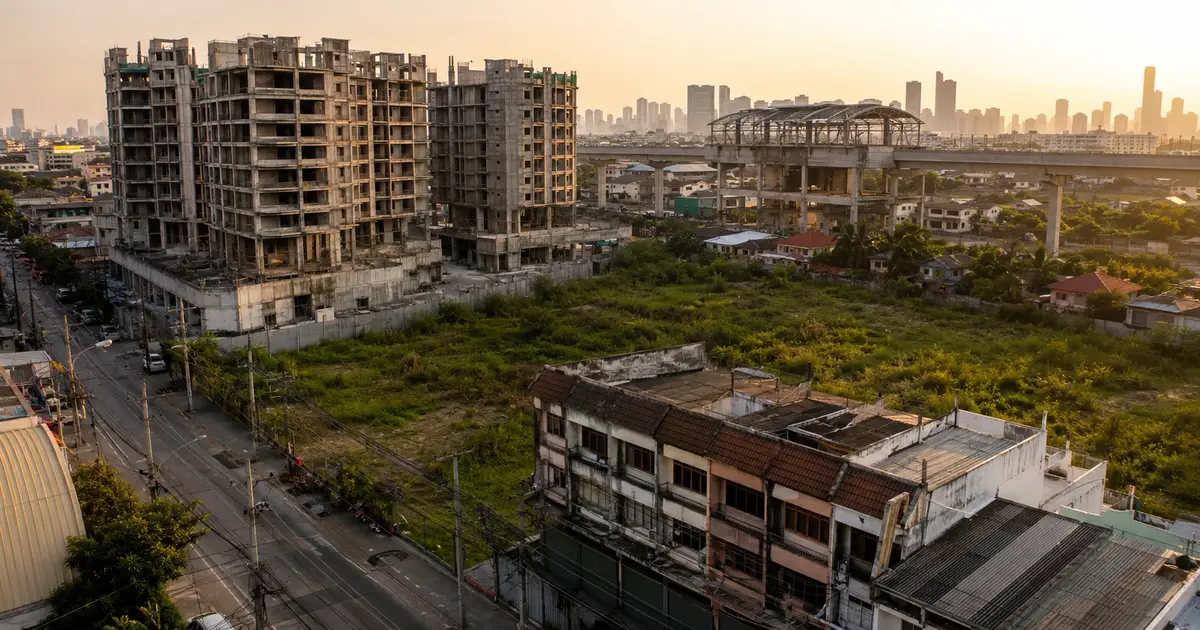
Bangkok's up-and-coming neighbourhood story has been running longer than many condo warranties. A foreign buyer hears the same script every cycle: the next station is coming, the next mall is coming, the next CBD is coming, and therefore the discount today is really hidden upside. Sometimes that is true. More often, the buyer is being asked to pay for a future that remains just far enough away to market, but not close enough to verify.
The point is not that Bang Sue, Lat Phrao, Phra Khanong, Charoen Nakhon, Bang Na, Pin Klao or western Thonburi are bad places to live. Several are practical, improving, and cheaper than Sukhumvit. The problem is investment framing. If the resale price depends on an unopened rail line, an unproven retail anchor, a still-thin expat tenant base, or a foreign-quota story that cannot be checked at the Land Office, you are not buying delivered upside. You are financing a press release.
Key Takeaway
Treat "up-and-coming" as an unpaid invoice. It counts only when trains are operating, retail is open, foreign quota is demonstrably filled, and the secondary market is moving without developer discounts.
The Media Archetype
The Bangkok property-media archetype is easy to spot. It starts with an established area that has become expensive: central Bangkok, Asoke, Phrom Phong, Thonglor, Silom, Sathorn. Then it identifies a cheaper adjacent zone. Then it borrows credibility from a catalyst: MRT extension, BTS extension, expressway, international school, convention hall, hospital, riverfront mall or mixed-use megaproject. Finally it converts infrastructure into a price claim: buy before everyone else notices.
This story works because it is half true. Bangkok does expand along rail. Retail anchors do change foot traffic. Schools and hospitals can reshape renter profiles. But the leap from "catalyst announced" to "capital appreciation banked" is where foreign buyers get hurt. Developers, agents and media all have incentives to tell the story early. The resale market has no obligation to validate it later.
The archive is blunt. Phra Khanong was already being framed as an up-and-coming urban playground in 2015. In 2017, property media was promoting Rama IX-Ratchada, Riverside-Thonburi, Udom Suk-Bang Na and Rama IV as the next wave. Charoen Nakhon riverside was framed as hidden value after ICONSIAM opened in 2018. Knight Frank was talking up Bangkok fringe-area prospects and outer Sukhumvit value in 2017. The same narrative keeps returning because the city keeps producing plausible catalysts.
BaanRow's current listing pool shows why the claim needs verification at property level, not neighbourhood level. Our live inventory snapshot has meaningful current stock in some of the hyped districts: Bang Na, Phra Khanong, Lat Phrao, Bang Phlat, Chatuchak and the central Watthana/Khlong Toei belt. That is useful for comparing live asking prices on BaanRow search. It is not proof of ten years of appreciation. The historical proof has to come from actual transfers, absorption, resale velocity and completed amenities.
Six Neighbourhoods That Stayed Coming
The table below is not a ranking of liveability. It is a risk map for the foreign buyer who is being sold upside. The question is simple: what was promised, what was actually delivered, and what still depends on a future catalyst?
| Area | Hype Claim | Delivered Reality | Buyer Risk |
|---|---|---|---|
| Bang Sue / Tao Poon / Chatuchak fringe | "New CBD" around rail interchange and government infrastructure. | Connectivity improved, but the office, retail and expat-rental ecosystem is still thinner than core CBD nodes. | Paying CBD expectations for a district that may behave like a transport hub, not a premium residential hub. |
| Lat Phrao / Bang Kapi / Lam Sali | Yellow Line plus future Orange/Brown interchange creates eastern upside. | Yellow Line reached full public trial in 2023. Orange East is now expected in January 2028. Brown Line remains under preparation. | The catalyst stack keeps moving from one unopened line to the next. |
| Charoen Nakhon / Thonburi riverside | ICONSIAM and river prestige would pull the CBD across the water. | ICONSIAM delivered as a destination. Depth of daily retail, office demand and walkable expat life remains uneven away from prime riverfront assets. | A luxury view can resell; a generic unit two sois back may not get the same liquidity. |
| Phra Khanong / On Nut / Punnawithi | The affordable next step after Ekkamai and Thonglor. | Useful BTS access and real renter demand, but heavy supply kept many projects competing on price and incentives. | Buying a weak building in a decent area still leaves you with weak resale. |
| Bang Na / Udom Suk / Bearing | BITEC, office towers, schools, malls and future airport-linked rail would make a south-eastern hub. | Some anchors are real. The district is still spread out, car-dependent and uneven for foreign renters. | Good end-user logic can be mistaken for broad investor liquidity. |
| Pin Klao / Charan / western Thonburi | Blue Line and western expansion would unlock cheaper urban living. | Transport improved, but the foreign-buyer ecosystem remains localized and building-specific. | The discount may be fair value, not mispricing. |
Lat Phrao is the cleanest example of permanent "coming." MRTA says Yellow Line approval came in 2016, the concession was signed in 2017, works began in 2018, and the full public trial reached Lat Phrao in June 2023. That is a real delivery. But the investment pitch did not stop there. It rolled forward into Orange Line interchange, then Brown Line potential, then bigger east-west connectivity. MRTA's own Orange Line page now puts East operation at January 2028, while Brown Line sits in the preparation bucket. A buyer who paid a 2017 premium for a 2028 operating date carried a decade of timing risk.
Phra Khanong is different. It did not wait for a single megaproject. It got better gradually: food, community, BTS convenience, overflow demand from Ekkamai. The problem is supply. DDproperty/Nexus noted in 2016 that Phra Khanong-Suan Luang was among the top new-supply zones in 2015. Knight Frank's later Upper Sukhumvit commentary described a large stock base in Phra Khanong-On Nut-Punnawithi-Udom Suk. That matters. Appreciation requires scarcity or demand growth faster than supply. A neighbourhood can improve and still fail to produce easy resale gains.
Charoen Nakhon delivered more visibly than most. ICONSIAM opened. The riverfront became more investable. The Gold Line improved last-mile access. But it also proves the need for asset selection. Prime riverfront towers and branded residences are not the same asset class as inland, small-unit, investor-stock condos sold on the halo effect. If the view, management, sinking fund, shuttle access and foreign-quota status are ordinary, the address alone cannot do the work.
Bang Na is a classic end-user trap for investors. For a family using an international school, airport access, BITEC or a larger unit, Bang Na can make sense. For a foreign investor expecting central-Bangkok liquidity, it is a different equation. The anchors are dispersed. Walkability is patchy. The tenant pool is more specific. A lower entry price is only an advantage if the exit market is deep enough when you sell.
Warning
Do not confuse infrastructure completion with investment completion. A station opening can improve convenience while leaving resale liquidity, rent growth and building-level absorption weak.
Why the Story Persists
First: transit slippage is normal, but marketing treats it as temporary. The Orange Line is the lesson. MRTA's implementation history starts with cabinet approval in April 2016 and construction scheduled in May 2017. The current expected East opening is January 2028. That does not make the line fake. It makes timing a major investment variable. The same logic applies to Brown, Grey, Silver and other preparation-stage projects. Until the station is operating, the buyer is carrying delay risk.
Second: retail anchors do not automatically create neighbourhood depth. A mall or mixed-use project can lift footfall and give agents a better map pin. It does not guarantee a complete daily ecosystem. Foreign renters still ask more basic questions: Can I walk to groceries? Is the footpath usable in rainy season? Are there restaurants after 9 p.m.? Can my spouse commute? Is there a school bus? Is Grab the default for every errand? If the answer is still no, the anchor is an excursion, not a neighbourhood.
Third: the foreign-buyer pool is legally capped and uneven. Thailand's condominium structure allows foreign freehold ownership inside the statutory foreign proportion. Thailand.go.th says the buyer needs a confirmation letter from the condominium juristic person showing the foreign proportion for transfer. In plain English: foreign demand is not infinitely elastic. A building can be attractive to foreigners and still be constrained by quota, Thai-quota resale discounts, bank lending and the ability to transfer funds correctly.
Fourth: inventory overhang changes the bargaining power. REIC data summarized by TeraBKK showed Bangkok and vicinities unsold inventory rising for five straight quarters in Q2 2024, reaching 214,590 units worth THB 1.266 trillion, with monthly absorption at 2.2%. Knight Frank reported only 405 new Bangkok condo units launched in Q2 2025, the lowest in 15 years, and transfers at the lowest level in more than six years. CBRE's 2025 outlook said developers were focused on backlog and ready-to-move unsold inventory. That is not an upside shortage. It is a market trying to digest past optimism.
| Signal | Hype Version | Verification Version |
|---|---|---|
| Rail | Approved, announced, under construction. | Operating with stable ridership and useful interchange. |
| Retail | Mall planned or anchor named. | Open, occupied, busy on weekdays, not only launch month. |
| Foreign quota | "Popular with foreigners." | Juristic letter shows current foreign ratio and transferable quota. |
| Absorption | Launch weekend sold well. | Resale listings clear without developer rebates and furniture giveaways. |
| BaanRow data | Lots of listings means activity. | Compare days-on-market, price cuts, district stock and competing units on search. |
Signals That Actually Matter
The best signal is not a construction fence. It is boring proof. A completed station with normal fares. A mall with weekday tenants, not just grand-opening photos. A school catchment that changes where families actually rent. A hospital or office cluster that produces repeatable tenants. A building juristic office that can show quota, financial statements, sinking fund status and maintenance history without delay.
For foreign buyers, the most useful signals are lagging indicators. That feels uncomfortable because lagging indicators mean you missed the absolute bottom. Good. The absolute bottom is usually visible only in hindsight. A foreign buyer buying across language, legal and financing gaps should not need perfect timing to survive the deal.
Watch secondary-market velocity. If five comparable units in the same building have sat for six months with repeated price cuts, the neighbourhood story is not enough. Watch rental renewal quality. A high advertised yield means little if tenants churn, furniture wears out and vacancy absorbs two months per year. Watch quota quality. A building with strong foreign quota fill, good management and clean common areas is different from a project where the only demand is discounted investor stock.
Use established areas as your control group. Compare the candidate building to listings in Sukhumvit, Sathorn, Asoke and Phrom Phong. Then compare it to BaanRow's buyer guides: DSR/LTV, visa ROI, cost of living and owner compliance. A cheap condo that fails financing, visa, holding-cost or resale checks is not cheap.
Warning: Do Not Buy the Adjective
"Emerging", "next CBD", "new Sukhumvit" and "hidden gem" are not investment metrics. Ask for the document, the transfer record, the quota letter and the competing resale set.
Buyer Playbook
Start with the seller's claim and turn every adjective into a test. If the pitch says "new MRT upside", ask which line, which station, which official opening date, and whether civil works, M&E systems and rolling stock are all complete. If the pitch says "retail anchor", visit on a weekday evening and count actual open tenants. If the pitch says "foreigners love this building", ask for the juristic foreign-quota letter before you negotiate, not after deposit.
Then build a resale set. Pull five to ten competing units in the same building and nearby buildings on BaanRow. Record size, floor, view, asking price, ownership quota, furnishing, days listed if available, and price cuts. If the unit is new, compare against completed resales, not only developer brochures. Developer incentives can hide the real clearing price.
Ask the uncomfortable building questions. How much is in the sinking fund? What repairs are planned? Are common fees collected on time? What percentage of units are rented short-term? Are there water leaks, facade issues, lift problems or legal disputes? These questions matter more in up-and-coming districts because the neighbourhood has less pricing power to offset a weak building.
Check whether the unit still works if appreciation is zero. Could you live in it? Could you rent it at a conservative rate? Could you hold it through a weak market? Would the same budget buy a smaller but more liquid unit in Sukhumvit or Sathorn? Read the mortgage bad-math guide, Chinese-buyer demand analysis, Thai-inheritor resale guide and holding-cost thinking from our solar ROI piece. They are different topics, but the discipline is the same: cash flow beats narrative.
Where Delivery Looked Different
Established Bangkok did not become investable because someone called it emerging. Phrom Phong, Asoke and Thonglor delivered through accumulated proof: BTS access, office demand, Japanese and international tenant depth, hospitals, schools, restaurants, supermarkets, nightlife, luxury retail, embassies nearby, and years of resale comparables. You do not have to believe a slogan to understand why liquidity is deeper there.
That does not mean every core-area condo is a good buy. Some are overpriced, old, poorly managed or yield-negative. It means the area-level evidence is already visible. A buyer can inspect actual rental demand, real transfer comparables and competing inventory. In an up-and-coming district, more of the underwriting rests on assumptions.
The contrarian answer is not "never buy outside the core." It is: pay an outside-the-core price unless the evidence has already moved inside the core-quality bucket. If the rail line is not open, discount it. If the mall is not leased, discount it. If foreign quota is not verified, discount it. If the developer is still carrying unsold stock, discount it. If the only proof is that ten articles have called the place up-and-coming since 2016, discount it twice.
Sources & References
- MRTA Yellow Line trial run and July 2023 revenue-service plan — Source used for transit timing, market absorption, ownership rules, or media-cycle evidence.
- MRTA Orange Line implementation plan showing January 2028 expected operation — Source used for transit timing, market absorption, ownership rules, or media-cycle evidence.
- MRTA Orange Line PPP signing and east/west opening targets — Source used for transit timing, market absorption, ownership rules, or media-cycle evidence.
- MRTA project list showing Brown, Grey, Silver and Light Blue lines under preparation — Source used for transit timing, market absorption, ownership rules, or media-cycle evidence.
- MRTA Pink Line route and Min Buri interchange details — Source used for transit timing, market absorption, ownership rules, or media-cycle evidence.
- Nation Thailand, Orange Line east January 2028 and west 2030 update — Source used for transit timing, market absorption, ownership rules, or media-cycle evidence.
- TeraBKK summary of REIC Q2 2024 Bangkok-vicinity market and unsold inventory — Source used for transit timing, market absorption, ownership rules, or media-cycle evidence.
- CBRE Thailand 2025 outlook on Bangkok residential finance, backlog and unsold inventory — Source used for transit timing, market absorption, ownership rules, or media-cycle evidence.
- CBRE Bangkok Overall Figures Q4 2025 — Source used for transit timing, market absorption, ownership rules, or media-cycle evidence.
- Knight Frank Bangkok Condominium Market Q2 2025 PDF — Source used for transit timing, market absorption, ownership rules, or media-cycle evidence.
- Colliers Q4 2023 Bangkok Condominium Market — Source used for transit timing, market absorption, ownership rules, or media-cycle evidence.
- Nation Thailand report on Thailand property slowdown and unsold condominiums — Source used for transit timing, market absorption, ownership rules, or media-cycle evidence.
- Fresh Property 2017 'hottest up-and-coming neighborhoods' article — Source used for transit timing, market absorption, ownership rules, or media-cycle evidence.
- Coconuts Bangkok 2015 Phra Khanong up-and-coming article — Source used for transit timing, market absorption, ownership rules, or media-cycle evidence.
- TeraBKK Charoen Nakhon riverside hidden-value article — Source used for transit timing, market absorption, ownership rules, or media-cycle evidence.
- Knight Frank 2017 Bangkok fringe-area prospects — Source used for transit timing, market absorption, ownership rules, or media-cycle evidence.
- Knight Frank Upper Sukhumvit 2019 supply and price commentary — Source used for transit timing, market absorption, ownership rules, or media-cycle evidence.
- DDproperty/Nexus 2016 Bangkok supply and demand commentary — Source used for transit timing, market absorption, ownership rules, or media-cycle evidence.
- Thailand.go.th foreign condominium ownership process and 49% quota — Source used for transit timing, market absorption, ownership rules, or media-cycle evidence.
- Nation Thailand REIC foreign condo transfers January-September 2025 — Source used for transit timing, market absorption, ownership rules, or media-cycle evidence.
This article was researched using 20 verified sources and written with AI assistance. Last updated: May 21, 2026.