Best Areas for Digital Nomads in Thailand 2026: The Complete Guide
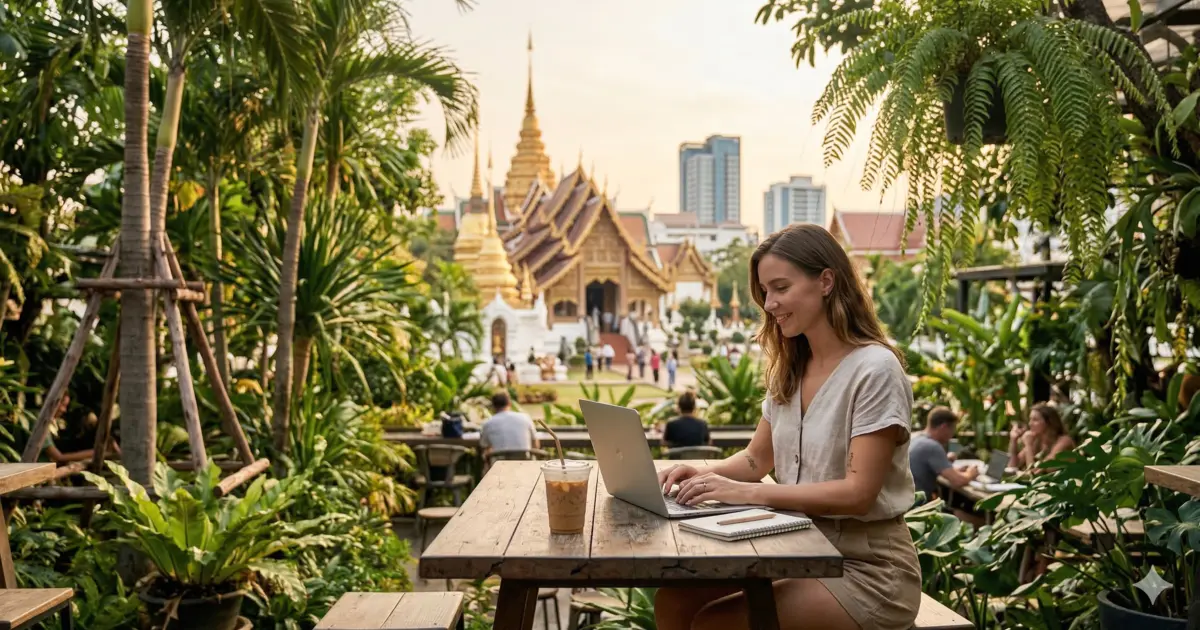
Thailand has cemented its position as the world's premier destination for digital nomads in 2026. With the formalization of the Destination Thailand Visa (DTV), world-class internet infrastructure ranked 8th globally, and a cost of living that stretches dollars further than almost anywhere else, the question is no longer whether to base yourself in Thailand — it's where.
Whether you're a freelance developer seeking focus in a beachside bungalow, a startup founder networking in Bangkok's buzzing coworking scene, or an investor eyeing condo yields above 7%, this guide breaks down the eight best areas for digital nomads in Thailand — with real 2026 data on costs, visas, property, and connectivity.
2026 City Rankings at a Glance
Based on infrastructure quality, cost efficiency, community size, internet reliability, and lifestyle appeal, here's how Thailand's top nomad hubs stack up in 2026:
| Rank | City | Score | Best For | Monthly Budget |
|---|---|---|---|---|
| 1 | Bangkok | 9.8/10 | Tech leads, founders, networking | ฿65,000 ($1,800) |
| 2 | Chiang Mai | 9.4/10 | Freelancers, creatives, startups | ฿40,000 ($1,110) |
| 3 | Phuket | 9.1/10 | Luxury nomads, families | ฿56,000 ($1,555) |
| 4 | Koh Phangan | 8.7/10 | Wellness, eco-entrepreneurs | ฿44,000 ($1,220) |
| 5 | Pattaya | 8.4/10 | Traders, short-stay workers | ฿51,000 ($1,415) |
| 6 | Hua Hin | 8.2/10 | Mature nomads, retirees | ฿58,000 ($1,610) |
| 7 | Koh Samui | 8.0/10 | HNW investors, retreat seekers | ฿55,000 ($1,530) |
| 8 | Koh Lanta | 7.8/10 | Writers, developers, slow living | ฿38,000 ($1,055) |
Bangkok: The Urban Command Center
Bangkok tops the 2026 rankings with an unmatched combination of professional infrastructure and urban energy. The city offers 164 coworking spaces — compared to Chiang Mai's 24 — and over 10,000 cafes and restaurants that double as informal offices.
The key neighborhoods for nomads are On Nut and Phra Khanong (affordable, young crowd), Ari (walkable, trendy), and Sukhumvit/Thonglor (premium, international). All sit along the BTS Skytrain, making the city navigable without a car.
A modern one-bedroom condo near BTS stations costs ฿18,000–25,000/month ($500–700). Premium areas like Thonglor push above ฿30,000. Monthly transport via BTS/MRT plus the occasional Grab ride totals about ฿2,500–4,500 ($70–125).
Key Takeaway
Bangkok is ideal if you need professional networking, corporate-grade infrastructure, and world-class healthcare. It's the most expensive Thai hub, but offers the highest earning potential and property yields (up to 9.35% in Phra Khanong).
Chiang Mai: The Budget King
Chiang Mai remains the world's most affordable city for a high-quality digital nomad lifestyle under ฿40,000/month ($1,110). The Nimman area is the epicenter — lined with cafes, coworking spaces like Yellow Co-working (1 Gbps fiber) and Punspace, and a thriving community of freelancers and creatives.
Rent for a modern condo in Nimman starts at just ฿10,000–18,000/month ($280–500) — a fraction of what you'd pay for similar quality in Bali or Lisbon. Street food runs ฿60–100 per meal, while cafe culture keeps the creative energy flowing.
The annual Nomad Summit (January 16–26, 2026) draws hundreds of remote workers for workshops, networking, and 50+ side events during Nomad Week.
Warning: Burning Season
From February to April, agricultural burning pushes AQI levels to 300–700+ (hazardous). Most experienced nomads migrate south to Phuket or Koh Phangan during these months. Plan your Chiang Mai stay for October–January for the best air quality and weather.
Phuket: Luxury Island Living
Phuket has transformed from a holiday island into a primary residence for affluent remote professionals. The villa market in Bang Tao and Kamala has surged 12–18% year-on-year, while managed condo rentals yield 7–10%+ returns.
For nomads, the Cherng Talay and Rawai areas offer the best blend of coworking infrastructure, international dining, and beach access. Monthly budgets start around ฿56,000 ($1,555), with rent for a modern condo at ฿18,000–30,000.
Phuket's international airport, growing number of international schools, and premium healthcare make it the top choice for nomad families seeking long-term stability.
Island Life: Koh Phangan, Samui & Lanta
Koh Phangan (8.7/10)
Once known only for Full Moon Parties, Koh Phangan has reinvented itself as a wellness-oriented remote work hub. BeacHub — Thailand's first beachfront coworking space — offers ergonomic chairs and ocean views. Fiber-optic internet now reaches most areas, with speeds exceeding 500 Mbps in dedicated coworking zones.
Monthly rent for a bungalow or condo runs ฿15,000–30,000, and the wellness community (yoga, breathwork, plant-based dining) is the strongest in the country.
Koh Samui (8.0/10)
Koh Samui caters to a luxury demographic. Sea-view villas in the "Gold Triangle" (Bophut, Chaweng Noi, Choeng Mon) sell for ฿20–40 million ($555K–$1.1M), with 7–9% land value appreciation forecasted for 2026. It's best for short-stay retreats or high-net-worth investors rather than budget nomads.
Koh Lanta (7.8/10)
Koh Lanta is the "deep focus" island — ideal for writers, developers, and long-term "slomads" who prioritize community and calm over nightlife. KoHub is legendary for its tight-knit community and "Work & Stay" packages. Monthly costs can dip below ฿38,000 ($1,055), making it one of Thailand's most affordable island options.
Cost of Living Comparison
Here's a side-by-side breakdown for a "comfortable lifestyle" — modern condo, regular coworking, varied dining, and leisure:
| City | Total/mo | Rent | Coworking | Food |
|---|---|---|---|---|
| Bangkok | ฿65,000 ($1,800) | ฿18–25K | ฿6–7.5K | ฿20K+ |
| Chiang Mai | ฿40,000 ($1,110) | ฿10–18K | ฿3–4.5K | ฿15K+ |
| Phuket | ฿56,000 ($1,555) | ฿18–30K | ฿5–6.5K | ฿18K+ |
| Koh Phangan | ฿44,000 ($1,220) | ฿15–30K | ฿3–5K | ฿15K+ |
| Pattaya | ฿51,000 ($1,415) | ฿8–12K | ฿4–5.5K | ฿18K+ |
| Koh Lanta | ฿38,000 ($1,055) | ฿10–20K | ฿3–5K | ฿12K+ |
Visa Options for Remote Workers
The 2026 visa landscape has been transformed by the Destination Thailand Visa (DTV), which has become the gold standard for location-independent professionals:
DTV (Destination Thailand Visa)
- Validity: 5 years, multiple entry
- Stay: 180 days per entry + 180-day extension (฿1,900 fee)
- Requirement: ฿500,000 ($14,500) in savings, held for 3+ months
- Categories: Workcation (remote workers), Thai Soft Power (Muay Thai, cooking), Dependents
LTR (Long-Term Resident)
- Validity: 10 years
- Requirement: $80,000/year income
- Benefit: Tax exempt on foreign income (Royal Decree No. 743)
Education (ED) Visa
- Validity: 12–15 months
- Cost: ~฿49,000 ($1,360) for a 14-month Thai language course
- Note: In-person attendance now mandatory; genuine study required
Thailand Privilege (formerly Elite)
- Validity: 5–20 years
- Cost: ฿600,000+ ($16,600+)
- Benefit: VIP airport fast-track, concierge, no income proof needed
Pro Tip
The DTV is the best value for most nomads. Apply from your home country embassy for the smoothest process. The era of "visa runs" on tourist exemptions is largely over — immigration now scrutinizes entry-exit patterns closely.
Buying Property Near Nomad Hubs
For nomads considering the leap from renting to owning, Thailand's condo market offers compelling yields — especially in areas with strong rental demand from the growing remote worker population. Foreigners can own condo freehold under the 49% foreign quota rule.
| Location | Type | Price/sqm | Gross Yield |
|---|---|---|---|
| Bangkok CBD | Luxury condo | ฿250–350K | 4–6% |
| Bangkok Phra Khanong | Studio | ฿54K | 9.35% |
| Phuket Bang Tao | Managed condo | ฿120–180K | 7–10%+ |
| Phuket Kamala | Luxury villa | ฿80–150K | 8–12% |
| Chiang Mai Nimman | 1BR condo | ฿65–80K | 5–6% |
Explore available properties in popular nomad areas on BaanRow: Bangkok, Phuket, Chiang Mai.
Internet & Infrastructure
Thailand's internet is a genuine competitive advantage. The country ranks 8th globally for fixed broadband speed with a median of 216 Mbps download / 222 Mbps upload. AIS leads as the top provider, with 5G coverage reaching 95% of the population.
Even the islands deliver: Koh Phangan now has fiber-optic broadband exceeding 500 Mbps in dedicated coworking zones. Bangkok's 5G performance hits 273.6 Mbps in major malls and commercial areas.
For walkability, Bangkok is the only hub with reliable public transit (BTS/MRT). Everywhere else, budget ฿2,500–4,000/month for a scooter rental plus fuel. Ride-hailing apps (Grab, Bolt) cover the gaps.
Climate: When to Go Where
Thailand's climate varies dramatically by region and season. Here's the nomad's calendar:
| Month | Best Region | Avoid | Notes |
|---|---|---|---|
| Nov–Jan | Everywhere | — | Golden Window: cool, clear skies nationwide |
| Feb–Apr | South (Phuket, islands) | Chiang Mai (smoke) | Burning season in north, AQI 300–700+ |
| May–Oct | Bangkok, Chiang Mai | Andaman coast | Southwest monsoon hits Phuket/Lanta |
| Nov–Dec | Andaman coast | Gulf coast | Gulf monsoon (Samui/Phangan heaviest rain) |
The savvy nomad follows a "circuit" strategy: Chiang Mai October–January, south to Phuket or Koh Phangan February–April, then Bangkok or back north May–September.
Sources & References
- Khaosod English — Bangkok tops global digital nomad rankings, Chiang Mai 2nd (2026)
- Ookla Speedtest — Thailand Connectivity Report H1 2025
- Global Property Guide — Thailand rental yields by city (2026)
- ThaiEmbassy.com — Destination Thailand Visa (DTV) requirements 2026
- Savills — Thailand Property Market 2026: Strategic Outlook
- Newsweek — World's Best Hospitals 2026: Thailand
- Nomad Summit — Chiang Mai 2026 Event Schedule
- CNXlocal — Chiang Mai Burning Season 2026 Guide
- Thailand Insider Guide — Cost of Living in Thailand 2026
This article was researched using Gemini Deep Research (77 verified sources) and written with AI assistance. All visa and financial information cross-referenced against official Thai government publications. Last updated: 17 March 2026.