Why Songkran Is When Foreigners Make Their Worst Property Decisions
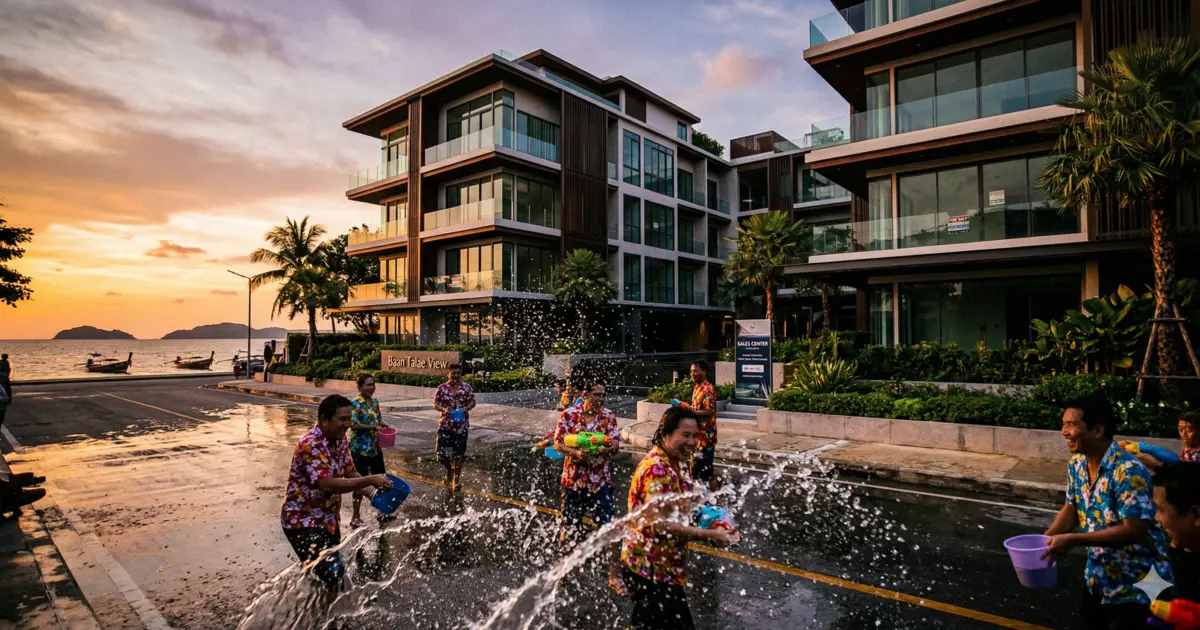
Every April, something predictable happens in Thailand's property market. Millions of tourists flood into the country for Songkran — the Thai New Year festival — and a small but significant percentage of them leave with something they didn't plan on: a signed reservation agreement for a condo or villa they viewed 48 hours earlier.
It's not that Thailand is a bad place to buy property. With 587 active listings across the country's most desirable locations, the market offers genuine opportunity. But the timing of when and how foreigners make their buying decisions during holiday seasons — particularly Songkran — creates a perfect storm of poor judgment, incomplete research, and expensive regret.
This article examines the data behind why the festive season is the worst time to sign a property contract in Thailand, drawing on market reports from CBRE, Knight Frank, and REIC, academic research into impulse psychology, and real cases of foreign buyers who wished they'd waited.
The Songkran Effect: When Vacation Mode Meets Real Estate
Songkran runs from April 11–15, but its gravitational pull on the property market starts weeks earlier. Developers schedule open houses, agents organize "exclusive viewing tours," and the entire machinery of Thailand's real estate marketing engine shifts into high gear to capture the attention of tourists who are relaxed, happy, and spending money freely.
The formula is simple: high tourist volume + festive atmosphere + aggressive marketing = impulsive commitments.
In 2026, the Tourism Authority of Thailand projected over 30.35 billion baht in revenue for the five-day Songkran period alone. Even with a projected 3.7% decline in spending compared to 2025 (driven by rising fuel costs and airfare increases of 20%+), the sheer volume of international visitors creates what psychologists call "social proof" — when you see thousands of people enjoying Thailand, the country feels like a smart investment.
Warning
The atmosphere that makes Songkran magical for tourists is the same atmosphere that makes it dangerous for property decisions. The gap between "I love this place" and "I just signed a contract" can be as short as one afternoon.
Your Brain on Holiday: The Science of "Vacation Brain"
The poor decisions foreigners make during Thai holidays aren't simply recklessness — they're neurobiological. Academic research into consumer behavior shows that during travel, the brain is flooded with dopamine while cortisol (the stress and risk-aversion hormone) drops precipitously. Consumer psychologist Dr. Kit Yarrow describes this as a "financial hiatus" where the brain's executive function — responsible for long-term planning and critical evaluation — effectively takes a holiday along with you.
Research published in MDPI using the HEXACO personality model found that impulsive buying has both cognitive and affective components. The cognitive component is a lack of planning and deliberation. The affective component is an intense emotional response. During Songkran, both fire simultaneously.
| Psychological Trigger | How It Works | Real Estate Example |
|---|---|---|
| Dopamine Surge | New experiences trigger reward chemicals | Viewing a sea-view condo feels euphoric, not analytical |
| Mental Accounting | Separate "vacation budget" feels unlimited | THB 200K deposit feels small against holiday spending |
| Social Proof | Seeing others enjoy Thailand validates buying | "Everyone's investing here — I should too" |
| FOMO (Scarcity) | Fear of returning to "normal life" without an escape | Agent says "only 3 units left in the foreign quota" |
| Aspirational Identity | Buying the lifestyle version of yourself | Not buying a condo — buying "the Thailand life" |
Here's the statistic that should make every holiday buyer pause: 73% of vacationers choose the more expensive option when given choices during travel. This "mental accounting" means tourists create a separate budget category for vacation spending that feels almost unlimited compared to domestic habits. Now apply that psychology to a THB 5–20 million property decision.
The Numbers Don't Lie: Peak vs. Low Season Pricing
Thailand's property market in 2025–2026 shows a clear "two-speed" trajectory. Nationally, residential prices rose just 0.63% year-on-year in Q4 2025. But the regional picture tells a very different story — and it's the regional story that holiday buyers see.
| Region | Q4 2025 YoY Change | 5-Year Growth | Holiday Buyer Risk |
|---|---|---|---|
| Bangkok | -0.70% | +11.28% | Moderate — oversupply in mass market |
| Phuket / Samui | +5.48% | +12.79% | High — peak season illusion |
| Chiang Mai | +4.04% | +16.14% | Moderate — Songkran is huge here |
| Pattaya | Variable | +13.69% | Very High — 9-25% overpricing |
Data synthesized from REIC, Global Property Guide, and CBRE Thailand reports (2025–2026).
The trap is clear: holiday buyers visiting Phuket or Samui see a booming market with 5.48% annual growth and assume the whole country is on fire. They don't see the -0.70% contraction in Bangkok or the rising unsold inventory in low-rise housing that developers are scrambling to clear.
The Rental Yield Illusion
Developers and agents show rental projections based on peak season occupancy — 80–95% in Phuket villas during December through February. What they don't mention:
- Low season (June–September): occupancy drops to 35–50%
- Pattaya long-term rentals: 20–30% lower than the "holiday rates" shown during viewings
- Management fees and sinking funds in luxury developments can be substantial and unpredictable
- Some Pattaya projects are 9–25% overpriced based on current FazWaz and Dot Property market data
A Samui sea-view villa might promise 7.2–7.5% net returns, but that assumes year-round demand. The reality is that four months of monsoon season represent 25% of the year at dramatically lower revenue — a fact conveniently omitted during a sunny April viewing.
5 High-Pressure Tactics Agents Use During Holiday Season
Thailand does not require mandatory licensing for real estate agents. This lack of regulation, combined with the high volume of potential leads during holiday periods, creates an environment ripe for aggressive — and sometimes deceptive — sales practices.
Warning: These Tactics Are Common
These aren't isolated incidents — they are documented patterns reported across forums like Reddit's r/ThailandTourism, ASEAN NOW, and Thai legal advisory firms.
- Ghost Listings — Agents post attractive units at appealing prices to generate inquiries. When you call, the unit is "just sold" and you're redirected to higher-priced or lower-quality alternatives.
- Foreign Quota Scarcity — "Only 3 units left in the foreign quota!" Thailand's Condominium Act limits foreign ownership to 49% of total units, and agents exploit this real limitation with false urgency claims.
- Model Unit Illusion — You're shown a meticulously staged unit with premium furnishings and upgrades that aren't included in the standard contract. The actual unit on handover looks nothing like what you toured.
- Quick Big Win Pressure — In 2026, the government's "Quick Big Win" policy reduced transfer and mortgage fees to 0.01% for properties up to THB 7 million (valid until June 30, 2026). Agents leverage this 2% saving to pressure closing within days, bypassing weeks of necessary due diligence.
- The Deadline Close — "This price is only valid during Songkran" or "The developer is raising prices next month." In reality, Bangkok and Pattaya markets have significantly more negotiation flexibility than most agents admit, especially during the shoulder season.
Thailand's Missing Safety Net: No Cooling-Off Period
This is perhaps the single most important fact that every foreign buyer needs to understand: Thailand has no statutory cooling-off period for property purchases.
While the Thai Consumer Protection Act (CPA) grants a 7-day cooling-off period for online purchases, door-to-door sales, and direct marketing, this rarely applies to standard real estate transactions conducted in a sales office. The moment you sign a reservation agreement and pay the deposit — typically THB 50,000 to 200,000 — that money is non-refundable unless the developer defaults.
| Country | Cooling-Off Period | Typical Deposit | Buyer Protection |
|---|---|---|---|
| Thailand | None | 50K–200K THB (non-refundable) | Civil court only (slow, costly) |
| Spain | 14 days (commonly) | 10% via arras contract | Regulated by housing law |
| Australia | 3–10 days (by state) | 0.25% holding deposit | Statutory right to rescind |
| UK | Until exchange of contracts | Nominal | Right to withdraw before exchange |
| Portugal | None (general) | Variable | Depends on CPCV exit clauses |
An impulsive decision made on a Saturday afternoon during Songkran is legally binding by Monday morning. There is no "I changed my mind" option. In countries like Australia or Spain, you'd have days — sometimes weeks — to reconsider. In Thailand, once the ink dries, your deposit is gone.
Legal Landmines of Rushed Due Diligence
A proper title search at a Thai Land Office takes only a few days. Yet during holiday buying sprees, this basic step is frequently skipped — with devastating consequences.
Title Deed Confusion
Many foreign buyers don't understand that not all Thai land titles are created equal. Only the Chanote (Nor Sor 4) provides full ownership rights with GPS-measured boundaries. Lower-grade titles carry escalating risks:
| Title Type | Transferable? | Risk Level | Key Issue |
|---|---|---|---|
| Chanote (NS4) | Yes | Low | Gold standard — GPS boundaries |
| Nor Sor 3 Gor | Limited | Medium | No official boundaries — neighbor disputes common |
| Nor Sor 2 | Restricted | High | Temporary occupation only — cannot be sold |
| Possessory Rights | No | Extreme | Government can seize without compensation |
The Nominee Structure Time Bomb
Since foreigners cannot own land in Thailand, many are advised by unscrupulous agents to use "nominee" arrangements — a Thai national or company holds the land title on the foreigner's behalf. This is illegal under both the Foreign Business Act and the Land Code.
In 2025, Thailand's Department of Business Development (DBD) announced plans to inspect 26,830 businesses suspected of using nominee structures in the real estate and tourism sectors. The risks are catastrophic:
- If the nominee dies, the property legally transfers to their heirs — who can evict you
- Nominees can sell or mortgage the land without your consent, since you have no legal standing
- Both parties face criminal charges — imprisonment and heavy fines if the structure is discovered
Real Case: Kata Beach Fraud
The Kata Beach Company Limited scheme in Phuket accepted millions of baht for units in a project built on land with no proper title and illegally issued permits. When the permits were revoked, the company went silent — and had no assets to repay victims. Over 60% of property fraud cases in Thailand involve "fellow nationals" acting as developers or agents, exploiting the trust of buyers from their home country.
The Currency Trap: When Exchange Rates Eat Your Savings
Here's a financial reality that almost no holiday buyer considers: Thailand has become 15–25% more expensive in US dollar terms compared to 2016. The Thai Baht tends to strengthen during the high tourist season as massive amounts of foreign currency flow into the economy.
For a property purchased at THB 10 million, a shift in the exchange rate from 36 to 34 THB/USD increases the dollar cost by over $16,000. Since most foreign buyers commit to a THB-denominated price during peak season (when the baht is strongest), they're effectively buying at the worst possible exchange rate.
The problem compounds with off-plan purchases. The typical payment structure requires 30–50% as a "balloon payment" upon completion — often 12–24 months after the initial commitment. If the buyer's home currency weakens during that period, the final cost in real terms can be dramatically higher than budgeted.
Smart Move
If you're serious about buying, consider consulting a currency specialist about hedging strategies before committing. Locking in an exchange rate for future payments could save you 5–10% on the total purchase price. Read more about hidden costs of buying property in Thailand.
Global Buyer's Remorse: Thailand vs. Spain vs. Bali
Post-purchase regret in holiday property markets is a global phenomenon. But the specific drivers — and the available safety nets — vary dramatically.
| Market | 2025 Trend | Primary Regret Driver | Data Transparency |
|---|---|---|---|
| Thailand | Regional divergence | Nominee risks + no cooling-off | Low (no centralized MLS) |
| Spain | 10% drop in non-resident buyers | Sudden rental regulation changes | High (INE tracked) |
| Portugal | Steady demand | Data opacity + high entry costs | Medium (fragmented) |
| Bali | Growth | Leasehold complexity + land use issues | Low (local custom) |
In Spain, the 2025 market saw tourist home listings drop by 12.4% year-on-year — the largest annual reduction on record — after new regulations required official registration numbers for all short-term rentals. Holiday buyers who purchased based on optimistic 2023 rental projections found their investment undermined by policy changes they never anticipated.
The lesson for Thailand buyers: regulatory risk is real. A condominium's juristic person can vote to ban Airbnb-style rentals in the building, wiping out your projected rental income overnight. This risk is invisible during a sunny Songkran viewing.
Songkran 2026: What the Tourism Data Tells Us
The 2026 Songkran period presented a more nuanced picture than the typical "peak season frenzy." Several indicators suggest the market is softening in ways that benefit patient buyers:
- Khao San Road visitors: dropped from 100,000/day (2025) to 80,000/day (2026)
- Hotel occupancy: below 50% in many areas, versus the usual 90%+
- Tourism revenue: projected 3.7% decline compared to Songkran 2025
- 2026 arrival targets: revised downward from 36.7 million to 32.14 million
- Energy crisis impact: fuel prices and electricity costs dampened Songkran enthusiasm nationwide
For property buyers, this softening is actually good news — if you wait. Fewer tourists means less competition for viewings, more negotiation leverage with developers sitting on unsold inventory, and a clearer picture of what the market actually looks like without the rose-tinted glasses of a festival atmosphere.
How to Protect Yourself: The Smart Buyer's Checklist
None of this means you shouldn't buy property in Thailand. The market offers genuine value — search our 587 verified listings to see what's available. But the timing and process of your purchase matters enormously.
The Golden Rule
Treat your holiday viewing as a preliminary survey only. A binding commitment should only be made during a subsequent visit in the low season, when tourist crowds have dissipated and the property's real performance can be evaluated under normal conditions.
Before you sign anything during Songkran (or any holiday), complete every item on this list:
- Verify the title deed — Insist on a Chanote (Nor Sor 4). Walk away from anything less unless you fully understand and accept the risks. Read about common property scams and red flags.
- Check the foreign quota — Verify the 49% limit directly at the Land Office, not from the agent's claims.
- Never use a nominee structure — It's illegal, and the crackdown is intensifying. Consider a legitimate leasehold instead.
- Hire an independent lawyer — Not the developer's lawyer, not the agent's recommendation. An independent Thai property lawyer who works for you.
- Request low-season rental data — Ask for 12 months of actual occupancy data, not projections. If the property is new, get comparable data from similar units in the area.
- Factor in ALL costs — Transfer fees, annual taxes, maintenance fees, sinking fund, management fees. Read our complete guide to hidden costs.
- Sleep on it — for weeks — If the deal is real, it will still be available when you return in July. If it's not, it wasn't real.
- Visit in the low season — See the property when it's raining, when the tourist restaurants are empty, when the pool area is quiet. That's the reality 4–5 months of the year.
Sources & References
- CBRE Thailand — Thailand's Real Estate Market in 2026: Balancing Risk and Reward
- CBRE Thailand — 2026 Outlook: Quality Over Quantity
- CBRE Global — 2026 Thailand Real Estate Market Outlook
- Bangkok Post — Thailand Property 2026: Strategic Balance of Risk and Reward
- Knight Frank — Thailand Market Report 2023
- Global Property Guide — Thailand Residential Property Market Analysis 2026
- Mordor Intelligence — Thailand Residential Real Estate Market Analysis
- MDPI — Impulsive Buying Tendencies and Personality: Cognitive and Affective Aspects
- UMass ScholarWorks — Exploring Unplanned/Impulsive Travel Decision Making
- Dr. Nicole Arnett Sanders — Beachside Buys: Why Vacations Turn Us Into High-Spending Consumers
- PATA — Impulse and Indulgence: The Psychology of Unplanned Luxury Consumption
- Savills — The Foreign Buyer's Complete Guide to Thai Property Law (2025 Edition)
- Thairath English — TAT Expects Songkran Festival 2026 to Generate Over 30 Billion Baht
- Thai PBS World — Spending During Songkran 2026 to Fall by Nearly 4%
- BDO Thailand — Tackling Nominee Businesses and Ensuring Compliance in Thailand
- Siam Legal — Common Pitfalls and Mistakes When Buying Real Estate in Thailand
- Siam Legal — Understanding Title Deeds in Thailand: A Legal Overview
- House Condo Lawyer — Property Fraud Lawsuit in Thailand
- Triumph Property Thailand — 5 Costly Mistakes Foreign Buyers Make in Thailand Property Deals
- Charlesdel — Phuket Real Estate Market 2025 Report
- Conrad Properties Asia — Is Koh Samui the Best Place to Invest in Thai Property? (2025)
- Conrad Properties Asia — 7 Costly Mistakes When Buying Property in Koh Samui
- Horizon Homes Samui — Thailand Real Estate Market Trends 2024-2025
- SKHAI — Thailand's Record Tourism 2026: What 40M+ Visitors Mean for Villa Investment
- Reddit r/ThailandTourism — Be Aware of This Real-Estate Tactic in Thailand
- EU Reporter — Buying Property in Thailand: Tax Misunderstandings to Look Out For
- Krabi Lawyers — Property Due Diligence in Thailand
- Spanish Property Insight — Non-Resident Foreign Buyers Retreat Sharply in 2025
- Idealista — Foreign Buyers Near 100,000 Home Purchases in Spain in 2025
- Harvey Law Group Thailand — Property Sale and Purchase Contract Review
This article was researched using Gemini Deep Research (64 verified sources across CBRE, Knight Frank, Savills, REIC, MDPI, BDO Thailand, and 58 other authoritative websites) and written with AI assistance. All data points are sourced from publicly available reports and verified publications. Last updated: April 2026.