Best Areas to Buy Property in Thailand 2026: Data-Driven Guide for Foreign Buyers
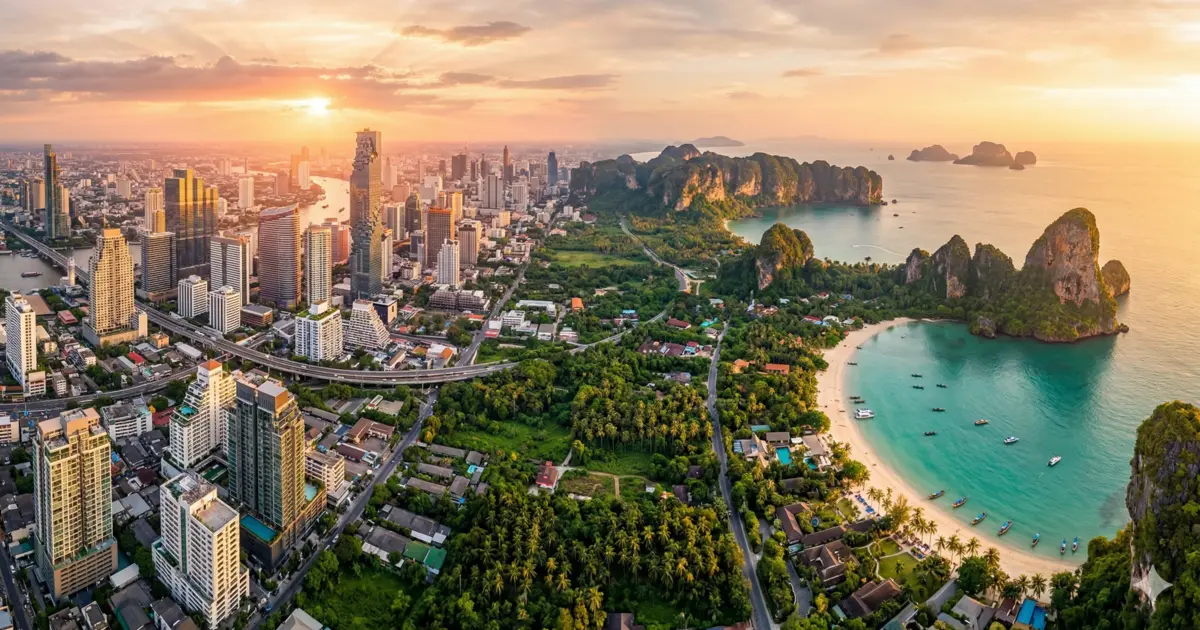
Thailand's property market in 2026 is a two-speed economy. The domestic mass market struggles under 89% household debt-to-GDP and mortgage rejection rates hitting 70% for properties under THB 3 million. But the foreign-facing luxury segment? It's thriving — with developers launching projects almost exclusively for international cash buyers.
If you're a foreign buyer looking at Thailand in 2026, this isn't the market your friend described from 2019. It's more selective, more regulated, and more rewarding for those who know exactly where to put their money. We analyzed data from CBRE, Knight Frank, Savills, JLL, the Real Estate Information Center (REIC), and the Bank of Thailand to create the most comprehensive area-by-area breakdown available.
Already know the basics? Skip straight to our complete guide on foreign ownership rules or the hidden costs nobody tells you about.
Thailand Property Market Overview 2026
The headline numbers tell a clear story of bifurcation. The REIC anticipates nationwide residential transfers to decline by 0.7% in unit volume in 2026, despite government stimulus measures reducing transfer and mortgage registration fees to 0.01% for eligible Thai buyers. Second-hand homes now account for 62% of all transfers as local consumers opt for more affordable, depreciated assets.
But here's the other side: hotel investment activity reached THB 26.4 billion in 2025 — nearly double the 10-year average, according to JLL. Knight Frank reports a 90% sales rate for prime housing units priced between THB 71-99 million in Bangkok. The luxury market doesn't just survive; it accelerates.
Key Takeaway
For foreign investors in 2026, success requires a surgical approach: geographically constrained micro-markets, areas with imminent infrastructure catalysts, and compliance-first legal frameworks. Broad, indiscriminate appreciation is over.
Who's Buying? Foreign Buyer Demographics
Foreign buyers captured 14.7% of total national transactions but a disproportionate 25% of total transfer value in 2025 — they buy premium. In total, 14,899 condominium units were transferred to foreign nationals, a 2.2% year-on-year increase.
| Nationality | Market Share | YoY Change | Focus Areas |
|---|---|---|---|
| Chinese | ~31% of value | -15% volume | Bangkok CBD, Rama 9, Chiang Mai |
| Myanmar | 2nd largest | +42.2% | Bangkok luxury, Chiang Mai |
| Russian | Dominates coast | +2.8% | Phuket, Pattaya |
| Taiwanese | Growing fast | +23.2% | Bangkok, diversification |
| UK | Lifestyle buyers | +15.8% | Hua Hin, Samui, Phuket |
| French | Lifestyle buyers | +21.8% | Hua Hin, Samui, Phuket |
The biggest shift: Chinese buyers are moving from speculative off-plan bulk purchases to end-user lifestyle acquisitions of completed units. Meanwhile, Myanmar buyers have surged as the second-largest foreign purchasing group, driven by geopolitical instability and capital flight.
Legal Framework: What You Can and Cannot Own
Before looking at any specific area, you need to understand the rules — and in 2026, they've tightened considerably. For the full breakdown, read our complete foreign ownership guide.
Critical Legal Updates for 2026
49% → 75% quota proposal: The government has proposed expanding the foreign condominium quota from 49% to 75%, but foreign owners in the expanded tier would forfeit voting rights. Not yet enacted.
"30+30+30" is dead: Thailand's Supreme Court (Decision No. 4655/2566) ruled that pre-paid automatic renewal clauses beyond 30 years are legally unenforceable. The maximum registered lease remains strictly 30 years.
Nominee crackdown: Authorities are aggressively prosecuting nominee company structures with forced property disposals within 180 days and permanent deportation.
The safe options: freehold condominium ownership (within the 49% quota) with Foreign Exchange Transaction (FET) proof, or a cleanly structured 30-year registered leasehold for villas. Read more about the 99-year leasehold proposal and what it means for buyers.
Bangkok: The Capital Powerhouse
Bangkok is a highly segmented market where prime CBD assets maintain their value through extreme land scarcity, while outer suburban corridors face mass-market oversupply. Browse Bangkok properties on BaanRow.
| District | Price/sqm (THB) | Price/sqm (USD) | Rental Yield | YoY Growth |
|---|---|---|---|---|
| Sukhumvit Core | 160,000–300,000+ | $4,700–$8,820+ | 4.0%–5.5% | +3.4% |
| Silom / Sathorn | 140,000–220,000 | $4,110–$6,470 | 4.0%–5.0% | +2.8% |
| Ari / Phahonyothin | 100,000–160,000 | $2,940–$4,700 | 4.5%–6.0% | +2.0% |
| Rama 9 / Ratchada | 110,000–170,000 | $3,230–$5,000 | 5.0%–7.0% | +4.1% |
| On Nut / Bang Na | 80,000–120,000 | $2,350–$3,530 | 5.5%–7.5% | +1.5% |
Sukhumvit Core (Asoke to Ekkamai)
The undisputed epicenter of Bangkok's premium expatriate market. Ultra-luxury developments exceed THB 280,000/sqm, and the foreign quota is routinely maxed out, making resale foreign-quota units highly liquid. The tenant base is anchored by Japanese corporate expatriates in Phrom Phong and Western executives in Asoke — virtually zero vacancy for correctly priced units. Lifestyle is unmatched: Bumrungrad and Samitivej hospitals, Bangkok Prep International School, and the city's best dining within walking distance.
Rama 9 / Ratchada — The "New CBD"
The highest growth story in Bangkok. An impressive 4.1% annual appreciation driven by the MRT Orange Line completion, making it a massive transit hub. Rental yields hit 5–7% thanks to the Grade-A office workforce. Chinese buyers dominate the 49% foreign allocation here. The risk? Sheer tower density — stick within 500 meters of the MRT or face oversupply competition.
On Nut / Bang Na — The Yield Play
The best volume-to-value ratio in Bangkok. At THB 80,000–120,000/sqm, entry prices are accessible, and yields regularly exceed 7%. The upcoming Bangkok Mall (one of Southeast Asia's largest) and proximity to Bangkok Patana International School add fuel. The catch: older buildings lose tenant appeal quickly as new launches flood the market.
Phuket: Asia's Luxury Island
Phuket has entirely decoupled from the Thai mainland market. Foreign buyers now account for 60–70% of all residential transactions on the island, using cash equity. The prime west coast faces a severe land shortage, driving double-digit villa price appreciation. Explore Phuket properties on BaanRow.
| Zone | Price/sqm (THB) | Rental Yield | YoY Growth |
|---|---|---|---|
| Bang Tao / Laguna | 140,000–180,000 | 6.0%–8.0% | +10–15% |
| Kamala | 130,000–160,000 | 6.0%–9.0% | +12–18% |
| Kata / Karon | 110,000–150,000 | 7.0%–10.0% | +7–10% |
| Rawai / Nai Harn | 100,000–130,000 | 6.0%–8.0% | +8–12% |
Kamala — Phuket's "Millionaire's Mile"
The island's appreciation champion: 12–18% year-over-year for landed estates, driven by zero remaining ocean-facing plots. Luxury hillside villas command THB 150,000–400,000/month during high season. The planned Kamala-Patong road tunnel will be a massive connectivity catalyst. Seasonality is the risk — monsoon months bring sharp occupancy drops.
Kata / Karon — The Yield Engine
Hotel-licensed condominiums can push 8–10% gross yields during peak tourism. The lowest entry point on Phuket's west coast makes this ideal for yield-focused investors. But the lack of international schools and hospitals means long-term residential leases are nearly impossible to secure.
Rawai — The Wellness Alternative
A bohemian, wellness-oriented community popular with digital nomads and retirees. Year-round rental stability at 6–8% because tenants sign 6-to-12-month leases, not volatile weekly holiday bookings. The trade-off: over an hour from the airport.
Phuket Infrastructure Watch
Two massive catalysts: the Phase 2 airport expansion adding 5 million annual passengers by 2027, and the Kathu-Patong Elevated Expressway (completion 2030) cutting cross-island travel time dramatically.
Pattaya: The EEC Transformation
Pattaya's real story in 2026 isn't nightlife — it's the Eastern Economic Corridor (EEC). The government's massive industrial and logistics initiative is transforming the eastern seaboard, and Chon Buri province is ground zero.
| Zone | Price/sqm (THB) | Rental Yield | YoY Growth |
|---|---|---|---|
| Wongamat | 160,000–250,000+ | 5.0%–6.0% | +6.0% |
| Pratumnak Hill | 110,000–160,000 | 5.5%–7.0% | +4.5% |
| Jomtien | 80,000–120,000 | 6.0%–8.0% | +3.5% |
Wongamat — Absolute Beachfront
The only area in Pattaya offering true, direct beachfront high-rises — no coastal road separating you from the sand. Ultra-luxury penthouses exceed THB 300,000/sqm. This is a pure capital-preservation play rather than a yield generator, attracting affluent Thai weekenders and wealthy European retirees. Foreign quota in completed beachfront towers is exceptionally tight.
Jomtien — Maximum Yield
The best volume-to-value ratio on the eastern seaboard. Yields frequently hit 7–8%, but the risk is real: mega-complexes create intense competition, and unrenovated units lose tenants fast. Superior interior design is non-negotiable for maintaining occupancy.
EEC Game-Changer
The U-Tapao Airport expansion into Bangkok's third international hub, plus the High-Speed Rail linking Don Mueang, Suvarnabhumi, and U-Tapao, will absorb Pattaya into the greater Bangkok commuter belt. Long-term capital appreciation is virtually assured across all sub-markets.
Chiang Mai: Digital Nomad Capital
Chiang Mai is fundamentally different from the southern coastal markets. It's not about high-yield tourism — it's a culturally rich, affordable haven for digital nomads, early retirees, and lifestyle expatriates. REIC data shows foreign buyer transfers in Chiang Mai actually fell 28% in 2025, confirming this is an end-user market, not a speculative one. See Chiang Mai listings on BaanRow, or read our Digital Nomad's Guide to Thailand Property.
| Zone | Price/sqm (THB) | Rental Yield | YoY Growth |
|---|---|---|---|
| Nimman | 80,000–110,000 | 5.0%–6.0% | +2.0% |
| Old City | 70,000–90,000 | 4.5%–5.5% | +1.5% |
| Santitham | 50,000–75,000 | 6.0%–7.0% | +3.0% |
Nimman — The Blue-Chip Northern Play
Dense with co-working spaces, high-end cafes, and boutique retail. The most liquid resale market in the north with the easiest tenant acquisition — mid-term leases from high-earning remote workers. Zoning restrictions naturally cap new supply, protecting resale values.
Santitham — The Value Play
At THB 50,000–75,000/sqm, this is Chiang Mai's best investment entry point. Walking distance to Nimman but at a 40% discount. Modern studios generate 6–7% yields with foreign quota widely available.
Warning: Burning Season
Every year from late February through April, agricultural burning creates hazardous air quality across northern Thailand. This causes a predictable exodus of expatriate tenants. Factor in 2–3 months of vacancy or discounted rent when calculating yields.
Koh Samui: The Breakout Star
Samui is actively absorbing the overflow of foreign capital priced out of Phuket. Strict environmental regulations prevent high-rise construction, preserving a boutique, low-density aesthetic as the island transitions into a structured investment hub.
| Zone | Price/sqm (THB) | Rental Yield | YoY Growth |
|---|---|---|---|
| Chaweng / Chaweng Noi | 85,000–120,000 | 7.0%–10.0% | +8.0% |
| Bophut | 70,000–100,000 | 6.0%–8.0% | +7.5% |
| Maenam | 60,000–90,000 | 5.5%–7.5% | +6.0% |
Chaweng — Maximum Returns
Gross yields exceeding 9–10% for well-managed properties, combined with 8% capital appreciation. The short-term Airbnb market is exceptionally strong, but 100% dependent on tourism volumes — any travel shock hits cash flow immediately.
Bophut — The Lifestyle Sweet Spot
Fisherman's Village offers refined dining and heritage charm without the chaos of Chaweng. Perfect for a blended strategy of personal use and mid-term rental at 6–8% yield. Garden villas from THB 6–15 million.
Samui Airport Expansion
Bangkok Airways is investing THB 1.5 billion to expand Samui Airport — increasing daily flights from 50 to 73 movements and allowing larger international jets. This will close the "accessibility gap" with Phuket and directly catalyze property values island-wide by 2027–2028.
Hua Hin: The Royal Retreat
Thailand's historic royal resort town: slow, methodical, non-speculative growth. The market is insulated from volatile tourism swings, driven instead by Northern European retirees and affluent Bangkok weekenders. Browse Hua Hin area properties on BaanRow.
| Zone | Price/sqm (THB) | Rental Yield | YoY Growth |
|---|---|---|---|
| Khao Takiab | 110,000–150,000 | 5.0%–7.0% | +5.0% |
| Town Center | 90,000–120,000 | 5.0%–6.5% | +4.0% |
| Pranburi | 60,000–85,000 | 4.5%–6.0% | +3.5% |
Khao Takiab is the premium pick — beachfront condos near world-class golf courses with strict height zoning that limits supply. Pranburi offers eco-luxury villas at a 40% discount for investors willing to wait for Hua Hin's southward urban sprawl.
The long game: the Southern High-Speed Rail (Phase 1 targeting Hua Hin by 2032) will cut the Bangkok commute to 90 minutes, fundamentally reshaping land values. Understand the costs with our 10-year ownership cost breakdown.
Krabi: The Emerging Frontier
Krabi is in an earlier, more speculative stage of maturation — and that's exactly why some investors are looking here. At THB 55,000–75,000/sqm, Ao Nang offers massive discounts compared to Phuket's west coast.
| Zone | Price/sqm (THB) | Rental Yield | YoY Growth |
|---|---|---|---|
| Ao Nang | 55,000–75,000 | 6.0%–8.0% | +4.0% |
Yields of 6–8% from seasonal European and Asian tourists, with foreign quota widely available. The risks: heavy monsoon seasonality, limited permanent expatriate infrastructure (no major international schools or private hospitals), and civic infrastructure that lags behind the pace of commercial development. Best suited for yield-focused investors and holiday-home buyers rather than families relocating full-time.
Best Area by Buyer Profile
Every buyer has different priorities. Here's our data-driven recommendation matrix based on the 2026 market dynamics:
| Your Goal | Best Location | Asset Type | Why |
|---|---|---|---|
| Maximum Yield | Phuket (Kata), Pattaya (Jomtien), Samui (Chaweng) | Hotel-licensed condos | 8–10% gross yields at low entry prices |
| Capital Preservation | Bangkok (Sukhumvit), Phuket (Bang Tao) | Luxury freehold condos | Land scarcity + blue-chip tenant base = liquidity |
| Retirement | Hua Hin (Town/Takiab), Chiang Mai (Nimman) | Low-rise condos, garden villas | World-class healthcare, low cost, established expat community |
| Digital Nomad | Chiang Mai (Nimman/Santitham), Phuket (Rawai), Bangkok (On Nut) | Mid-market condos | Co-working density, fast internet, vibrant communities |
| Family Relocation | Phuket (Bang Tao), Bangkok (Bang Na/Sukhumvit) | 3–4 bed villas, large condos | Tier-1 international schools, pediatric care, beach clubs |
Wondering what happens to foreign buyers years after their purchase? Read our investigation into what happened to foreigners who bought Thai property 10 years ago. For the complete buying process, see our step-by-step condo buying timeline.
Don't forget the money side: review the complete tax guide for foreign owners and learn to spot the 10 red flags every buyer must know. And if you're still weighing your options, our analysis of renting vs buying for expats may help.
Sources & References
- CBRE Thailand — 2026 Thailand Real Estate Market Outlook
- Knight Frank Thailand — Prime Housing Market Report & Luxury Segment Analysis
- Savills — The Foreign Buyer's Complete Guide to Thai Property Law (2025 Edition)
- JLL Thailand — Hotel Investment Activity & Industrial Market Outlook
- Real Estate Information Center (REIC) — National Residential Transfer Statistics & Foreign Buyer Data
- Bank of Thailand — Financial Stability Review & Household Debt Data
- Office of the Council of State (Krisdika) — Condominium Act B.E. 2522, Land Code Act, Civil and Commercial Code
- Board of Investment (BOI) — Long-Term Resident Visa & Foreign Investment Regulations
- Department of Business Development — Foreign Business Act & Nominee Structure Enforcement
- Department of Lands — Foreign Condominium Ownership Transfer Statistics
- Phuket International Airport — Phase 2 Expansion Plans
- Eastern Economic Corridor Office — EEC Infrastructure & U-Tapao Development
- Bangkok Airways — Samui Airport Expansion Investment (THB 1.5 Billion)
- National Economic and Social Development Council (NESDC) — GDP & Economic Forecast Data
- Supreme Court of Thailand — Decision No. 4655/2566 (Leasehold Renewal Ruling)
This article was researched using Gemini Deep Research (125+ verified sources across CBRE, Knight Frank, Savills, JLL, REIC, Bank of Thailand, and government agencies) and written with AI assistance. All price data reflects Q1 2026 market conditions. Last updated: April 2026.