Digital Nomad's Guide to Living & Investing in Thailand Property in 2026
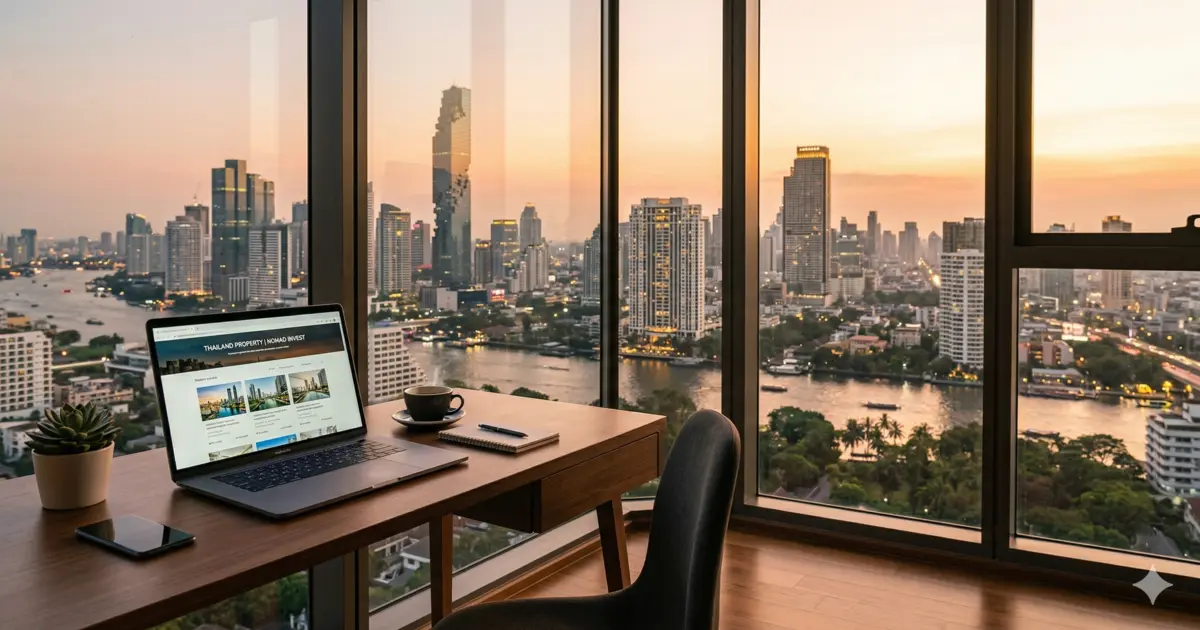
The laptop-and-passport lifestyle has evolved. What started as a movement of young backpackers bouncing between hostels and beach cafes has become a $787 billion annual economic force driven by mid-career professionals earning six figures. And increasingly, these digital nomads aren't just renting in Thailand — they're buying.
With over 40 million digital nomads worldwide (a 147% increase since 2019), Thailand has positioned itself as the #2 destination globally for remote workers, behind only Mexico. The introduction of the Destination Thailand Visa (DTV) has been a game-changer, giving nomads legal residency for up to five years — and the confidence to start treating Thailand not just as a place to work, but a place to invest.
This guide breaks down everything you need to know about living and investing in Thai property as a digital nomad in 2026 — from visa requirements and legal ownership rules to city-by-city yield comparisons and the tax traps that catch newcomers off guard.
Why Digital Nomads Are Buying Property in Thailand
The digital nomad of 2026 looks nothing like the stereotype. According to recent data, 49% are aged 30–39, and 38% are 40 or older — leaving only 13% in their twenties. A remarkable 90% hold a university degree (35% with a master's, 3% with a PhD), and over one-third earn between $50,000 and $100,000 annually. Many in tech-adjacent roles earn up to $250,000.
Perhaps most telling: 26% of U.S. digital nomads now travel with children, participating in "worldschooling." And 55% live with a partner or spouse. These aren't transient travelers — they're dual-income households looking for stability, international schools, and long-term homes.
Key Insight
Thailand captures approximately 12% of the global nomad market. The Tourism Authority of Thailand (TAT) has shifted its entire 2026 strategy from "volume to value," targeting 36.7 million arrivals and 2.78 trillion baht in tourism revenue — with digital nomads as a priority demographic.
The math behind the shift from renting to buying is straightforward. A comfortable studio near Chiang Mai's Nimmanhaemin Road runs $900–$1,600 per month in rent. A freehold condo in the same area costs $70,000–$110,000. At 6.32% gross yield, that condo pays for itself while building equity — and you own it outright with a Thai title deed.
Visa Options That Make It Possible
The biggest barrier to nomad property investment was always legal residency. Thailand has systematically dismantled that barrier with three visa pathways designed for long-term foreign residents.
| Visa | For Whom | Duration | Cost | Financial Requirement |
|---|---|---|---|---|
| DTV | Nomads, freelancers, remote workers | 5 years (180 days/entry, extendable to 360) | ~10,000 THB (~$275) | 500,000 THB in savings (~$14,500) |
| LTR | High earners, wealthy pensioners, skilled professionals | 10 years | 50,000 THB | $80,000+/year income or $1M assets |
| Privilege (Elite) | VIPs, investors, affluent retirees | 5–20 years | 650,000–5,000,000+ THB | Membership fee only |
The DTV has attracted over 35,000 applicants in its first year alone. It's the most accessible option for nomads: show 500,000 THB in savings, get health insurance with $50,000 minimum coverage, and you can legally live and work remotely in Thailand for up to a year at a stretch. You can also qualify through cultural activities — Muay Thai training, cooking courses, or wellness programs.
DTV Banking Challenge
Because the DTV is classified as a long-term tourist visa (not a resident visa), many holders face difficulty opening Thai bank accounts. This creates friction when executing property transactions or setting up automated payments. Plan ahead — some banks are more accommodating than others.
For high earners, the LTR visa is compelling: 10-year residency with a flat 17% income tax rate (versus progressive rates up to 35%). The Privilege Visa (formerly Elite) is best for those who want hassle-free residency without income proof — though the entry-level Bronze tier at 650,000 THB is a limited-time offer.
For a detailed breakdown of every visa pathway and how they interact with property ownership, see our comprehensive Thailand Visa Options guide.
Can You Actually Buy? The Legal Reality
Yes — with important constraints. Thailand maintains strict protectionist policies on land ownership, but has carved out a clear, legal pathway for foreigners to own condominiums outright.
Freehold Condos: Your Safest Bet
Under the Condominium Act B.E. 2522, foreigners can own condo units on an absolute freehold basis, with a Chanote title deed in their own name. The only limit: total foreign ownership in any building cannot exceed 49% of the sellable floor area. This is the most secure, liquid investment vehicle for nomads — full legal title, easy to resell, and straightforward to rent out.
For a deep dive into the buying process from reservation to transfer day, see our step-by-step buying timeline.
Leasehold: For Villas and Houses
Foreigners cannot own land in Thailand. For villas, the standard mechanism is a 30-year registered leasehold, often with contractual options for two 30-year renewals (90 years total). However, these renewals are contractual promises — not guaranteed property rights.
In 2026, the Thai property industry is actively lobbying for a 60-year leasehold framework (initial 30 + legally guaranteed 30-year renewal) and an expansion of the foreign condo quota from 49% to 75%. These remain proposals under review — not yet law.
Warning: The Nominee Trap
Using a Thai nominee company to buy land is extremely dangerous in 2026. Authorities have prosecuted 820 cases with damages exceeding 12.49 billion THB. Over 204,000 individuals have been flagged for investigation. Consequences include total asset seizure, company dissolution, criminal charges, and deportation. Every major law firm in Thailand advises against this structure. Stick to freehold condos or registered leaseholds.
For more on property scams and legal pitfalls, including nominee crackdown case studies, see our dedicated guide.
Best Cities for Nomad Property Investment
Thailand's nomad-friendly cities each serve a different investor profile. Here's how they compare in 2026:
| City | Condo Price (USD) | Gross Yield | Internet Speed | Best For |
|---|---|---|---|---|
| Bangkok | $106,000–$317,000 | 6.22% | 300–1,000 Mbps | Career professionals, stable long-term yield |
| Chiang Mai | $70,000–$110,000 | 6.32% | 200–500 Mbps | First-time buyers, tech community, lowest entry |
| Phuket | Variable (villa-driven) | 6.36–7.05% | 150–400 Mbps | Families, luxury lifestyle, branded residences |
| Pattaya | $90,000–$150,000 | 6.86% | 200–600 Mbps | Value investors, EEC growth corridor |
| Koh Samui | Premium (scarcity) | 7.00–10.00% | 100–300 Mbps | Eco-luxury, highest yields, limited supply |
Bangkok: The Urban Yield Engine
Ranked #1 globally for digital nomads on Nomad List, Bangkok offers unmatched infrastructure: BTS/MRT transit, 300+ Mbps broadband, and a dense coworking ecosystem. Studios in Chatuchak yield 7.63%, and one-beds in Phra Khanong hit 6.91%. The Eastern Bangkok corridor (Bang Na, Krungthep Kreetha) is emerging as an "extended business district" near international schools like Wellington College, sustaining steady 5% yields in the luxury segment.
Chiang Mai: The Original Nomad Capital
Ranked #2 globally, Chiang Mai delivers the best geoarbitrage in Thailand. A comfortable solo lifestyle — studio, meals, scooter, coworking — costs just $900–$1,600/month. Property prices are the lowest among major cities, yet gross yields reach 6.32%. The deep tech community around Nimmanhaemin Road, annual events like the SEO Conference (800+ attendees), and the DTV-driven demand make this the ideal entry point for first-time nomad investors.
Phuket: The Family Hub
Phuket has transformed from holiday island to long-term residency hub. Foreign buyers now account for nearly 60% of all transactions. Villa prices rose 4% year-over-year entering 2026. The action centers on Bang Tao, Cherng Talay, and Rawai — areas with international schools, healthcare, and year-round occupancy. For nomad families, branded residences offer 5-star management while you're away.
Pattaya: The Comeback Story
Integrated into the Eastern Economic Corridor (EEC) with an upcoming high-speed rail link to Bangkok, Pattaya is attracting a new wave of professionals. With 53 coworking spaces, 600 Mbps internet, and yields at 6.86%, it's one of the highest-yielding urban zones in the country — and prices remain accessible at $90,000–$150,000.
Koh Samui: The Scarcity Play
Strict building regulations (height limits, shoreline setbacks) cap supply and preserve the island's exclusive feel. This scarcity drives yields of 7–10% for well-managed sea-view villas. The airport expansion (completion 2027) is accelerating capital appreciation. Properties with eco-luxury features (solar, rainwater harvesting) command a 15% rental premium.
Rental Yields and Income Potential
Thailand's national average gross rental yield stands at 6.49% as of Q1 2026, up from 6.28% in late 2025. But the real story is how the DTV has transformed the rental market.
Before the DTV, resort markets suffered brutal seasonal swings — landlords would see income crater during off-peak months. The influx of DTV holders staying 180+ days has created a new "workation" asset class: medium-term tenants who want furnished units with fast Wi-Fi and ergonomic workspaces, paying stable monthly rents instead of volatile nightly Airbnb rates.
| Location | Unit Type | Price (USD) | Monthly Rent | Gross Yield |
|---|---|---|---|---|
| Bangkok (Chatuchak) | Studio | ~$85,000 | $540 | 7.63% |
| Bangkok (Huai Khwang) | 1-Bed | $112,300 | $640 | 6.84% |
| Bangkok (Phra Khanong) | 1-Bed | ~$115,000 | $660 | 6.91% |
| Phuket (Bang Tao) | 1-Bed Condo | Variable | Variable | 6.36–7.05% |
| Koh Samui (Sea View) | Villa | Premium | Premium | 7.00–10.00% |
Net Yield Reality Check
Gross yields look great on paper. But net yields — after taxes, repairs, insurance, and management fees — are typically 1.5–2.0% lower. In resort markets, property management runs 8–15% of monthly rent. A 7% gross yield becomes 5–5.5% net. Still excellent globally — but budget accordingly.
For a complete breakdown of every tax and fee that affects your net yield, see our tax guide.
Tax Implications You Cannot Ignore
The era of casual tax compliance for expats in Thailand is over. Sweeping changes in 2024 fundamentally altered how foreign income is taxed.
The 180-Day Rule
Spend 180+ days in Thailand in a calendar year and you're a tax resident — regardless of visa type. This applies to DTV, LTR, and even Privilege Visa holders.
The Foreign Income Remittance Revolution
Before 2024, foreign income was only taxable if remitted into Thailand in the same year it was earned. The old loophole: earn in 2023, transfer in 2024, pay zero tax. That loophole is closed. Under Departmental Instruction Por.161/2566, all foreign income remitted by tax residents is now taxable regardless of when earned.
One protection remains: income earned before January 1, 2024 is still exempt when remitted — but you must prove the origin through segregated bank accounts and historical statements.
Rental Income Tax
Thailand allows a 30% standard deduction on rental income for expenses. After that plus your personal allowance (60,000 THB), you're taxed on progressive brackets from 5% to 35%. Non-residents face a flat 15% withholding tax.
The good news: Thailand has DTAs with 61 countries, and a new digital tool (launched January 2026) helps calculate Foreign Tax Credits to avoid double taxation.
For the full tax picture including real-world scenarios and optimization strategies, read our complete tax guide for foreign owners.
How to Finance Your Purchase
Most digital nomads buy condos with cash — but financing options do exist for those who want leverage.
| Lender | LTV | Term | Notes |
|---|---|---|---|
| UOB (Singapore) | Up to 70% | Up to 30 years | SGD/USD denominated; freehold condos in Bangkok |
| ICBC | Varies | Varies | Targets Asian buyers; min 2.5M THB property value |
| MBK Guarantee | Up to 50% | Up to 10 years | No work permit needed; ~10% interest rate |
| Developer Plans | N/A | During construction | 25% down + 50% installments + 25% on transfer |
The Crypto and Tokenization Frontier
Thailand's SEC has approved Bitcoin ETFs and crypto futures, but the Bank of Thailand prohibits crypto as direct payment for property. The workaround: Real World Asset (RWA) tokenization.
Projects like RealX Investment Token (SEC-approved, $60M raised) let investors buy tokenized ownership in Bangkok condos with guaranteed 4–5% annual yields for the first five years. One token equals one square inch of space. This model lowers entry barriers by 60% and eliminates property management headaches — ideal for nomads who want Thai real estate exposure without the operational burden.
Real Stories: Wins, Losses, and Lessons
What Works
The most consistent success stories come from nomads who buy freehold condos in central Bangkok along the BTS Sukhumvit line or in the Bang Na corridor. With absolute legal title, stable 5–7% yields, and strong resale liquidity, these properties deliver reliable returns year after year.
In resort markets, branded residences — developments with integrated 5-star hotel management — are the winning formula. They sell 20% faster than unbranded units and generate 5–8% net yields with zero management effort. For a nomad splitting time between Phuket and Europe, this is the stress-free path.
What Fails
The "Freedom Trap": Young nomads buy cheap condos intending to self-manage via Airbnb while traveling. The reality: constant tenant turnover, strict short-term rental regulations, tropical maintenance issues, and what was supposed to be passive income becomes a full-time headache.
The Isolation Mistake: Buying in remote, "authentic" locations that lack fiber-optic internet, coworking spaces, and the social infrastructure that nomads actually need. Result: loneliness and a distressed sale.
The Nominee Catastrophe: The worst outcome — total loss of capital. Nomads who use Thai nominee companies to buy villas face company dissolution, forced property disposal, criminal charges, and deportation when authorities audit the structure.
Risks Every Nomad Investor Must Know
Mass Market Oversupply
While luxury and foreign-focused segments thrive, condos priced under 3 million THB are in crisis. Domestic buyers face 70% mortgage rejection rates. If you buy a cheap condo expecting quick appreciation, you may be stuck with an illiquid asset — too basic for affluent foreigners, too expensive for locals who can't get credit.
Currency risk is real. Your yields are in Thai Baht. A strong Baht reduces purchasing power for incoming tourists (cooling short-term rental demand), while a weak Baht erodes your repatriated returns. Factor exchange rate scenarios into your investment model.
Political and macroeconomic risks remain. Thailand is resilient, but global trade tensions and domestic policy shifts can affect tourism inflows and investor sentiment.
For a comprehensive list of scams and red flags, read our guide on 10 red flags every foreign buyer must know.
Your 2026 Action Plan
If you're a digital nomad seriously considering property investment in Thailand, here's the practical roadmap:
- Secure your visa first. Apply for a DTV ($275, accessible) or LTR (if you qualify for the 17% tax rate). Your visa determines your residency timeline and tax obligations.
- Start with a freehold condo. Don't get seduced by villa dreams and nominee structures. A freehold condo gives you absolute legal title, strong yields, and easy resale.
- Target the right city for your profile. First-time buyers: Chiang Mai ($70K entry). Professionals: Bangkok (highest infrastructure). Families: Phuket (schools + lifestyle). Value hunters: Pattaya (EEC growth).
- Check the foreign quota. Before you commit, verify the building hasn't already hit its 49% foreign ownership limit. Your lawyer should confirm this.
- Plan your tax strategy before buying. If you'll stay 180+ days, your global income remitted to Thailand is taxable. Segregate pre-2024 savings. Consider DTAs. Get professional tax advice.
- Budget for net yield, not gross. Subtract 1.5–2.0% for taxes, management (8–15%), repairs, and insurance. A 6.5% gross yield is really 4.5–5.0% net.
- Use professional management if you'll be away more than a few months per year. Self-management from another country is a recipe for the Freedom Trap.
- Transfer funds properly. Property purchases must be funded via international bank transfer (Foreign Exchange Transaction form required). This is non-negotiable for resale.
Ready to explore available properties? Search our listings across Bangkok, Chiang Mai, Phuket, and more — with AI-powered search in 9 languages.
Sources & References
- DemandSage — Digital Nomad Statistics 2026: population, demographics, income data
- Nomad List — Global city rankings for digital nomads (Bangkok #1, Chiang Mai #2)
- CBRE Thailand — 2026 Thailand Real Estate Market Outlook: pricing, sales rates, projections
- Savills — Thailand property market analysis and two-speed economy assessment
- Global Property Guide — Thailand rental yield data by city and district (Q1 2026)
- Denz Phuket — DTV 2026 complete guide: costs, requirements, application process
- Board of Investment (BOI) — LTR visa program details and Thai investment framework
- Siam Legal — Foreign property ownership laws, nominee risks, Condominium Act B.E. 2522
- The Nation Thailand — 60-year leasehold proposal, developer lobbying, nominee crackdowns
- Silk Legal — Legal analysis of nominee structures and enforcement trends
- ThaiLawOnline — Foreign ownership structures, nominee risk assessment
- HLB Thailand — 2026 tax changes, foreign income remittance rules, DTA overview
- Ookla (Speedtest) — Thailand broadband speed data by region (AIS network)
- Sansiri — Developer strategy: 7.9B THB foreign sales target, Phuket expansion
- IMI Daily — Thailand Privilege Visa tiers, pricing, and membership deadline
- Frank Legal & Tax — Tax residency rules, FIFO method, DTA Foreign Tax Credit tool
- Office of the Council of State (Krisdika) — Condominium Act B.E. 2522, Land Code, Civil and Commercial Code
- DataReportal — Digital 2026 Thailand: internet penetration, connectivity infrastructure
This article was researched using Gemini Deep Research (74 verified sources across 228 references) and written with AI assistance. All data points are sourced from named institutions and cross-referenced for accuracy. Last updated: March 31, 2026.