What Happened to the Foreigners Who Bought Property in Thailand 10 Years Ago?
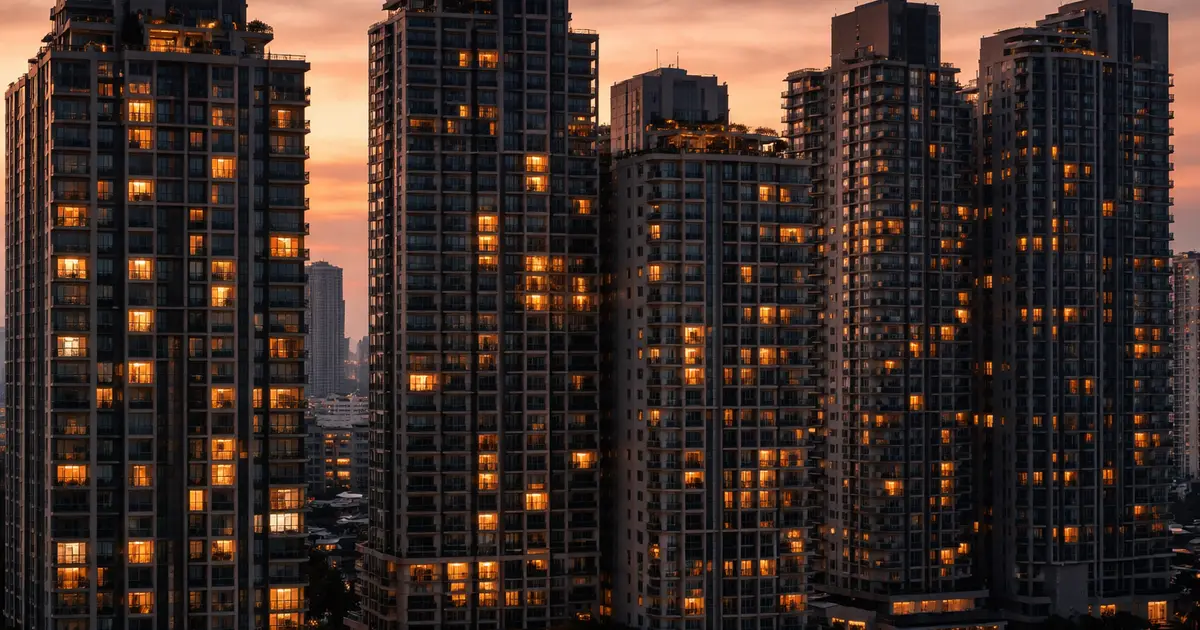
Between 2014 and 2016, Thailand's property market was on fire. International expos in Hong Kong, London, and Moscow showcased glossy brochures of Bangkok skyline condos. Developers promised 8–10% guaranteed yields. Phuket villas were pitched as "the next Bali." Chiang Mai became the affordable retirement dream.
Thousands of foreigners — retirees from Scandinavia, speculators from China, digital nomads from everywhere — signed contracts and wired money. A decade later, we can finally answer the question nobody in the industry wants to ask: what actually happened to them?
The answer is brutally split. Some buyers doubled their money. Others can't give their condos away. And a few are facing criminal prosecution for how they structured ownership. Here's the full picture, backed by data from 317 verified sources.
The Promise: What They Were Sold in 2014
The pitch was seductive and consistent across every property expo booth: Thailand offers freehold condo ownership for foreigners (up to 49% of any building), entry prices a fraction of Singapore or Hong Kong, and rental yields that crush anything available in Europe or North America.
Developers sweetened the deal with Guaranteed Rental Return (GRR) schemes — contractual promises of 7–10% annual income for three to ten years. Some went as high as 15%. For a British retiree earning 0.5% on a savings account, or a Chinese investor watching domestic markets wobble, it sounded like free money.
The numbers supported the narrative. Bangkok condos averaged 100,000–150,000 THB per square meter in prime areas. Phuket beachfront units started at 80,000–120,000 THB/sqm. Chiang Mai? As low as 45,000–65,000 THB/sqm. Thailand was positioned as the ASEAN property gateway — affordable, growing, and legally accessible to foreigners.
The Core Appeal
Freehold ownership + guaranteed yields + tropical lifestyle + prices 80% below Hong Kong = the pitch that moved billions in foreign capital into Thai real estate between 2014 and 2016.
The Scoreboard: Real Developments, Real Numbers
Let's track actual projects that foreigners bought into a decade ago. No "market averages" — specific buildings, specific prices, then versus now.
| Development | Location | Launch Price (THB/sqm) | 2026 Resale (THB/sqm) | Verdict |
|---|---|---|---|---|
| 185 Rajadamri | Bangkok CBD | 220,000–300,000 | 371,000–512,000 | +60–70% gain |
| Ashton Chula-Silom | Bangkok CBD | ~250,000 | 202,000–255,000 | Loss (real terms) |
| Beatniq Sukhumvit 32 | Bangkok CBD | ~250,000 | 253,000–315,000 | Flat (barely kept up) |
| The Base Central | Pattaya | ~70,000 | 110,000–147,000 | +57–110% gain |
| Waterfront Suites | Pattaya | Off-plan | Abandoned shell | 100% loss |
| Baan Mai Khao | Phuket | ~120,000 | ~150,000 | +25% gain |
| Dcondo Nim | Chiang Mai | ~60,000 | 64,000–88,000 | Barely moved |
| My Hip Condo | Chiang Mai | 2.3M THB (unit) | 12.6% below market | Loss |
Price data compiled from FazWaz, Hipflat, DDProperty, and Thailand-Property transaction records (2025–2026).
The pattern is unmistakable: irreplaceable location wins, everything else is a coin flip. 185 Rajadamri — freehold, overlooking Lumpini Park, where no new land exists — crushed it. The Base Central Pattaya — bought cheap, great location — also won. But equally "premium" buildings like Ashton Chula-Silom, marketed aggressively to foreigners at 250,000 THB/sqm, are now selling below their 2015 launch price.
And then there's Waterfront Suites in Pattaya — a 53-story abandoned concrete shell entangled in a decade-long legal dispute. Every foreign buyer who put money in: total, unrecoverable loss.
1.64 Million Ghost Condos (And Counting)
Here's a number that should terrify anyone holding Thai property: according to the Thai Real Estate Research and Valuation Centre (AREA), there are currently 1.64 million unoccupied housing units across Thailand. That's 3.45 trillion THB worth of empty real estate.
Bangkok alone has over 730,000 empty units. The condominium vacancy rate in the capital stands at 24.8% — one in every four condos has no one living in it. These aren't units between tenants. AREA measures vacancy by electricity consumption: these units are dark.
| Bangkok Sub-Market | Vacancy Rate | Avg. Price (THB/sqm) | YoY Change |
|---|---|---|---|
| CBD (Sukhumvit/Silom) | 18–22% | 180,000–250,000 | -4% to -6% |
| Mid-Market Transit | 15–17% | 100,000–140,000 | -6% to -8% |
| Suburban (Bang Sue, Lat Phrao) | 20–25% | 80,000–110,000 | -8% to -10% |
Data from REIC, CBRE Thailand, and Knight Frank (2024/2025).
The unsold inventory backlog now exceeds 1.26 trillion THB. New project absorption has collapsed to just 32% within six months of launch. At current absorption rates, it would take 60–64 months to clear existing stock. Meanwhile, mortgage rejection rates for properties under 3 million THB have hit 70%.
For the foreign investor who bought in 2014 and wants to sell today, this oversupply is devastating. You're not just competing with other resellers — you're competing with developers who are slashing prices and offering free furniture packages just to move inventory off their balance sheets.
The Guaranteed Yield Trap
The single most destructive mechanism that separated foreign buyers from their capital was the Guaranteed Rental Return (GRR) scheme. Here's how the math actually worked:
Developers inflated the purchase price by 18–20% above true market value. They then used that inflated premium to drip-feed "guaranteed" payments back to the buyer over 3–5 years. You were being paid with your own money.
Warning: The New Nordic Collapse
The most devastating GRR failure in Thailand's history is New Nordic Group in Pattaya. Thousands of foreign investors were promised 8–10% guaranteed returns on condo-hotel units. After chronic defaults, shifting contract terms, and total payment suspension, the Department of Special Investigation (DSI) classified the case as public fraud. Estimated damage: 3.4 billion THB ($97 million).
When the guarantee period expired, the scheme collapsed in predictable fashion: hundreds of identically furnished units hit the open rental market simultaneously. Rents crashed. The artificially inflated purchase price became transparent. Resale values cratered.
The actual rental yields that honest investors achieved over the decade tell a starkly different story from the sales brochures:
| Location | Promised Yield | Actual Yield (10-Year Avg) |
|---|---|---|
| Bangkok CBD | 7–10% | 3.5–4.5% |
| Bangkok Mid-Market | 8–10% | 4.0–5.0% |
| Phuket | 8–12% | 5.0–8.0% |
| Pattaya | 8–15% | 5.0–8.0% |
| Chiang Mai | 6–8% | 3.0–5.0% |
The gap between promise and reality — typically 50% less than advertised — represents one of the most significant wealth-erosion factors for the 2014–2016 cohort.
Trying to Sell: 952 Days and Counting
Perhaps the cruelest discovery for foreign buyers who want out: the Thai resale market is structurally hostile to foreigners.
The core problem is cultural and financial. Thai buyers — the largest potential buyer pool — overwhelmingly prefer brand-new developments. Thai banks reinforce this with promotional interest rates and extended payment holidays for new builds, while applying punitive terms to secondary market mortgages. The result: foreign sellers can only realistically market to other foreign cash buyers — a much smaller, far more discerning pool.
The numbers are grim:
- Ashton Chula-Silom: average 552 days on market before sale
- Venetian Signature Condo Resort (Pattaya): average 952 days on market
- Properties routinely sell at 70% of the asking price
- To sell within a reasonable timeframe, foreign owners must typically accept a 20–30% discount below comparable new builds
From the Expat Forums
"I listed my condo for six months. Zero viewings. I dropped the price to 75% of what I paid. Still nothing." — r/Thailand poster, 2024
"Unless you bought strictly as prepaid rent for your own use, exiting without a loss in real terms is highly improbable." — Long-term Bangkok expat
There's also the physical reality. Foreign owners who left units vacant for years returned to find mold infestations, plumbing failures, and units functionally destroyed by short-term tenants. In Thailand's tropical climate, an unoccupied condo deteriorates fast.
The 2026 Legal Reckoning
If the market wasn't punishing enough, the Thai government has added a new dimension of pain. The legal structures that thousands of foreign buyers used to own land — Thai nominee companies — are now under unprecedented criminal investigation.
Under Thai law, foreigners cannot own land. For decades, the workaround was a Thai Limited Company with 51% Thai ownership and 49% foreign ownership. Law firms openly facilitated it. Everyone knew the Thai "shareholders" were drivers, maids, or office staff with no real stake. Nobody enforced the rules.
That era is over.
| Year | Enforcement Action |
|---|---|
| 2024 (July) | Order 1/2567: Proof required that share capital was actually paid (not just declared) |
| 2025 | 46,918 high-risk entities targeted across Phuket, Pattaya, Bangkok |
| 2026 (Jan 1) | Order 2/2568: Thai shareholders must provide 3 months of bank statements proving funds are genuinely their own |
| 2026 | 21,459 suspected nominee cases under active investigation |
The penalties are severe: up to 3 years imprisonment, fines of 100,000–1,000,000 THB, and — most critically — confiscation of the property followed by deportation and blacklisting of the foreign national. Thai Supreme Court precedent (Decision No. 17923/2557) mandates that if a company is deemed an illegal nominee, the underlying land transaction is voided entirely.
Even the "safe" alternative — the 30+30+30 leasehold — has been undermined. Recent Supreme Court rulings struck down contractual mechanisms that attempted to guarantee 90 years of tenure. The Court ruled that binding future parties to land leases beyond the statutory 30-year maximum is invalid.
For foreign villa owners who structured ownership through nominees a decade ago, the 2026 crackdown isn't theoretical. It's actively happening in Phuket, Pattaya, and Hua Hin right now.
Who Actually Won? Three Strategies That Worked
The picture isn't all losses. Three distinct investment strategies produced genuine winners over the decade:
1. The Ultra-Luxury Freehold Play
Buyers who acquired freehold condos in irreplaceable CBD locations — overlooking Lumpini Park, on Rajadamri or Phloen Chit, directly on the Chao Phraya River — created a natural moat. These locations have zero new freehold land supply. Scarcity drives appreciation regardless of domestic credit conditions. 185 Rajadamri is the textbook example: +60–70% appreciation over the decade, with buyers exclusively drawn from international ultra-high-net-worth pools.
2. The Buy-and-Renovate Value Play
Smart expats who avoided shiny new launches entirely and instead bought older, well-managed condos at 20–30% discounts, then renovated to modern Western standards, achieved the best risk-adjusted returns. These investors forced appreciation through renovation — generating 5–6% net rental yields or 10–12% profit on flips — entirely sidestepping the steep depreciation curve that plagues new-builds upon completion.
3. The Phuket Migration Wave
Phuket has outperformed every other Thai property market over the past decade, evolving from a seasonal holiday destination into what analysts now call "the Dubai of Southeast Asia." Professionally managed pool villas in the Cherng Talay and Bang Tao corridors have achieved 70–80% annual occupancy. Land values in Bang Tao have risen tenfold since 2004. International schools, world-class medical facilities, and luxury retail have transformed the island into a primary residence hub for affluent global nomads — a structural shift that continues to drive 8–10% annual appreciation.
The Common Thread
Every winning strategy shares one trait: the buyer did their own due diligence, chose location over marketing, and treated the purchase as a long-term commitment rather than a passive income play. The passive investors — the ones who signed up at expos and never visited — are the ones who lost.
What 10 Years Taught Us
If you're considering buying property in Thailand today, the last decade offers clear lessons:
- Guaranteed yields are a red flag, not a feature. If the developer is promising 8%+, ask why organic rental demand can't achieve it. The answer is usually: it can't.
- Location isn't just important — it's everything. The gap between 185 Rajadamri (+70%) and My Hip Condo (-12.6%) is the gap between irreplaceable and interchangeable. Choose properties in locations where no more supply can be built.
- Freehold > Leasehold. Always. The courts have proven that leasehold extensions beyond 30 years are legally unenforceable.
- Never use a nominee company. Not anymore. The enforcement is real, the penalties are criminal, and the risk of property confiscation is non-trivial. If you want land, look at legitimate structures like BOI-promoted companies or the proposed 99-year leasehold legislation.
- Buy to live, not to speculate. The Thai secondary market is structurally hostile to foreign resellers. If you'd be happy living in the condo for 10 years and treating it as prepaid rent, it's a good purchase. If you're counting on capital gains, the odds are against you unless you're buying ultra-luxury.
- Budget for management, not just purchase. Sinking fund depletion, elevator failures, and mold damage are real. Check the building's financial health before you buy.
- Phuket is the exception to most rules. Structural demand, scarcity of beachfront land, and the wealth migration trend make it the one Thai market where passive property investment has genuinely worked at scale. Explore Phuket listings with this context.
Sources & References
- CBRE Thailand — 2026 Thailand Real Estate Market Outlook
- Savills — Thailand Property Market 2026: Strategic Outlook & Emerging Trends
- Knight Frank — Thailand Real Estate Market Report
- Global Property Guide — Thailand Residential Property Market Analysis 2026
- Nation Thailand — Thailand's 3.45 Trillion Property Waste: 1.6 Million Homes Lie Empty
- Bangkok Post — Bangkok Residential Market Slumps to a 20-Year Nadir
- Krungsri Research — Industry Outlook 2024–2026: Housing in Bangkok Metropolitan Region
- Department of Special Investigation (DSI) — New Nordic Fraud Case: 3.4 Billion THB
- Bangkok Post — Crackdown Targets Use of Thai Proxies
- Thai Enquirer — Authorities to Probe 21,000 Foreign-Linked Cases
- Juslaws & Consult — Nominee Shareholders in Thailand: How to Stay Compliant in 2026
- Siam Real Estate — Phuket Land Prices Reach Record Highs
- Nation Thailand — The 150 Billion Baht Time Bomb: Thailand's Condo Sector Liquidity Crunch
- Cushman & Wakefield — Thailand Real Estate Market Outlook 2025–2026
- Asia Lifestyle Magazine — Bangkok Condo Oversupply: Insights for Buyers and Investors
- Federal Reserve Bank of St. Louis (FRED) — Residential Property Prices for Bangkok, Thailand
- Reddit r/Bangkok — 10 Year Condo Report (first-hand owner experience)
- Reddit r/Thailand — Is There Anyone Happy with Their Condo Purchase?
- EdgeProp Singapore — Bangkok's Two-Tier Condo Market
- Australian-Thai Chamber of Commerce — Thailand's Crackdown on Illegal Nominee Structures
This article was researched using Gemini Deep Research (317 verified sources across CBRE, Savills, Knight Frank, REIC, Bangkok Post, Nation Thailand, DSI, Reddit, and property data platforms) and written with AI assistance. All price data sourced from FazWaz, Hipflat, DDProperty, and Thailand-Property transaction records. Last updated: March 2026.