Getting Your Money Out of Thailand: The FET Form, Repatriation Rules, and What Foreign Sellers Discover Too Late (2026)
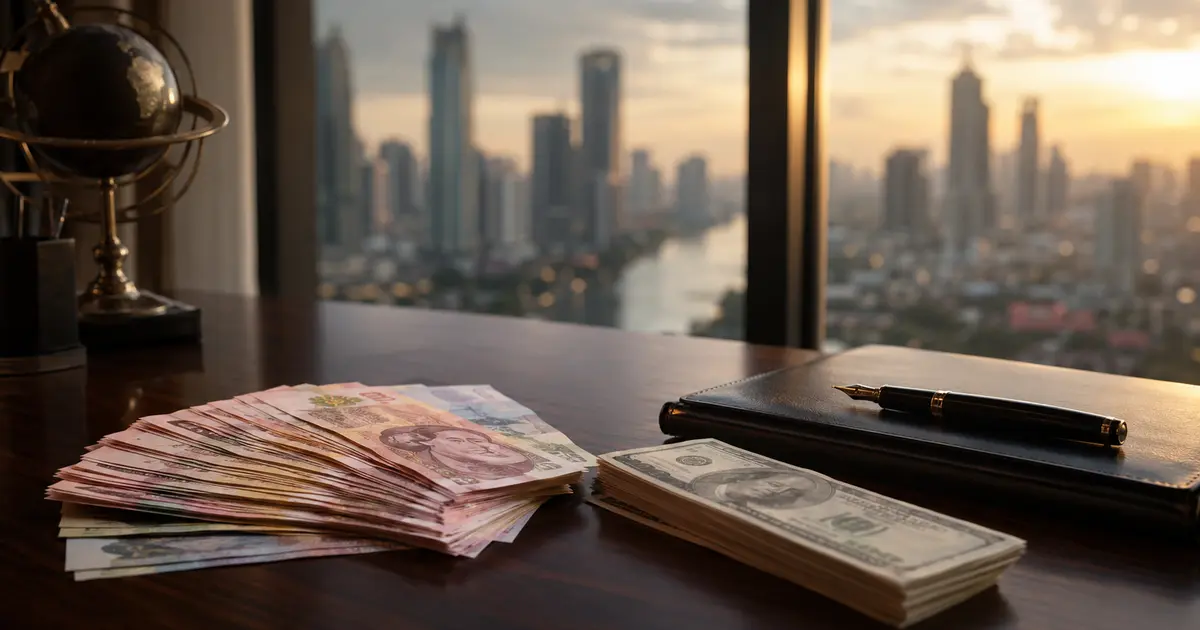
You spent months choosing the right condo, wiring the money, and signing at the Land Office. Years later you sell at a healthy price, the buyer pays in full, and you walk into your Thai bank to send the proceeds home. The bank says no. Not because the money is dirty, but because of a single document you may not even remember collecting on the day you bought. In Thailand, the right to take your sale proceeds out of the country is not automatic. It is earned at the moment of purchase, and foreign sellers who never understood this are the ones left with capital they cannot move.
This guide walks through how repatriation actually works for a foreign condo seller in 2026: the Foreign Exchange Transaction (FET) form that controls everything, the taxes the Land Office deducts before you can leave, the Bank of Thailand rules that decide whether your transfer clears, and the five mistakes that strand foreign money inside the Thai banking system. If you own a Thai condo or plan to, read the exit rules before you need them.
Your Exit Is Decided on the Day You Buy
Foreigners cannot own land in Thailand. The Land Code Act of 1954 closes that door. The one clean route to freehold title is the condominium, opened by the Condominium Act B.E. 2522. Under Section 19 of that act, foreigners can hold absolute freehold title to a unit, evidenced by a Chanote deed, as long as the total foreign-owned floor area in the building stays at or below 49%. To register the transfer, you present a Juristic Person Certificate confirming the building is still inside that quota.
The part most buyers miss is the funding rule baked into the same section. To qualify as an eligible foreign buyer, you must prove that the full purchase price was sent into Thailand in foreign currency from an overseas source. That single requirement is the foundation of your future exit. If the money did not enter the country the right way, the legal pathway to take the sale proceeds out is severed permanently. The asset is yours, but the capital behind it loses the regulatory pedigree that lets it leave.
If you are still at the buying stage, our step-by-step guide to buying a condo as a foreigner covers the inbound side in full. Understanding the different title deed types matters too, because only a Chanote-titled condo gives you the clean freehold this exit strategy depends on.
The FET Form: The Master Key to Getting Money Out
The single most important document in the life of a foreign-owned condo is the Foreign Exchange Transaction form, still widely called by its old name, the Thor Tor 3 (TT3). It is issued only by licensed Thai commercial banks under Bank of Thailand rules, and it certifies one thing: that foreign currency was genuinely brought into Thailand from abroad and converted into Thai baht through the domestic banking system.
The FET works at both ends of your ownership. On the way in, the Land Department demands it to satisfy the foreign-funding rule of Section 19. On the way out, sometimes a decade later, your Thai bank demands the same original form to convert your baht sale proceeds back into a foreign currency and approve the outbound SWIFT transfer. Without it, the bank is legally required to treat the sale proceeds as locally generated income, which a non-resident generally cannot move offshore without restriction.
Key Takeaway
The FET form is not paperwork for the purchase. It is the receipt that proves your money is allowed to leave. Collect it on the day you buy, keep the original, and file it somewhere you will still find it in ten years.
The USD 50,000 Threshold and What Happens Below It
The amount that triggers a standard, official FET form has moved over the years. The Bank of Thailand consolidated its older forms into a single FET in 2004 and set the threshold at USD 20,000. In 2010 it raised the bar to USD 50,000, and that figure still stands in 2026.
| Era | Mandatory FET Threshold | What Changed |
|---|---|---|
| Pre-2004 | Various | Many separate Thor Tor forms by transaction type |
| 2004 | USD 20,000 | Consolidated into one standard FET form |
| 2010–2026 | USD 50,000 | Threshold raised to reduce banking friction |
For any single inward transfer of USD 50,000 or more, the receiving Thai bank must report it to the Bank of Thailand and issue an official FET form on request. The trap sits below that line. If you send the money in smaller pieces, say USD 30,000 at a time, the bank will not auto-generate the standard FET. Instead it issues an alternative document, usually a Bank Certificate, a Credit Advice, or a Confirmation Letter of Exchange.
Those documents carry the same legal weight as the FET, but only if they contain every required field. To be accepted by the Land Office and by your future remitting bank, the Credit Advice must clearly state the sender name, the receiver name, the exact foreign-currency amount, the exact baht amount with the applied exchange rate, the date, and the explicit purpose of the transfer, worded as something like "for the purchase of condominium unit X at project Y." Leave out the stated purpose and the document becomes useless for both registration and repatriation.
What the Land Office Takes When You Sell
Selling a condo triggers a stack of taxes and fees, all settled at the Land Office at the moment of transfer. This is not only a cost. It is a regulatory checkpoint, because your bank will later demand the Garuda-stamped tax receipt to prove the money you want to send abroad is legitimate, post-tax proceeds. No receipt, no repatriation.
Two valuations drive the math: the actual sale price you negotiate, and the official appraised value set by the Treasury Department, which is usually lower. Different taxes use different baselines, so the calculation needs care.
| Tax / Fee | Rate | Baseline | Who Pays |
|---|---|---|---|
| Transfer Fee | 2.0% | Appraised value | Split 50/50, buyer and seller |
| Specific Business Tax (SBT) | 3.3% | Higher of appraised or sale price | Seller, if held under 5 years |
| Stamp Duty | 0.5% | Higher of appraised or sale price | Seller, exempt if SBT is paid |
| Withholding Tax (company) | 1.0% flat | Higher of appraised or sale price | Seller (juristic person) |
| Withholding Tax (individual) | Progressive, 5%–35% | Appraised value, after deductions | Seller (natural person) |
The Specific Business Tax is Thailand's anti-speculation tool. If you sell within five years of registering the unit, you pay 3.3% SBT on the gross figure. Hold for five years or more and the SBT disappears, replaced by a small 0.5% stamp duty. The two are mutually exclusive, so a single sale is never hit by both. For a clearer picture of every cost across the whole ownership cycle, our Thailand property tax guide for foreign owners breaks it down further.
Warning: the 0.01% fee is not for you
You will read that Thailand cut the transfer fee to 0.01% through 30 June 2026. That stimulus applies only to Thai nationals buying residential property under 7 million baht. Foreign buyers and foreign sellers still pay the full 2% transfer fee at any value. Budgeting your exit on the reduced rate is a common and expensive mistake.
How Individual Withholding Tax Really Works
If you sell as a company, withholding tax is simple: a flat 1% on the higher of appraised or sale price. If you sell as an individual, which most foreign owners do, the calculation is built to reward long holding and punish quick flips. It runs entirely off the official appraised value and ignores your actual sale price.
First, a standard lump-sum expense deduction is subtracted from the appraised value, sized by how many years you held the unit:
| Years Held | Lump-Sum Deduction |
|---|---|
| 1 year | 92% |
| 2 years | 84% |
| 3 years | 77% |
| 4 years | 71% |
| 5 years | 65% |
| 6 years | 60% |
| 7 years | 55% |
| 8 years or more | 50% |
What remains after the deduction is divided by the number of years held to give a yearly net assessable income. That annual figure is then run through Thailand's progressive personal income tax scale: 5% up to 300,000 baht, 10% to 500,000, 15% to 750,000, 20% to 1 million, 25% to 2 million, 30% to 5 million, and 35% above that. The tax calculated for one year is then multiplied back by the years held to reach the final withholding tax collected at the counter. The effect is that a long-held, highly appreciated unit is taxed progressively rather than slammed into the top bracket all at once.
Bank of Thailand 2026: Looser for Some, Stricter for Property
Thailand runs a managed-float currency under the Bank of Thailand and the Exchange Control Act B.E. 2485. For years the country kept tight controls on money leaving. That has been changing. Through late 2025 and into 2026 the BOT ran what it called a "mega project" to modernize the foreign exchange ecosystem, easing several outbound rules to relieve upward pressure on a strong baht.
Analyses from Baker McKenzie note the headline relaxations: a new USD 10 million threshold exempting foreign-sourced funds from mandatory immediate repatriation, lighter documentation for outbound transfers under USD 200,000, and, for the first time, permission for some Thai funds to invest in offshore digital assets.
None of that loosens the grip on real estate. According to Silk Legal, the BOT tightened documentary checks at the same time. Under BOT Circular No. 8434/2568, spot transactions of USD 200,000 or more require verified proof of the source of funds, and the central bank explicitly flags real estate money as a high-risk category for money laundering. Banks cannot lean on routine checks here. They are compelled to run a full documentary audit before they let property capital leave.
The Documents Your Bank Will Demand
Your commercial bank acts as the Bank of Thailand's gatekeeper. If your file is incomplete, the bank blocks the outbound transfer, full stop. To repatriate condo sale proceeds in 2026, assemble this dossier of originals:
- The original FET form (or a compliant Credit Advice) proving the inbound purchase money, so the funds leaving match the funds that entered.
- The Land Office sale agreement, the official Garuda-sealed contract recording the sale and the declared price.
- The Land Office tax receipt, proving all transfer fees, withholding tax, and SBT are paid and no domestic liabilities remain.
- A copy of the cancelled Chanote title deed, showing the transfer from you to the new buyer.
- Passport and banking details, matching the original FET, plus the verified SWIFT or IBAN of your home account.
Get this right and the bank uses its delegated BOT authority to convert your baht back to your home currency and wire it out, with no arbitrary cap on the amount.
The Currency Gamble: A Strong Baht in 2026
Your condo sells in baht. To finish the exit you convert those baht back to your home currency. So your real return depends not just on price appreciation but on where the baht sits at the moment you sell. Foreign owners face a double conversion: home currency to baht at purchase, baht back to home currency at sale, with years of an illiquid asset in between.
The direction of the BOT's 2026 policy is a clue. Central banks encourage outflows when their currency is strong and they want to relieve appreciation pressure. The relaxations above point to a baht with real underlying strength in 2026, which is good news for sellers converting out. A simple model shows why:
A worked example
You sent USD 500,000 into Thailand at 38 baht per dollar and received 19,000,000 baht, which bought the unit. Five years on, the local price is flat and you sell for the same 19,000,000 baht. But the baht has strengthened to 32 per dollar. Converting back gives you USD 593,750, a gain of USD 93,750 with zero local appreciation, purely from a stronger baht. Flip the move the other way, from 32 to 40, and the same sale yields only USD 475,000, a USD 25,000 loss while the property held its local value.
You cannot control the exchange rate, but you can choose when to convert and you can plan around it instead of being surprised by it. If you are weighing whether to hold or exit, our look at resale dynamics and off-plan trade-offs is a useful companion read.
Five Ways Foreigners Get Their Money Stuck
The Thai system has almost no tolerance for procedural error. These are the failures that strand foreign capital most often.
1. No FET on purchase
The worst mistake, and the most common. It happens three ways. You convert to baht in your home country and wire baht into Thailand, so no foreign exchange happens here and no FET can exist. You omit the purpose of the transfer, so the bank refuses or the Land Office rejects the form. Or the sender name does not match the buyer on the Chanote, which invalidates the FET for that purchase. Always send foreign currency, let the Thai bank convert it, state the purpose, and keep the names aligned.
2. The digital remittance trap
Platforms like Wise and Revolut keep fees low by using local banking partners instead of traditional SWIFT wires. The money lands in your Thai account as what looks like a domestic transfer, so the bank's systems never trigger an FET. Buyers arrive at the Land Office with statements that prove nothing about an offshore origin. The fix is to trace the transaction back through the platform's local partner bank and demand a manual Credit Advice at the time of purchase. After the fact it is far harder.
3. Missing Revenue Department paperwork
Some sellers toss the Thai-language Land Office receipts once the sale closes. Without the Garuda-stamped sale agreement and the tax receipt, the bank will not move your money, because it cannot confirm the taxes were paid. Recovering lost receipts from provincial archives can delay repatriation by months.
4. Under-declaring the sale price
Declaring a price closer to the lower appraised value to shave taxes was long common in the secondary market. For a foreign seller it backfires badly. If you actually sold for 15 million baht but declared 10 million, the bank will only authorize repatriation of the 10 million on the documents. The other 5 million becomes unexplained wealth trapped inside Thailand, unable to pass the BOT's anti-money-laundering checks.
5. Corporate nominee structures under fire
Using a Thai company with nominee shareholders to skirt the 49% quota or buy land has always been illegal, and in 2026 the Department of Business Development is auditing these structures aggressively, often during a sale. If a nominee arrangement is uncovered the company can be forced into liquidation, the asset frozen or fire-sold, and the foreign investor exposed to criminal penalties, with repatriation off the table entirely. Choosing the right ownership route up front matters, which is why our comparison of ownership vehicles is worth reading before you commit. The same care applies to passing property on, covered in our guide to inheritance when a foreign owner dies.
Your Repatriation Checklist
- Send the purchase money in foreign currency from abroad, never baht wired in from your home bank.
- Collect the original FET form, or a Credit Advice with all required fields, for every tranche you send.
- State the purpose, "for the purchase of condominium unit X," on every transfer instruction.
- Match the sender name to the buyer named on the Chanote deed.
- Declare the true sale price at the Land Office and keep every Garuda-stamped receipt.
- Store the FET, sale agreement, tax receipts, and cancelled deed copy together, ready for the bank.
- Time your baht-to-home-currency conversion deliberately, not on autopilot.
Ready to find a unit with a clean title and a clear paper trail? Browse verified condo listings on BaanRow or explore the Bangkok market to get started.
Frequently Asked Questions
Can I take all my condo sale money out of Thailand?
Yes, with no arbitrary cap on the amount, provided you present a complete document set: the original FET form proving inbound foreign funds, the Land Office sale agreement, the tax receipts, and the cancelled title deed. The bank, acting for the Bank of Thailand, releases the transfer once the file checks out.
What is the FET form and why does it matter on the way out?
The Foreign Exchange Transaction form, formerly the Thor Tor 3, is a bank-issued certificate proving foreign currency entered Thailand and was converted to baht. Your bank requires the original years later to convert your sale proceeds back and wire them abroad. Without it, the proceeds are treated as domestic income and cannot be freely repatriated.
What if I sent the purchase money in installments under USD 50,000?
Below USD 50,000 the bank issues a Credit Advice or Bank Certificate instead of the standard FET. It works the same legally, but only if it lists the sender, receiver, foreign and baht amounts, exchange rate, date, and the explicit purpose of buying the condo. Make sure each one is complete.
How much tax do I pay when selling a Thai condo?
Expect a 2% transfer fee, usually split with the buyer. Sell within five years and you pay 3.3% Specific Business Tax; sell after five years and you pay 0.5% stamp duty instead. Individuals also pay a progressive withholding tax based on the appraised value and years held. The 0.01% reduced fee you may have seen applies only to Thai buyers under 7 million baht.
Does using Wise or Revolut to buy cause repatriation problems?
It can. These platforms often route through local partner banks, so the money looks domestic and no FET is triggered. If you used one, contact the local partner bank at the time of purchase and request a manual Credit Advice that documents the offshore origin, or you may struggle to repatriate later.
Sources & References
- Bank of Thailand — Exchange Control Act B.E. 2485, official text.
- Baker McKenzie — Thailand repatriation exemption for foreign-sourced funds (2026).
- Baker McKenzie InsightPlus — Advancing Thailand's FX ecosystem and repatriation reform.
- Silk Legal — Bank of Thailand tightens inbound foreign exchange controls (Circular 8434/2568).
- Silk Legal — Repatriating profits from Thailand.
- Siam Legal — BOT relaxation of foreign trading and exchange regulations.
- Siam Legal Library — Condominium Act B.E. 2522, ownership Sections 19/1–19/11.
- Siam Legal — The risks of under-declaring a sale price.
- Samui for Sale — The Foreign Exchange Transaction form explained.
- Wise — Thailand FET form and remittance guidance.
- Forbes & Partners — FET form and Thailand property.
- CBRE Thailand — Taxes on selling properties in Thailand.
- Acclime Thailand — Withholding tax on selling a condominium.
- Revenue Department of Thailand — Personal income tax and property.
- Thai PBS World — Cabinet cuts property transfer fee to 0.01% (eligibility limits).
- Sukhothai Interlaw — Selling Thai property and repatriating funds, exit strategy.
- DeeMoney — Thailand money transfer regulations, 2026 guide.
- Tilleke & Gibbins — Resident versus non-resident bank accounts in Thailand.
Important: this is general information, not legal or tax advice
Thai exchange-control, tax, and property rules are detailed and change with new BOT circulars and cabinet measures. Figures here reflect 2026 guidance from the sources above. Before buying or selling, confirm your position with a licensed Thai lawyer and your remitting bank, and keep every original document.
This article was researched using Gemini Deep Research (30+ verified sources from the Bank of Thailand, Baker McKenzie, Siam Legal, Silk Legal, Tilleke & Gibbins, CBRE, and the Revenue Department) and written with AI assistance. Last updated: 1 June 2026.